Spain

Europe
Spain
17
books
9
authors

Books from Spain

1
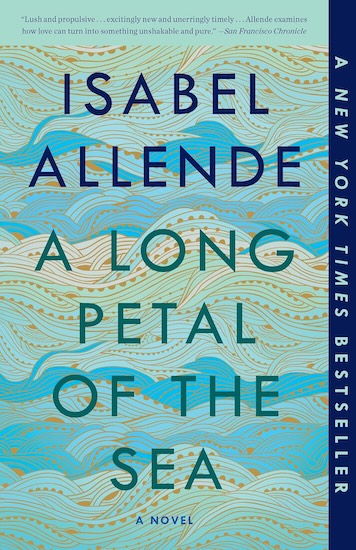
A Long Petal of the Sea
Beginning during the Spanish Civil War, A Long Petal of the Sea follows two people whose lives are transformed by war and exile. Victor Dalmau, a young doctor, becomes caught in the conflict when Franco’s forces defeat the Republican side. Alongside Roser Bruguera, a pregnant widow and gifted pianist, he is forced to flee Spain. To survive, they enter into a marriage neither originally desired and join thousands of Spanish refugees seeking safety abroad. Their journey takes them aboard the SS Winnipeg, a ship chartered by Chilean poet Pablo Neruda to transport refugees to South America. In Chile, Victor and Roser build a new life while navigating political tensions, cultural differences, and the challenges of starting over in an unfamiliar country. As decades pass, their adopted homeland experiences its own political upheavals, forcing them to confront once again the relationship between belonging, exile, and home. Spanning generations and continents, Allende’s novel explores how displacement reshapes identity, family, and personal loyalties. Through Victor and Roser’s experiences, she examines the courage required to rebuild a life after losing everything and the enduring hope that one day it may be possible to return home.
2019
2
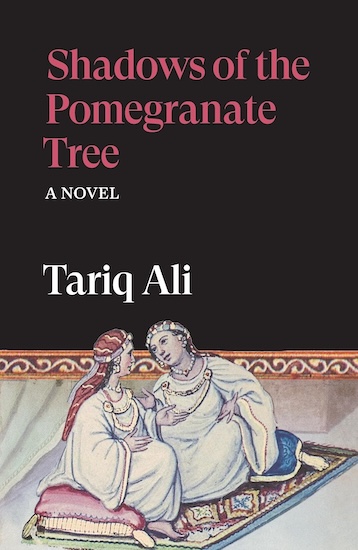
Shadows of the Pomegranate Tree (The Islam Quintet)
Set in the final years of Muslim rule in Granada, Spain, at the end of the fifteenth century, Shadows of the Pomegranate Tree explores the fate of a Muslim family as their world is transformed by the Christian conquest of Al-Andalus. The novel centres on the Banu Hudayl family, who have lived for generations in a village near Granada. Led by the respected Omar bin Abdallah, the family struggles to preserve its traditions, faith, and way of life as the Catholic monarchs Ferdinand and Isabella consolidate their power. Following the fall of Granada in 1492, Muslims face increasing persecution, forced conversions, and the destruction of their cultural heritage. As religious authorities tighten their control, members of the family respond in different ways. Some attempt to adapt to the new order, while others resist the loss of their identity and the restrictions imposed on their freedom. Their personal conflicts reflect the wider tragedy unfolding across the region, where libraries are burned, intellectual traditions are suppressed, and centuries of coexistence give way to religious intolerance. Through the family’s experiences, Tariq Ali brings to life the final chapter of Muslim Spain, exploring the relationship between faith, power, memory, and cultural survival. The novel also challenges simplified accounts of the past, revealing how conquest affects ordinary people, fractures communities, and threatens the knowledge and traditions passed from one generation to the next.
2026
3
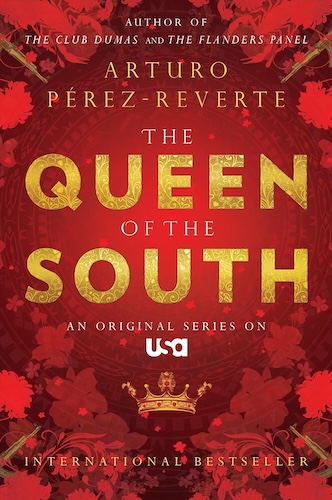
Queen of the South
Queen of the South
When the phone rings, Teresa Mendoza knows her life is about to change forever. Her boyfriend, a pilot who smuggles drugs for the Mexican cartels, has warned her that if she ever receives that call, she must run for her life. When he is murdered, Teresa flees Mexico, leaving behind everything she knows and entering an unfamiliar world where survival depends on intelligence, courage, and the ability to trust no one. Her journey takes her from Mexico to Spain, where she becomes involved in the dangerous business of smuggling hashish across the Strait of Gibraltar. Initially an outsider in a ruthless, male-dominated criminal world, Teresa gradually discovers her talent for negotiation, strategy, and business. As she builds her own network and accumulates wealth and influence, she transforms herself from a frightened young woman into a formidable criminal leader. Spanning continents and more than a decade, Pérez-Reverte’s novel combines crime thriller, political intrigue, and a powerful portrait of female ambition. Inspired in part by real-world drug-trafficking networks, the story explores loyalty, betrayal, identity, and the price of power. Teresa’s rise challenges conventional ideas about femininity and authority, while revealing the brutal realities of a world where survival often demands becoming the very person one once feared.
2002
4
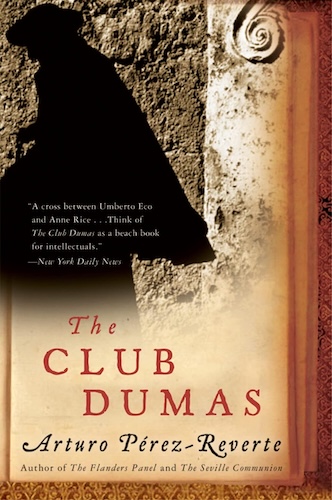
The Club Dumas
The Club Dumas
Lucas Corso is a cynical, resourceful book detective who makes his living tracking down rare editions for wealthy collectors. When he is hired to authenticate a manuscript believed to be a chapter from Alexandre Dumas’s The Three Musketeers, he finds himself drawn into a mystery involving a suspicious death, literary forgery, and a secret society of Dumas enthusiasts. But another assignment soon takes him into even darker territory: a wealthy collector wants him to verify a rare book entitled The Nine Doors of the Kingdom of Shadows, a mysterious volume said to contain instructions for summoning the Devil. As Corso travels between Madrid, Toledo, and Paris, he encounters obsessive bibliophiles, enigmatic women, and individuals whose fascination with forbidden knowledge borders on madness. The two investigations begin to intertwine, blurring the boundaries between literary scholarship and the occult. With every clue, Corso becomes less certain about whom he can trust—or whether the dangers surrounding him are entirely human. Combining intellectual mystery, Gothic suspense, and a playful exploration of literary history, Pérez-Reverte creates a thrilling tribute to the power of books and the obsessions they inspire. The Club Dumas asks whether rare books are merely objects to possess or gateways to worlds that might be better left unexplored.
1996
5
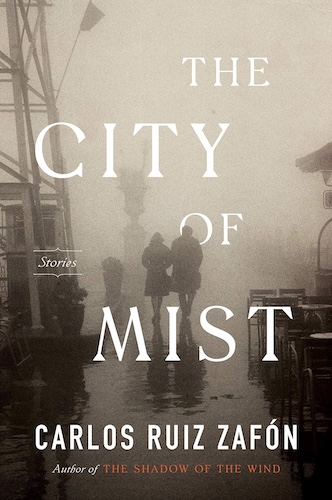
The City of Mist: Stories
In The City of Mist, Carlos Ruiz Zafón returns to the shadowy, enchanting Barcelona of his celebrated Cemetery of Forgotten Books series. This posthumous collection brings together eleven stories filled with mysterious characters, forgotten histories, supernatural encounters, and the irresistible magic of literature. Some stories expand the universe of Zafón’s bestselling novels, while others explore new corners of his richly imagined world. A young boy discovers that writing can win the attention of the girl he loves. A labyrinth maker escapes plague-stricken Constantinople to build a library designed to withstand the destruction of time. Miguel de Cervantes encounters a mysterious stranger who offers him an extraordinary literary bargain, while the celebrated architect Antoni Gaudí embarks on a journey to New York that could determine the fate of one of his greatest creations. Throughout the collection, Zafón blends Gothic mystery, historical imagination, dark humour, and a profound love of books. His stories transform cities into labyrinths of secrets and libraries into places where the past remains alive. Both a celebration of storytelling and a farewell to one of Spain’s most beloved modern novelists, The City of Mist invites readers to lose themselves once more in a world where every book conceals another mystery.
2020

Famous authors from Spain

About Spain

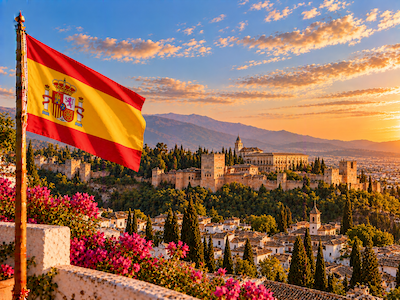
Spain occupies most of the Iberian Peninsula in southwestern Europe, bordered by the Atlantic Ocean and the Mediterranean Sea. Its landscapes range from sunlit Mediterranean beaches and rugged mountains to green northern coastlines, vast central plateaus, and the volcanic Canary Islands. Madrid, the capital, is a major cultural center, while Barcelona, Seville, Granada, and Valencia reflect the country’s diverse architectural and historical heritage. Spanish culture has been shaped by Roman, Visigothic, Islamic, Jewish, and Christian influences, alongside strong regional identities in Catalonia, the Basque Country, Galicia, and other parts of the country.

Region
Europe
Literary Context

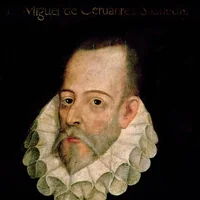
Spanish literature has a rich history of medieval epic poetry, chivalric romances, religious writing, and oral storytelling. One of its foundational works is The Song of the Cid, an epic poem reflecting medieval ideas of honor and loyalty. During the Golden Age of the 16th and 17th centuries, Spanish literature flourished through drama, poetry, and prose. Miguel de Cervantes’s Don Quixote became one of the most influential works in world literature, exploring the tension between imagination and reality. Other major literary figures include Lope de Vega and Pedro Calderón de la Barca, celebrated for their plays; Federico García Lorca, whose poetry and drama draw on folklore, desire, and social conflict; and Benito Pérez Galdós, known for his realist novels. The 20th century brought writers such as Carmen Laforet, Camilo José Cela, and Carmen Martín Gaite, whose work reflected social change and the legacy of the Spanish Civil War and dictatorship. Contemporary Spanish literature frequently explores memory, identity, family, gender, regional culture, migration, and historical trauma. The country’s literary landscape also includes important traditions in Catalan, Galician, and Basque, offering distinct perspectives within Spain’s multilingual cultural heritage.


Europe