Books from Spain
Suggest a book
All genres
Historical Fiction
Literary Fiction
Fantasy
Romance
Horror
Thriller
Non-Fiction
Mystery
Memoir
Classics
History
Sci-Fi
Contemporary Fiction
Science Fiction
Fiction
Poetry
Essays
Family Saga
Magical Realism
Family Drama
Dark Academia
Psychological Fiction
Dark Comedy
Political Writing
Feminist Fiction
Satire
Campus Fiction
Cultural Studies
Biography
Philosophy
Comedy
Drama
Young Adult
Gothic
Dystopia
Crime
Children's Books
Short Stories
Mythology
Cozy
Retellings
Humour
Adventure
All themes
Love & Passion
Adventure & Journey
Identity & Belonging
War & Conflict
Freedom & Resistance
Family & Heritage
Nature & Landscape
Society & Class
Spirituality & Faith
Solitude & Exile
Coming of Age
Revolution & Change
Friendship
History
Immigration
Myths and Retellings
Colonialism
Women & Society
Mental Health
Motherhood
1
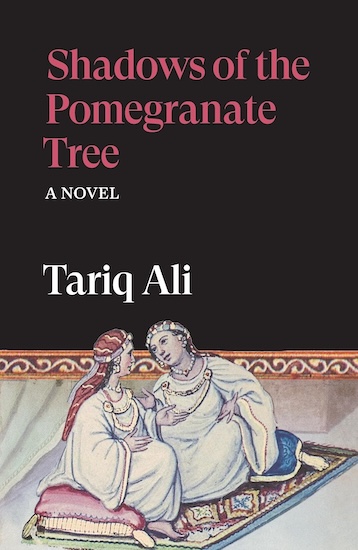
Shadows of the Pomegranate Tree (The Islam Quintet)
Set in the final years of Muslim rule in Granada, Spain, at the end of the fifteenth century, Shadows of the Pomegranate Tree explores the fate of a Muslim family as their world is transformed by the Christian conquest of Al-Andalus.
The novel centres on the Banu Hudayl family, who have lived for generations in a village near Granada. Led by the respected Omar bin Abdallah, the family struggles to preserve its traditions, faith, and way of life as the Catholic monarchs Ferdinand and Isabella consolidate their power. Following the fall of Granada in 1492, Muslims face increasing persecution, forced conversions, and the destruction of their cultural heritage.
As religious authorities tighten their control, members of the family respond in different ways. Some attempt to adapt to the new order, while others resist the loss of their identity and the restrictions imposed on their freedom. Their personal conflicts reflect the wider tragedy unfolding across the region, where libraries are burned, intellectual traditions are suppressed, and centuries of coexistence give way to religious intolerance.
Through the family’s experiences, Tariq Ali brings to life the final chapter of Muslim Spain, exploring the relationship between faith, power, memory, and cultural survival. The novel also challenges simplified accounts of the past, revealing how conquest affects ordinary people, fractures communities, and threatens the knowledge and traditions passed from one generation to the next.
2026
2
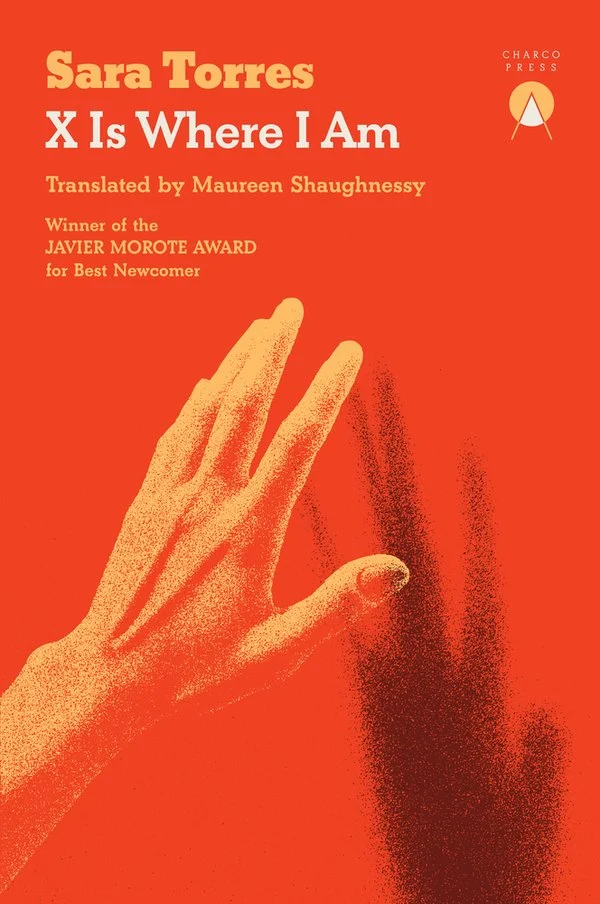
X Is Where I Am
In this intimate, lyrical novel, a young Spanish writer navigates the overlapping experiences of grief, desire, and complicated love. When twenty-eight-year-old Sara moves from London to Barcelona for a university teaching position, she leaves behind her long-term girlfriend while beginning an intense affair with a woman she calls Girl. At the same time, her mother is dying of cancer in Asturias, forcing Sara to confront the approaching loss of one of the most important relationships in her life. As these emotional worlds collide, she struggles with guilt, longing, and the impossibility of controlling either her own desires or the people she loves. Blending fiction with philosophical reflection, Torres explores the body as a site of pleasure, vulnerability, and suffering. Her prose moves between intimate encounters and meditations on attachment, sexuality, and mortality, capturing the messy contradictions of being human. X Is Where I Am is ultimately a moving exploration of how we continue to love amid loss—and how grief can transform our understanding of ourselves and our relationships.
2026
3
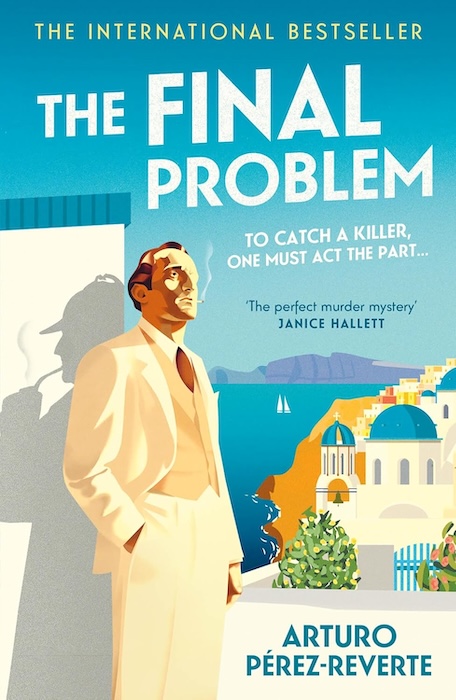
The Final Problem
In June 1960, a violent storm traps nine travelers on the secluded Greek island of Utakos, where they are staying at the island’s only hotel. Their isolation takes a sinister turn when Edith Mander, a quiet British tourist, is found dead in a beach pavilion. Although her death initially appears to be suicide, the circumstances suggest something far more mysterious. With the island cut off from the outside world, the guests find themselves trapped in a classic locked-room mystery, and everyone becomes a potential suspect.
Their unlikely investigator is Ormond Basil, a once-famous actor whose most celebrated role was Sherlock Holmes. Although Basil has spent his career portraying the legendary detective rather than solving real crimes, his familiarity with Holmes’s methods may be the group’s only hope. When another body is discovered, the mystery deepens into a deadly game involving literary clues, carefully staged murders, and a killer who seems to understand detective fiction as intimately as Basil himself.
A witty homage to the golden age of crime fiction, the novel explores the boundaries between fiction and reality, the nature of storytelling, and the intellectual duel between a detective and a murderer—and between an author and a reader.
2026
4

Discontent
Marisa appears to have everything she should want: a beautiful apartment in central Madrid, a promising career at an advertising agency, and a convenient arrangement with her attractive neighbour. In reality, she despises her job, finds her colleagues unbearable, and struggles to discover any meaning in her carefully constructed life. She spends her working hours hiding from coworkers, watching YouTube videos, and taking tranquillizers to cope with the relentless monotony of corporate existence. Her carefully maintained professional image, built partly on lies and other people’s work, begins to crumble when she is forced to attend a company team-building retreat. Surrounded by manipulative bosses, irritating colleagues, and artificial attempts at bonding, Marisa approaches a personal breaking point. Through biting humour and uncomfortable honesty, Beatriz Serrano captures the alienation of a generation that followed society’s promises of success only to find itself exhausted and unfulfilled. Discontent is a darkly comic exploration of workplace burnout, loneliness, and the desperate desire to escape a life that looks successful from the outside but feels empty within.
2023
5
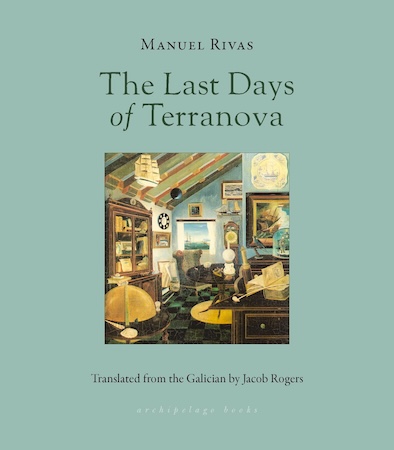
The Last Days of Terranova
What if a bookstore could preserve everything the world is trying to forget? In 2014, Vicenzo Fontana faces the imminent closure of Terranova, his family’s beloved bookstore, threatened by property developers after decades of serving as a refuge for dissidents, exiles, and forbidden books. Spending one final night among its shelves, the elderly bookseller revisits the people and events that shaped his life and the history of the shop. His memories lead back to 1935, when his father first opened Terranova, and forward through the Spanish Civil War’s legacy, Franco’s dictatorship, and the turbulent years of political resistance. Among the bookstore’s visitors are idealists, rebels, writers, and people fleeing persecution, each carrying a story of their own. Blending literary allusions, political history, and poetic storytelling, Manuel Rivas creates a moving tribute to books as vessels of memory and instruments of resistance. As Terranova faces its final hours, the novel asks what we lose when the places that protect ideas and shelter outsiders disappear.
2022
6
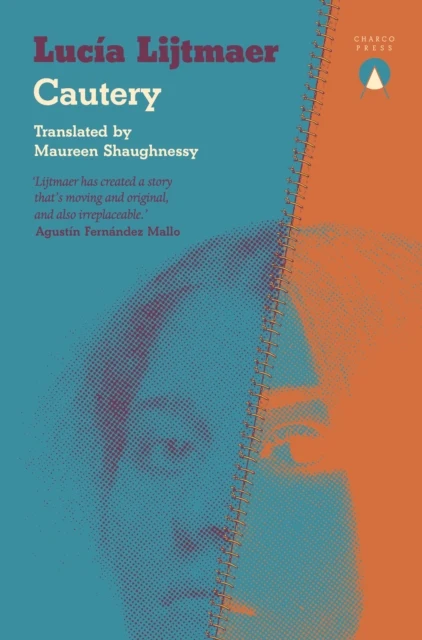
Cautery
A woman in Barcelona is trapped in a relationship that looks perfect from the outside, yet she cannot shake the feeling that her life is quietly falling apart. Haunted by fantasies of an impending apocalypse, she begins to question the promises of romantic love, modern feminism, and the freedom she thought she had achieved. Four centuries earlier, Deborah Moody, a fiercely independent Englishwoman, escapes to colonial America after losing almost everything. Despite their vastly different worlds, both women confront the same uncomfortable truth: independence does not guarantee freedom from the expectations and disappointments imposed by men. Darkly funny, provocative, and sharply observant, Cautery explores heartbreak, female anger, and the radical possibility of starting over when the life you’ve built becomes unbearable.
2022
7

Boulder
In Boulder, Eva Baltasar tells the story of a solitary woman who works as a cook on a ship and finds comfort in a life defined by independence, physical desire, and freedom from emotional commitments. Her carefully constructed world changes when she meets Samsa, a woman with whom she begins a relationship. When Samsa expresses her desire to become a mother, their partnership enters unfamiliar territory, forcing Boulder to confront the tensions between intimacy and autonomy. Through sparse, intense prose, Baltasar explores queer desire, jealousy, motherhood, and the difficulty of building a shared life without losing oneself. The novel offers an uncompromising portrait of love as both a source of connection and a challenge to personal freedom.
2022
8
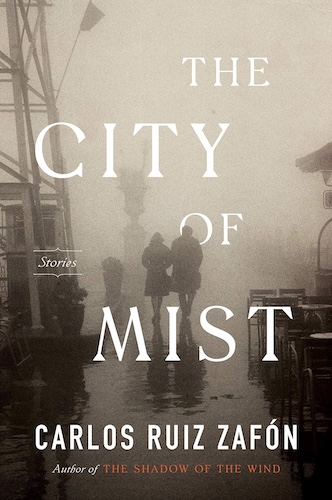
The City of Mist: Stories
In The City of Mist, Carlos Ruiz Zafón returns to the shadowy, enchanting Barcelona of his celebrated Cemetery of Forgotten Books series. This posthumous collection brings together eleven stories filled with mysterious characters, forgotten histories, supernatural encounters, and the irresistible magic of literature. Some stories expand the universe of Zafón’s bestselling novels, while others explore new corners of his richly imagined world.
A young boy discovers that writing can win the attention of the girl he loves. A labyrinth maker escapes plague-stricken Constantinople to build a library designed to withstand the destruction of time. Miguel de Cervantes encounters a mysterious stranger who offers him an extraordinary literary bargain, while the celebrated architect Antoni Gaudí embarks on a journey to New York that could determine the fate of one of his greatest creations.
Throughout the collection, Zafón blends Gothic mystery, historical imagination, dark humour, and a profound love of books. His stories transform cities into labyrinths of secrets and libraries into places where the past remains alive. Both a celebration of storytelling and a farewell to one of Spain’s most beloved modern novelists, The City of Mist invites readers to lose themselves once more in a world where every book conceals another mystery.
2020
9
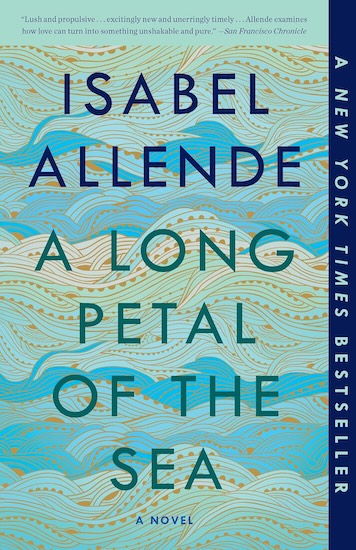
A Long Petal of the Sea
Beginning during the Spanish Civil War, A Long Petal of the Sea follows two people whose lives are transformed by war and exile. Victor Dalmau, a young doctor, becomes caught in the conflict when Franco’s forces defeat the Republican side. Alongside Roser Bruguera, a pregnant widow and gifted pianist, he is forced to flee Spain. To survive, they enter into a marriage neither originally desired and join thousands of Spanish refugees seeking safety abroad.
Their journey takes them aboard the SS Winnipeg, a ship chartered by Chilean poet Pablo Neruda to transport refugees to South America. In Chile, Victor and Roser build a new life while navigating political tensions, cultural differences, and the challenges of starting over in an unfamiliar country. As decades pass, their adopted homeland experiences its own political upheavals, forcing them to confront once again the relationship between belonging, exile, and home.
Spanning generations and continents, Allende’s novel explores how displacement reshapes identity, family, and personal loyalties. Through Victor and Roser’s experiences, she examines the courage required to rebuild a life after losing everything and the enduring hope that one day it may be possible to return home.
2019
10
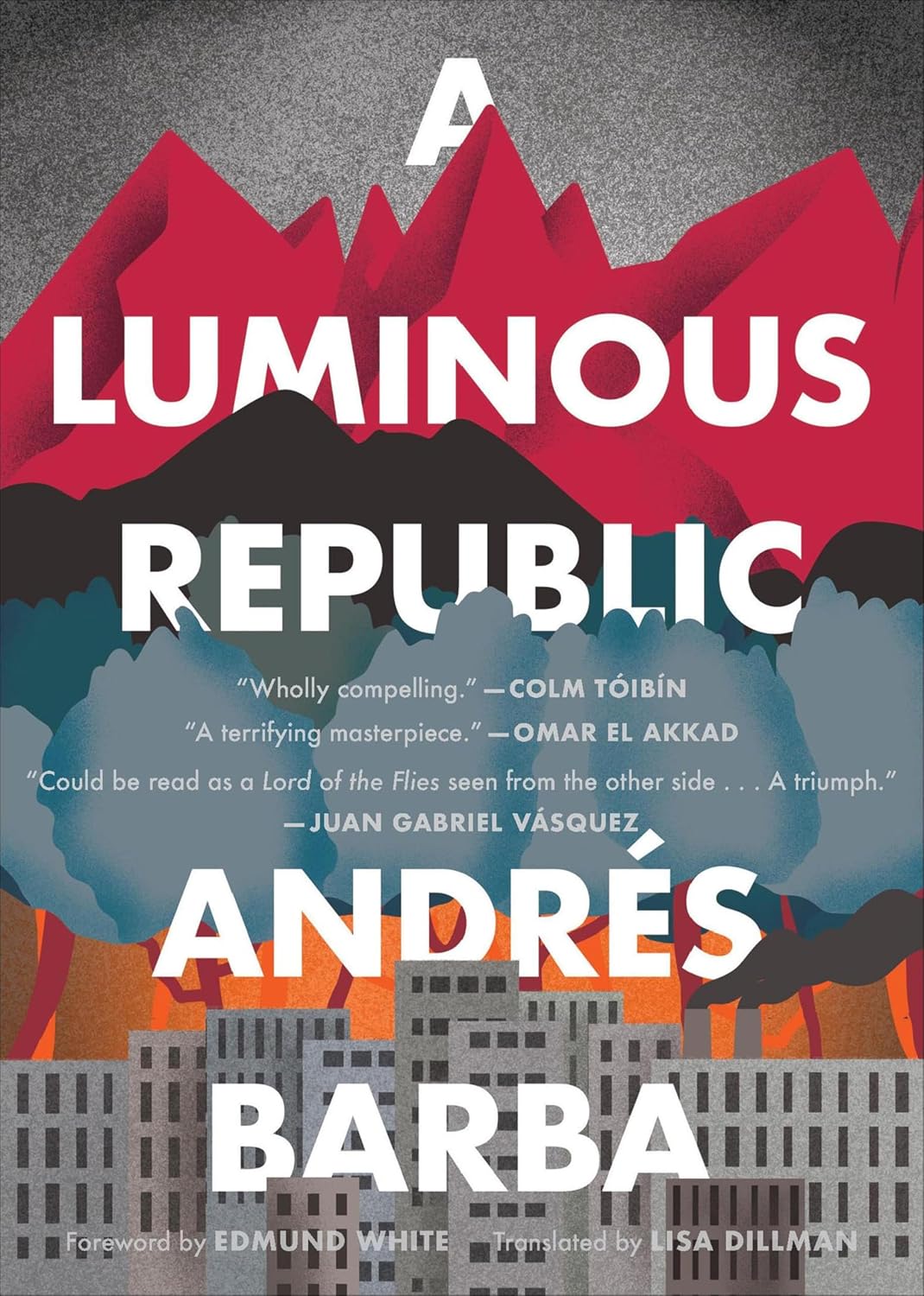
A Luminous Republic
In A Luminous Republic, a narrator looks back on a disturbing episode from his time working in the subtropical town of San Cristóbal. A mysterious group of children appears in the town, living on its margins and communicating in an unfamiliar language. When some of them begin committing acts of violence, the community struggles to understand their behaviour and decide how to respond. What initially seems like a social mystery gradually becomes a troubling examination of the boundaries between civilisation and savagery, childhood and adulthood, and order and chaos. Barba challenges the idealised image of childhood innocence, asking how societies define outsiders and how fear shapes collective behaviour. The novel reads like a modern fable about the fragility of social norms and the limits of human understanding.
2017
11
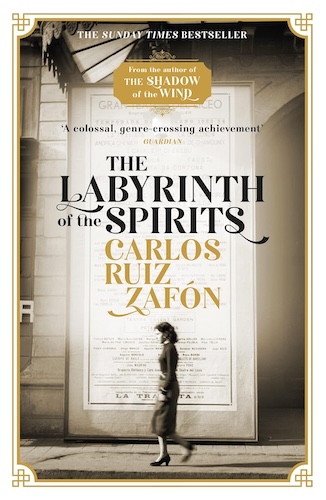
The Labyrinth of the Spirits
In post-war Barcelona, where the shadows of Francisco Franco’s dictatorship linger over everyday life, a young investigator named Alicia Gris is drawn into a dangerous mystery involving one of Spain’s most powerful political figures. Working for a secretive government agency, Alicia is tasked with locating a missing minister, but what begins as a straightforward investigation soon reveals a far-reaching conspiracy involving political corruption, kidnapping, and murder.
As Alicia follows the trail of clues, her investigation brings her into contact with the Sempere family, whose lives have been intertwined with the mysteries of the Cemetery of Forgotten Books for decades. Daniel Sempere, still haunted by questions surrounding his mother’s death, finds himself drawn into a final confrontation with the secrets that have shaped his family. Together, Alicia and Daniel uncover a disturbing history of violence, betrayal, and buried truths.
The fourth and final novel in Zafón’s Cemetery of Forgotten Books series, The Labyrinth of the Spirits brings together characters and mysteries from the previous books in an intricate literary puzzle. Combining Gothic atmosphere, historical fiction, suspense, and a profound love of books, Zafón creates a sweeping portrait of a city haunted by its past. At its heart, the novel explores how literature preserves memory, how authoritarian power attempts to control truth, and how courage and friendship can help people emerge from the darkest chapters of history.
2016
12
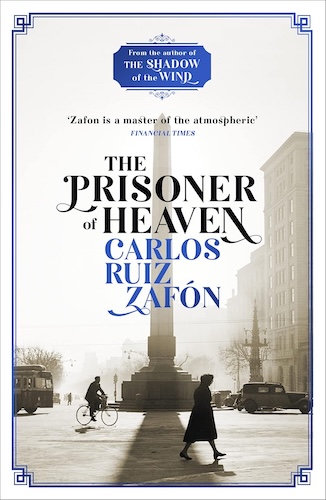
Prisoner Of Heaven
Barcelona, 1957. At the Sempere & Sons bookshop, Daniel Sempere seems to have finally found happiness. Married to Bea and the father of a young son, he shares his days with his devoted friend Fermín Romero de Torres, who is preparing for his own wedding. But their peaceful life is disrupted when a mysterious stranger enters the shop and purchases a rare, beautifully illustrated edition of The Count of Monte Cristo. Before leaving, he writes a disturbing dedication addressed to Fermín, hinting at a secret buried deep in the past.
Daniel soon discovers that his friend’s history is far darker than he imagined. The mystery leads back to the brutal years of Francisco Franco’s dictatorship, revealing a story of imprisonment, betrayal, revenge, and survival. As buried memories resurface, Daniel and Fermín must confront the consequences of secrets that could endanger everything they hold dear.
The third novel in Zafón’s Cemetery of Forgotten Books series, The Prisoner of Heaven brings together characters and mysteries from The Shadow of the Wind and The Angel’s Game. Blending Gothic suspense, historical fiction, and the enduring magic of books, the novel explores how the past refuses to remain buried—and how friendship and loyalty can survive even the darkest chapters of history.
2011