Books from Spain
Suggest a book
All genres
Historical Fiction
Literary Fiction
Fantasy
Romance
Horror
Thriller
Non-Fiction
Mystery
Memoir
Classics
History
Sci-Fi
Contemporary Fiction
Science Fiction
Fiction
Poetry
Essays
Family Saga
Magical Realism
Family Drama
Dark Academia
Psychological Fiction
Dark Comedy
Political Writing
Feminist Fiction
Satire
Campus Fiction
Cultural Studies
Biography
Philosophy
Comedy
Drama
Young Adult
Gothic
Dystopia
Crime
Children's Books
Short Stories
Mythology
Cozy
Retellings
Humour
Adventure
All themes
Love & Passion
Adventure & Journey
Identity & Belonging
War & Conflict
Freedom & Resistance
Family & Heritage
Nature & Landscape
Society & Class
Spirituality & Faith
Solitude & Exile
Coming of Age
Revolution & Change
Friendship
History
Immigration
Myths and Retellings
Colonialism
Women & Society
Mental Health
Motherhood
1
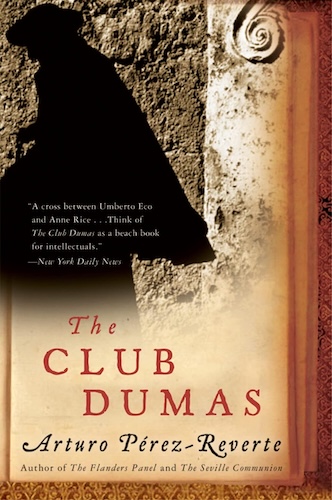
The Club Dumas
Lucas Corso is a cynical, resourceful book detective who makes his living tracking down rare editions for wealthy collectors. When he is hired to authenticate a manuscript believed to be a chapter from Alexandre Dumas’s The Three Musketeers, he finds himself drawn into a mystery involving a suspicious death, literary forgery, and a secret society of Dumas enthusiasts. But another assignment soon takes him into even darker territory: a wealthy collector wants him to verify a rare book entitled The Nine Doors of the Kingdom of Shadows, a mysterious volume said to contain instructions for summoning the Devil.
As Corso travels between Madrid, Toledo, and Paris, he encounters obsessive bibliophiles, enigmatic women, and individuals whose fascination with forbidden knowledge borders on madness. The two investigations begin to intertwine, blurring the boundaries between literary scholarship and the occult. With every clue, Corso becomes less certain about whom he can trust—or whether the dangers surrounding him are entirely human.
Combining intellectual mystery, Gothic suspense, and a playful exploration of literary history, Pérez-Reverte creates a thrilling tribute to the power of books and the obsessions they inspire. The Club Dumas asks whether rare books are merely objects to possess or gateways to worlds that might be better left unexplored.
1996
2
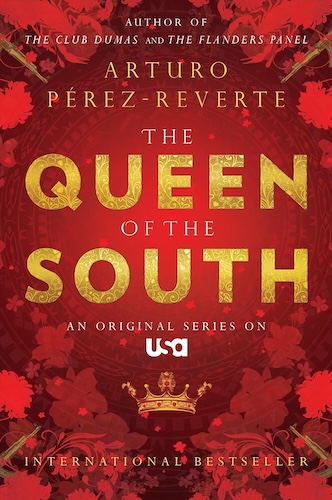
Queen of the South
When the phone rings, Teresa Mendoza knows her life is about to change forever. Her boyfriend, a pilot who smuggles drugs for the Mexican cartels, has warned her that if she ever receives that call, she must run for her life. When he is murdered, Teresa flees Mexico, leaving behind everything she knows and entering an unfamiliar world where survival depends on intelligence, courage, and the ability to trust no one.
Her journey takes her from Mexico to Spain, where she becomes involved in the dangerous business of smuggling hashish across the Strait of Gibraltar. Initially an outsider in a ruthless, male-dominated criminal world, Teresa gradually discovers her talent for negotiation, strategy, and business. As she builds her own network and accumulates wealth and influence, she transforms herself from a frightened young woman into a formidable criminal leader.
Spanning continents and more than a decade, Pérez-Reverte’s novel combines crime thriller, political intrigue, and a powerful portrait of female ambition. Inspired in part by real-world drug-trafficking networks, the story explores loyalty, betrayal, identity, and the price of power. Teresa’s rise challenges conventional ideas about femininity and authority, while revealing the brutal realities of a world where survival often demands becoming the very person one once feared.
2002
3
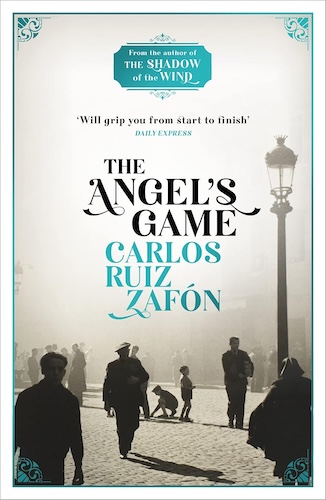
The Angel’s Game
In the dark, atmospheric streets of 1920s Barcelona, David Martín makes his living writing sensational crime stories under a pseudonym. Haunted by a troubled childhood and an impossible love, he finds refuge in literature and in a decaying mansion whose sinister history gradually begins to consume him. When a mysterious French publisher named Andreas Corelli offers him an extraordinary sum of money to write a book unlike any other, David accepts, believing the commission could transform his life.
But as he begins his work, unsettling connections emerge between the book he is writing, the secrets hidden within his mansion, and the strange events unfolding around him. What initially appears to be a dream opportunity becomes an increasingly dangerous mystery, blurring the boundaries between fiction and reality, faith and deception, and creation and destruction.
Returning to the shadowy literary universe of the Cemetery of Forgotten Books, Zafón crafts a Gothic thriller filled with secret passages, forbidden knowledge, obsessive love, and supernatural menace. Beneath its intricate mysteries lies a meditation on the power of storytelling and the price of artistic ambition. The Angel’s Game asks whether a writer can truly control the stories he creates—or whether some stories have the power to control their creators.
2008
4
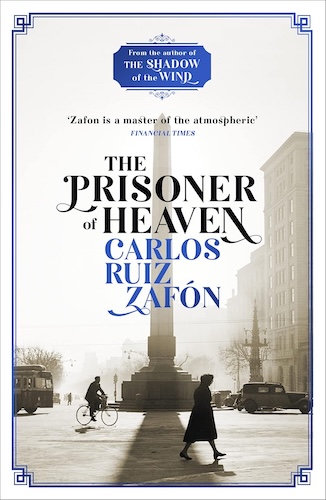
Prisoner Of Heaven
Barcelona, 1957. At the Sempere & Sons bookshop, Daniel Sempere seems to have finally found happiness. Married to Bea and the father of a young son, he shares his days with his devoted friend Fermín Romero de Torres, who is preparing for his own wedding. But their peaceful life is disrupted when a mysterious stranger enters the shop and purchases a rare, beautifully illustrated edition of The Count of Monte Cristo. Before leaving, he writes a disturbing dedication addressed to Fermín, hinting at a secret buried deep in the past.
Daniel soon discovers that his friend’s history is far darker than he imagined. The mystery leads back to the brutal years of Francisco Franco’s dictatorship, revealing a story of imprisonment, betrayal, revenge, and survival. As buried memories resurface, Daniel and Fermín must confront the consequences of secrets that could endanger everything they hold dear.
The third novel in Zafón’s Cemetery of Forgotten Books series, The Prisoner of Heaven brings together characters and mysteries from The Shadow of the Wind and The Angel’s Game. Blending Gothic suspense, historical fiction, and the enduring magic of books, the novel explores how the past refuses to remain buried—and how friendship and loyalty can survive even the darkest chapters of history.
2011
5
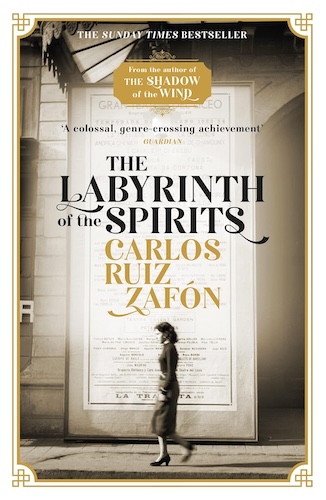
The Labyrinth of the Spirits
In post-war Barcelona, where the shadows of Francisco Franco’s dictatorship linger over everyday life, a young investigator named Alicia Gris is drawn into a dangerous mystery involving one of Spain’s most powerful political figures. Working for a secretive government agency, Alicia is tasked with locating a missing minister, but what begins as a straightforward investigation soon reveals a far-reaching conspiracy involving political corruption, kidnapping, and murder.
As Alicia follows the trail of clues, her investigation brings her into contact with the Sempere family, whose lives have been intertwined with the mysteries of the Cemetery of Forgotten Books for decades. Daniel Sempere, still haunted by questions surrounding his mother’s death, finds himself drawn into a final confrontation with the secrets that have shaped his family. Together, Alicia and Daniel uncover a disturbing history of violence, betrayal, and buried truths.
The fourth and final novel in Zafón’s Cemetery of Forgotten Books series, The Labyrinth of the Spirits brings together characters and mysteries from the previous books in an intricate literary puzzle. Combining Gothic atmosphere, historical fiction, suspense, and a profound love of books, Zafón creates a sweeping portrait of a city haunted by its past. At its heart, the novel explores how literature preserves memory, how authoritarian power attempts to control truth, and how courage and friendship can help people emerge from the darkest chapters of history.
2016
6
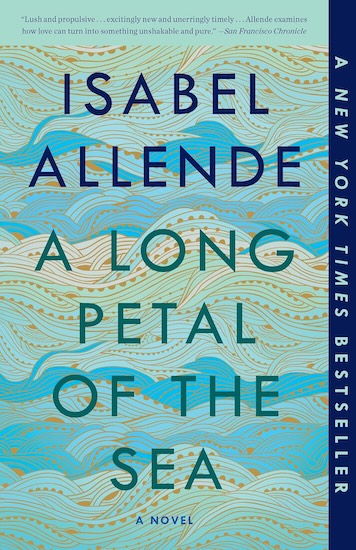
A Long Petal of the Sea
Beginning during the Spanish Civil War, A Long Petal of the Sea follows two people whose lives are transformed by war and exile. Victor Dalmau, a young doctor, becomes caught in the conflict when Franco’s forces defeat the Republican side. Alongside Roser Bruguera, a pregnant widow and gifted pianist, he is forced to flee Spain. To survive, they enter into a marriage neither originally desired and join thousands of Spanish refugees seeking safety abroad.
Their journey takes them aboard the SS Winnipeg, a ship chartered by Chilean poet Pablo Neruda to transport refugees to South America. In Chile, Victor and Roser build a new life while navigating political tensions, cultural differences, and the challenges of starting over in an unfamiliar country. As decades pass, their adopted homeland experiences its own political upheavals, forcing them to confront once again the relationship between belonging, exile, and home.
Spanning generations and continents, Allende’s novel explores how displacement reshapes identity, family, and personal loyalties. Through Victor and Roser’s experiences, she examines the courage required to rebuild a life after losing everything and the enduring hope that one day it may be possible to return home.
2019
7
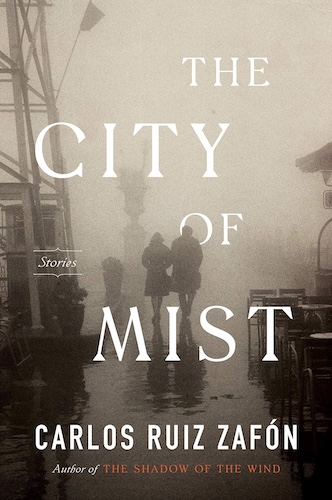
The City of Mist: Stories
In The City of Mist, Carlos Ruiz Zafón returns to the shadowy, enchanting Barcelona of his celebrated Cemetery of Forgotten Books series. This posthumous collection brings together eleven stories filled with mysterious characters, forgotten histories, supernatural encounters, and the irresistible magic of literature. Some stories expand the universe of Zafón’s bestselling novels, while others explore new corners of his richly imagined world.
A young boy discovers that writing can win the attention of the girl he loves. A labyrinth maker escapes plague-stricken Constantinople to build a library designed to withstand the destruction of time. Miguel de Cervantes encounters a mysterious stranger who offers him an extraordinary literary bargain, while the celebrated architect Antoni Gaudí embarks on a journey to New York that could determine the fate of one of his greatest creations.
Throughout the collection, Zafón blends Gothic mystery, historical imagination, dark humour, and a profound love of books. His stories transform cities into labyrinths of secrets and libraries into places where the past remains alive. Both a celebration of storytelling and a farewell to one of Spain’s most beloved modern novelists, The City of Mist invites readers to lose themselves once more in a world where every book conceals another mystery.
2020
8
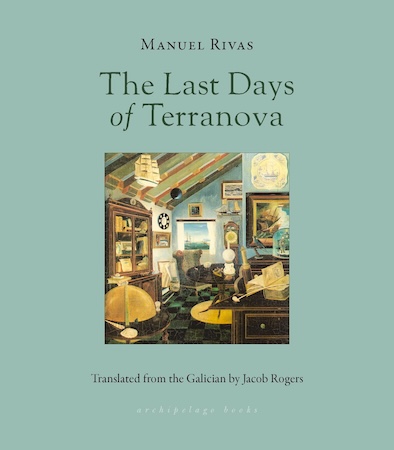
The Last Days of Terranova
What if a bookstore could preserve everything the world is trying to forget? In 2014, Vicenzo Fontana faces the imminent closure of Terranova, his family’s beloved bookstore, threatened by property developers after decades of serving as a refuge for dissidents, exiles, and forbidden books. Spending one final night among its shelves, the elderly bookseller revisits the people and events that shaped his life and the history of the shop. His memories lead back to 1935, when his father first opened Terranova, and forward through the Spanish Civil War’s legacy, Franco’s dictatorship, and the turbulent years of political resistance. Among the bookstore’s visitors are idealists, rebels, writers, and people fleeing persecution, each carrying a story of their own. Blending literary allusions, political history, and poetic storytelling, Manuel Rivas creates a moving tribute to books as vessels of memory and instruments of resistance. As Terranova faces its final hours, the novel asks what we lose when the places that protect ideas and shelter outsiders disappear.
2022
9
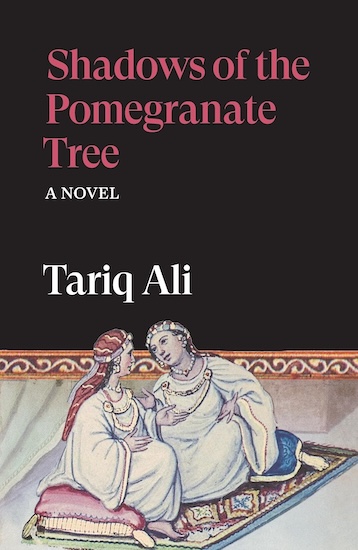
Shadows of the Pomegranate Tree (The Islam Quintet)
Set in the final years of Muslim rule in Granada, Spain, at the end of the fifteenth century, Shadows of the Pomegranate Tree explores the fate of a Muslim family as their world is transformed by the Christian conquest of Al-Andalus.
The novel centres on the Banu Hudayl family, who have lived for generations in a village near Granada. Led by the respected Omar bin Abdallah, the family struggles to preserve its traditions, faith, and way of life as the Catholic monarchs Ferdinand and Isabella consolidate their power. Following the fall of Granada in 1492, Muslims face increasing persecution, forced conversions, and the destruction of their cultural heritage.
As religious authorities tighten their control, members of the family respond in different ways. Some attempt to adapt to the new order, while others resist the loss of their identity and the restrictions imposed on their freedom. Their personal conflicts reflect the wider tragedy unfolding across the region, where libraries are burned, intellectual traditions are suppressed, and centuries of coexistence give way to religious intolerance.
Through the family’s experiences, Tariq Ali brings to life the final chapter of Muslim Spain, exploring the relationship between faith, power, memory, and cultural survival. The novel also challenges simplified accounts of the past, revealing how conquest affects ordinary people, fractures communities, and threatens the knowledge and traditions passed from one generation to the next.
2026
10
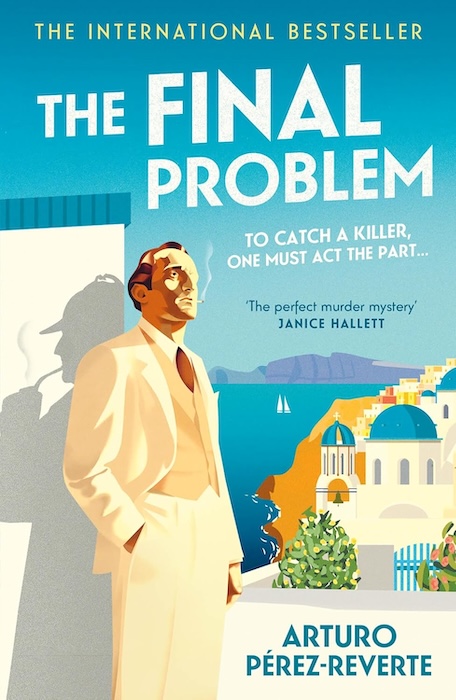
The Final Problem
In June 1960, a violent storm traps nine travelers on the secluded Greek island of Utakos, where they are staying at the island’s only hotel. Their isolation takes a sinister turn when Edith Mander, a quiet British tourist, is found dead in a beach pavilion. Although her death initially appears to be suicide, the circumstances suggest something far more mysterious. With the island cut off from the outside world, the guests find themselves trapped in a classic locked-room mystery, and everyone becomes a potential suspect.
Their unlikely investigator is Ormond Basil, a once-famous actor whose most celebrated role was Sherlock Holmes. Although Basil has spent his career portraying the legendary detective rather than solving real crimes, his familiarity with Holmes’s methods may be the group’s only hope. When another body is discovered, the mystery deepens into a deadly game involving literary clues, carefully staged murders, and a killer who seems to understand detective fiction as intimately as Basil himself.
A witty homage to the golden age of crime fiction, the novel explores the boundaries between fiction and reality, the nature of storytelling, and the intellectual duel between a detective and a murderer—and between an author and a reader.
2026