Books from Egypt
Suggest a book
All genres
Historical Fiction
Literary Fiction
Fantasy
Romance
Horror
Thriller
Non-Fiction
Mystery
Memoir
Classics
History
Sci-Fi
Contemporary Fiction
Science Fiction
Fiction
Poetry
Essays
Family Saga
Magical Realism
Family Drama
Dark Academia
Psychological Fiction
Dark Comedy
Political Writing
Feminist Fiction
Satire
Campus Fiction
Cultural Studies
Biography
Philosophy
Comedy
Drama
Young Adult
Gothic
Dystopia
Crime
Children's Books
Short Stories
Mythology
Cozy
Retellings
Humour
Adventure
All themes
Love & Passion
Adventure & Journey
Identity & Belonging
War & Conflict
Freedom & Resistance
Family & Heritage
Nature & Landscape
Society & Class
Spirituality & Faith
Solitude & Exile
Coming of Age
Revolution & Change
Friendship
History
Immigration
Myths and Retellings
Colonialism
Women & Society
Mental Health
Motherhood
1

Friendly Fire
An Israeli family gathers for the holidays, but beneath the familiar rituals lie old resentments, unspoken fears, and questions about the meaning of home. Amotz Yaari, a successful engineer, and his wife, Daniela, find their carefully ordered lives disrupted by a family crisis that sends Daniela travelling to Africa to visit her widowed brother-in-law. Meanwhile, their son is serving in the Israeli army, and the family struggles to reconcile its private concerns with the realities of military service and political conflict. Moving between domestic life and distant landscapes, Friendly Fire examines the fragile bonds that hold families together and the ways war infiltrates even the most intimate relationships.
2009
2
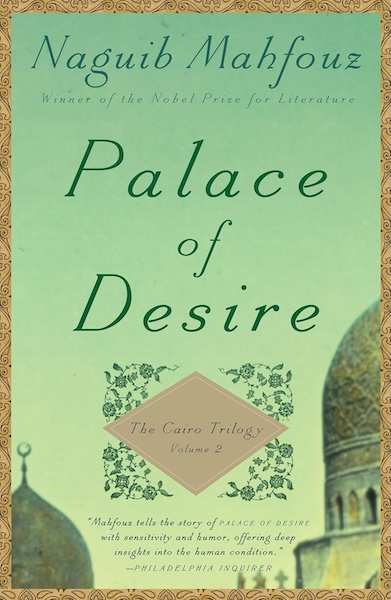
Palace of Desire
Palace of Desire is the second novel in Naguib Mahfouz’s Cairo Trilogy, continuing the story of the al-Sayyid family in Cairo during the 1920s. As Egypt experiences political change and growing demands for independence, the family faces its own transformations. Ahmad Abd al-Jawad, once the unquestioned authority in his household, grows older while continuing to struggle with his desire for pleasure and control. Meanwhile, his children enter adulthood, developing beliefs, ambitions, and relationships that increasingly challenge the traditions imposed upon them.
The novel focuses particularly on the younger generation’s changing attitudes toward religion, politics, love, and personal freedom. Kamal, the youngest son, becomes increasingly absorbed in philosophy and literature, questioning the religious certainties of his upbringing and struggling with unrequited love. Through the family’s experiences, Mahfouz explores the tension between inherited values and modern ideas, revealing how political upheaval and cultural transformation reshape intimate relationships. Rich in psychological detail, Palace of Desire portrays a society caught between tradition and modernity, where the search for independence often comes at the cost of family harmony.
1957
3
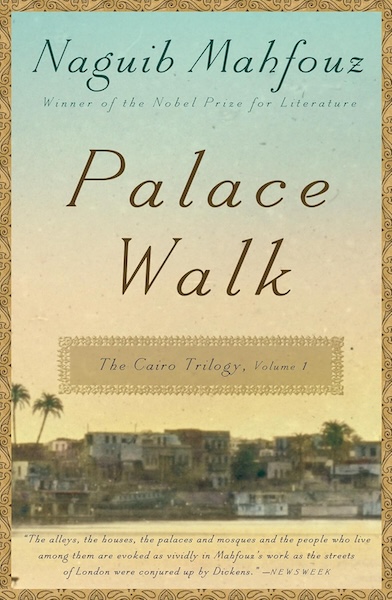
Palace Walk
Palace Walk is the first novel in Naguib Mahfouz’s acclaimed Cairo Trilogy, following the lives of the al-Sayyid family in Cairo during the First World War and the Egyptian nationalist movement of 1919. At the centre of the household is Ahmad Abd al-Jawad, a prosperous merchant who rules his family with absolute authority while secretly indulging in a life of pleasure outside the home. His wife, Amina, remains largely confined to the house, devoted to her husband and children, while their sons and daughters gradually develop ambitions that challenge the traditional values governing their lives.
As political unrest spreads through Egypt, the family’s private struggles reflect the wider tensions between tradition and modernity, religious authority and personal freedom, and colonial rule and national independence. Mahfouz portrays a society undergoing profound transformation, where generational conflicts reveal changing attitudes toward gender, education, and individual choice. Through richly detailed depictions of domestic life in historic Cairo, the novel examines the contradictions of patriarchal power and the ways political change reshapes even the most private relationships.
1956