Books from Algeria
Suggest a book
All genres
Historical Fiction
Literary Fiction
Fantasy
Romance
Horror
Thriller
Non-Fiction
Mystery
Memoir
Classics
History
Sci-Fi
Contemporary Fiction
Science Fiction
Fiction
Poetry
Essays
Family Saga
Magical Realism
Family Drama
Dark Academia
Psychological Fiction
Dark Comedy
Political Writing
Feminist Fiction
Satire
Campus Fiction
Cultural Studies
Biography
Philosophy
Comedy
Drama
Young Adult
Gothic
Dystopia
Crime
Children's Books
Short Stories
Mythology
Cozy
Retellings
Humour
Adventure
All themes
Love & Passion
Adventure & Journey
Identity & Belonging
War & Conflict
Freedom & Resistance
Family & Heritage
Nature & Landscape
Society & Class
Spirituality & Faith
Solitude & Exile
Coming of Age
Revolution & Change
Friendship
History
Immigration
Myths and Retellings
Colonialism
Women & Society
Mental Health
Motherhood
1
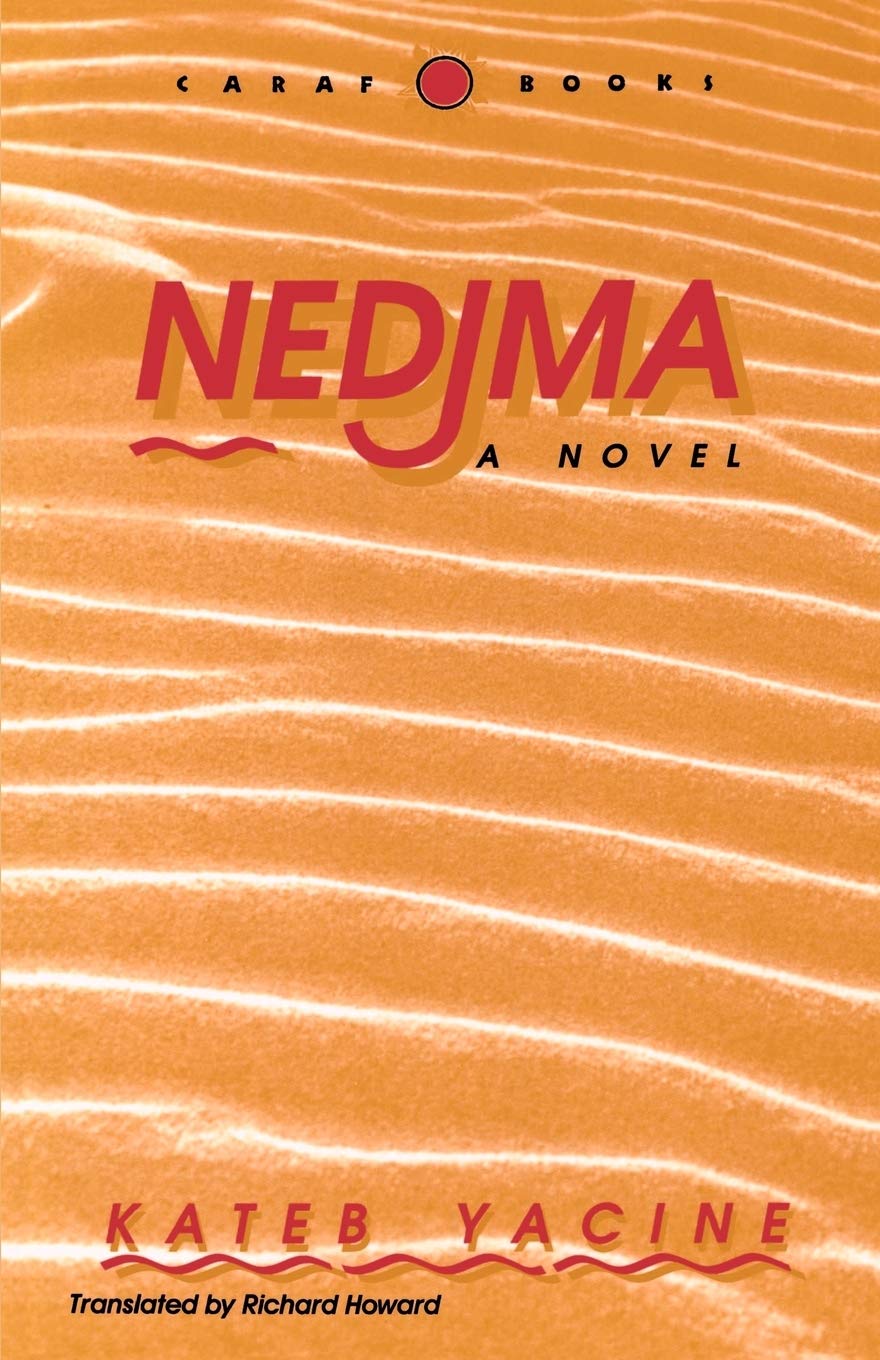
Nedjma
Nedjma follows four young Algerian men—Lakhdar, Mustapha, Mourad, and Rachid—whose lives become intertwined through friendship, desire, and their shared experience of growing up under French colonial rule. At the centre of their stories is Nedjma, a mysterious and captivating woman whose identity and origins reflect the complex history of Algeria itself. Each man is drawn to her, but she remains elusive, embodying both personal longing and a deeper attachment to a homeland whose past has been shaped by conquest and cultural displacement.
Rather than following a linear narrative, Kateb Yacine moves between memories, shifting perspectives, and fragmented episodes, mirroring the instability of a society struggling to define itself. Family histories, colonial violence, and personal relationships intertwine as the characters search for meaning and belonging. Through this experimental structure, the novel explores national identity, memory, resistance, and the psychological consequences of colonialism. Widely regarded as a landmark of modern Algerian literature, Nedjma captures the uncertainty and urgency of a generation searching for its place in a changing world.
1956