Books from Germany
Suggest a book
All genres
Historical Fiction
Literary Fiction
Fantasy
Romance
Horror
Thriller
Non-Fiction
Mystery
Memoir
Classics
History
Sci-Fi
Contemporary Fiction
Science Fiction
Fiction
Poetry
Essays
Family Saga
Magical Realism
Family Drama
Dark Academia
Psychological Fiction
Dark Comedy
Political Writing
Feminist Fiction
Satire
Campus Fiction
Cultural Studies
Biography
Philosophy
Comedy
Drama
Young Adult
Gothic
Dystopia
Crime
Children's Books
Short Stories
Mythology
Cozy
Retellings
Humour
Adventure
All themes
Love & Passion
Adventure & Journey
Identity & Belonging
War & Conflict
Freedom & Resistance
Family & Heritage
Nature & Landscape
Society & Class
Spirituality & Faith
Solitude & Exile
Coming of Age
Revolution & Change
Friendship
History
Immigration
Myths and Retellings
Colonialism
Women & Society
Mental Health
Motherhood
1
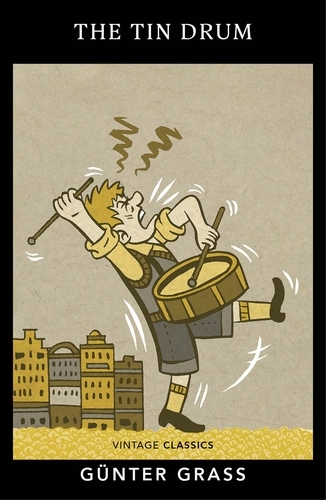
The Tin Drum
The Tin Drum is narrated by Oskar Matzerath, who recounts his life from a mental institution while reflecting on the turbulent history of Germany before, during, and after the Second World War. Born in Danzig in 1924, Oskar decides at the age of three to stop growing, using his small stature and tin drum to distance himself from the adult world. He also possesses a piercing scream capable of shattering glass. Through his strange perspective, the novel depicts the rise of Nazism, the violence of war, and the moral compromises of ordinary people. Grass combines grotesque humour, fantasy, and historical realism to challenge conventional narratives of innocence and responsibility. Oskar’s unreliable account exposes the contradictions of a society that participated in or tolerated fascism, examining collective guilt, denial, and the difficulty of confronting a traumatic national past.
1959
2

Beware of Pity
In Beware of Pity, Stefan Zweig explores the dangerous consequences of misplaced compassion through a young Austrian officer who becomes entangled in the life of a disabled woman. A profound psychological novel about guilt, duty, and the fine line between genuine empathy and self-serving pity.
1939
3

All Quiet on the Western Front
All Quiet on the Western Front follows Paul Bäumer, a young German soldier who enlists in the First World War alongside his school friends after being encouraged by patriotic teachers. Once at the front, the young men discover that the heroic ideals used to recruit them bear little resemblance to the reality of trench warfare. Constant bombardment, hunger, exhaustion, and the loss of comrades gradually destroy their innocence and their faith in the society that sent them to fight. When Paul returns home on leave, he finds himself unable to reconnect with civilians who cannot understand his experiences. Remarque portrays war as a force that damages not only bodies but also the emotional and moral foundations of a generation. The novel explores trauma, disillusionment, and the devastating distance between military rhetoric and the human cost of conflict.
1929
4

Steppenwolf
Steppenwolf follows Harry Haller, a middle-aged intellectual who feels profoundly alienated from bourgeois society and believes himself divided between two opposing natures: the civilised human being and the solitary wolf. Disillusioned with conventional life, Harry becomes increasingly withdrawn and struggles with thoughts of despair. His encounter with Hermine, a lively and unconventional woman, introduces him to new experiences, including music, dancing, and forms of pleasure he has long rejected. Through these encounters, he begins to question his rigid understanding of identity and the assumption that human beings can be divided into simple opposing parts. Hesse blends psychological exploration with surreal and philosophical episodes to examine loneliness, social conformity, and the possibility of personal transformation. The novel asks whether people can learn to embrace the contradictions within themselves rather than remain imprisoned by a fixed image of who they are.
1927
5
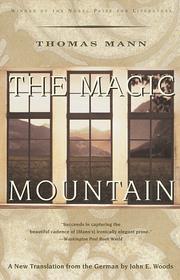
The Magic Mountain
The Magic Mountain follows Hans Castorp, a young German engineer who visits his cousin at a tuberculosis sanatorium in the Swiss Alps. Initially intending to stay for only three weeks, Hans becomes absorbed in the institution’s unusual atmosphere and eventually remains there for seven years. Removed from the routines of ordinary society, he encounters patients and intellectuals whose conversations explore competing ideas about politics, philosophy, science, love, and human progress. The sanatorium becomes a miniature version of pre-war Europe, where debates about rationalism, humanism, nationalism, and radical ideology reveal the tensions shaping the continent. Through Hans’s gradual transformation, Mann examines the relationship between time, illness, and intellectual development. The novel explores the attraction of isolation and the difficulty of understanding a society approaching catastrophe, ultimately reflecting on the cultural and moral crises that preceded the First World War.
1924
6
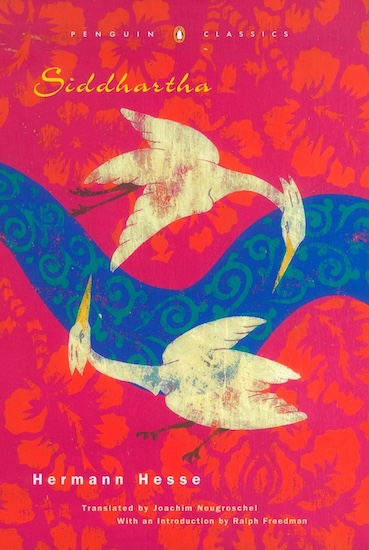
Siddhartha
Siddhartha follows a young man in ancient India who leaves his privileged life in search of spiritual understanding. Dissatisfied with the religious teachings and ascetic practices available to him, Siddhartha travels with his friend Govinda and eventually encounters the Buddha. Although he respects the Buddha’s wisdom, Siddhartha believes that enlightenment cannot simply be learned from another person. He therefore pursues his own experiences, exploring sensual pleasure, wealth, love, and the suffering that accompanies attachment. After years of disillusionment, he finds guidance in the quiet presence of a ferryman and begins to understand the interconnectedness of existence. Hesse draws on Indian religious and philosophical traditions to explore self-discovery, desire, and the limitations of intellectual knowledge. The novel suggests that wisdom emerges not through rigid doctrine but through attentive experience, acceptance, and an understanding of life’s constantly changing nature.
1922