Books from Germany
Suggest a book
All genres
Historical Fiction
Literary Fiction
Fantasy
Romance
Horror
Thriller
Non-Fiction
Mystery
Memoir
Classics
History
Sci-Fi
Contemporary Fiction
Science Fiction
Fiction
Poetry
Essays
Family Saga
Magical Realism
Family Drama
Dark Academia
Psychological Fiction
Dark Comedy
Political Writing
Feminist Fiction
Satire
Campus Fiction
Cultural Studies
Biography
Philosophy
Comedy
Drama
Young Adult
Gothic
Dystopia
Crime
Children's Books
Short Stories
Mythology
Cozy
Retellings
Humour
Adventure
All themes
Love & Passion
Adventure & Journey
Identity & Belonging
War & Conflict
Freedom & Resistance
Family & Heritage
Nature & Landscape
Society & Class
Spirituality & Faith
Solitude & Exile
Coming of Age
Revolution & Change
Friendship
History
Immigration
Myths and Retellings
Colonialism
Women & Society
Mental Health
Motherhood
1
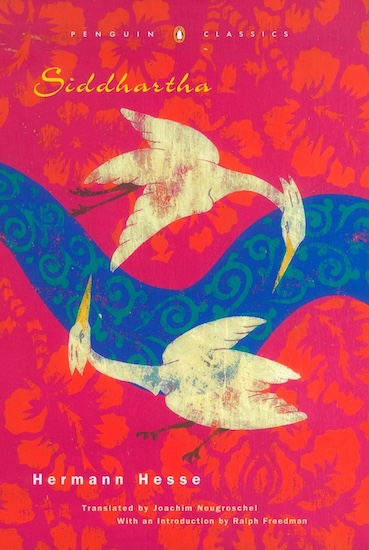
Siddhartha
Siddhartha follows a young man in ancient India who leaves his privileged life in search of spiritual understanding. Dissatisfied with the religious teachings and ascetic practices available to him, Siddhartha travels with his friend Govinda and eventually encounters the Buddha. Although he respects the Buddha’s wisdom, Siddhartha believes that enlightenment cannot simply be learned from another person. He therefore pursues his own experiences, exploring sensual pleasure, wealth, love, and the suffering that accompanies attachment. After years of disillusionment, he finds guidance in the quiet presence of a ferryman and begins to understand the interconnectedness of existence. Hesse draws on Indian religious and philosophical traditions to explore self-discovery, desire, and the limitations of intellectual knowledge. The novel suggests that wisdom emerges not through rigid doctrine but through attentive experience, acceptance, and an understanding of life’s constantly changing nature.
1922
2
The Magic Mountain
The Magic Mountain follows Hans Castorp, a young German engineer who visits his cousin at a tuberculosis sanatorium in the Swiss Alps. Initially intending to stay for only three weeks, Hans becomes absorbed in the institution’s unusual atmosphere and eventually remains there for seven years. Removed from the routines of ordinary society, he encounters patients and intellectuals whose conversations explore competing ideas about politics, philosophy, science, love, and human progress. The sanatorium becomes a miniature version of pre-war Europe, where debates about rationalism, humanism, nationalism, and radical ideology reveal the tensions shaping the continent. Through Hans’s gradual transformation, Mann examines the relationship between time, illness, and intellectual development. The novel explores the attraction of isolation and the difficulty of understanding a society approaching catastrophe, ultimately reflecting on the cultural and moral crises that preceded the First World War.
1924
3
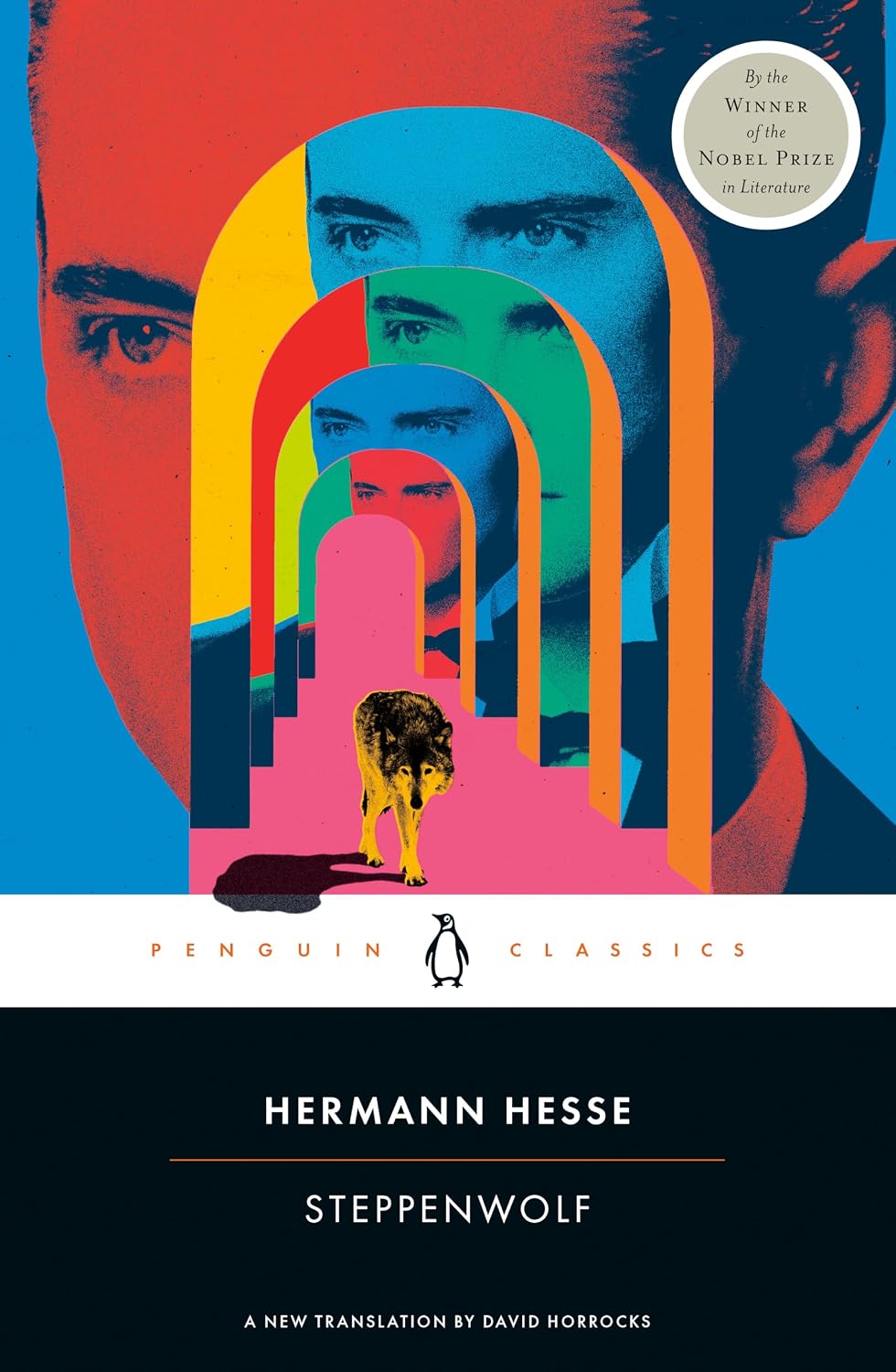
Steppenwolf
Steppenwolf follows Harry Haller, a middle-aged intellectual who feels profoundly alienated from bourgeois society and believes himself divided between two opposing natures: the civilised human being and the solitary wolf. Disillusioned with conventional life, Harry becomes increasingly withdrawn and struggles with thoughts of despair. His encounter with Hermine, a lively and unconventional woman, introduces him to new experiences, including music, dancing, and forms of pleasure he has long rejected. Through these encounters, he begins to question his rigid understanding of identity and the assumption that human beings can be divided into simple opposing parts. Hesse blends psychological exploration with surreal and philosophical episodes to examine loneliness, social conformity, and the possibility of personal transformation. The novel asks whether people can learn to embrace the contradictions within themselves rather than remain imprisoned by a fixed image of who they are.
1927
4
All Quiet on the Western Front
All Quiet on the Western Front follows Paul Bäumer, a young German soldier who enlists in the First World War alongside his school friends after being encouraged by patriotic teachers. Once at the front, the young men discover that the heroic ideals used to recruit them bear little resemblance to the reality of trench warfare. Constant bombardment, hunger, exhaustion, and the loss of comrades gradually destroy their innocence and their faith in the society that sent them to fight. When Paul returns home on leave, he finds himself unable to reconnect with civilians who cannot understand his experiences. Remarque portrays war as a force that damages not only bodies but also the emotional and moral foundations of a generation. The novel explores trauma, disillusionment, and the devastating distance between military rhetoric and the human cost of conflict.
1929
5
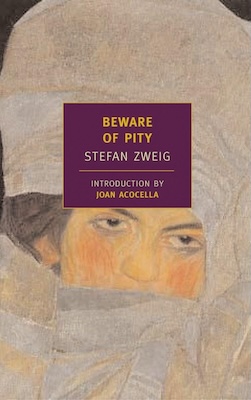
Beware of Pity
In Beware of Pity, Stefan Zweig explores the dangerous consequences of misplaced compassion through a young Austrian officer who becomes entangled in the life of a disabled woman. A profound psychological novel about guilt, duty, and the fine line between genuine empathy and self-serving pity.
1939
6

The Tin Drum
The Tin Drum is narrated by Oskar Matzerath, who recounts his life from a mental institution while reflecting on the turbulent history of Germany before, during, and after the Second World War. Born in Danzig in 1924, Oskar decides at the age of three to stop growing, using his small stature and tin drum to distance himself from the adult world. He also possesses a piercing scream capable of shattering glass. Through his strange perspective, the novel depicts the rise of Nazism, the violence of war, and the moral compromises of ordinary people. Grass combines grotesque humour, fantasy, and historical realism to challenge conventional narratives of innocence and responsibility. Oskar’s unreliable account exposes the contradictions of a society that participated in or tolerated fascism, examining collective guilt, denial, and the difficulty of confronting a traumatic national past.
1959
7
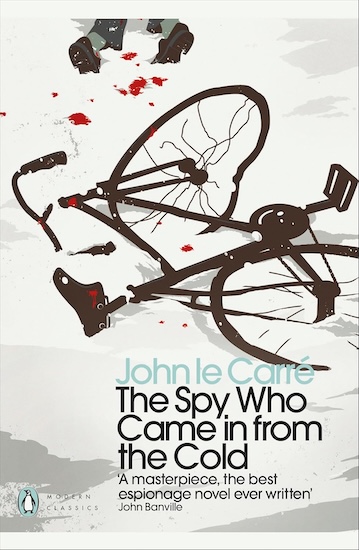
The Spy Who Came in from the Cold
Alec Leamas is a weary British intelligence officer stationed in Berlin during the Cold War. After watching his network of agents collapse, he is ready to leave the dangerous world of espionage behind. But his superior, known as Control, offers him one final assignment: pretend to defect to East Germany and help destroy a powerful figure within the East German intelligence service. To make the deception convincing, Leamas must appear disillusioned, financially desperate, and willing to betray his country.
As he becomes entangled in a carefully constructed web of lies, Leamas discovers that the boundaries between truth and deception are far less clear than he imagined. His growing relationship with Liz Gold, a young British communist, complicates his mission and forces him to confront the human cost of a world in which people are treated as expendable pieces in a political game.
Set against the bleak backdrop of divided Berlin, The Spy Who Came in from the Cold strips espionage of its glamour, revealing a world shaped by moral compromise, manipulation, and betrayal. John le Carré’s landmark novel challenges the idea that intelligence work serves an uncomplicated good, asking what remains of personal conscience when loyalty to the state demands sacrificing everything else.
1963
8

Berlin Game
During the Cold War, British intelligence officer Bernard Samson is accustomed to being overlooked. Now working behind a desk in London after years in the field, he is unexpectedly called back into action when one of Britain’s most valuable agents in East Berlin requests urgent extraction. Known by the codename “Brahms Four,” the agent believes a Soviet mole has infiltrated the highest levels of British intelligence—and that his own life is in immediate danger.
Sent to Berlin, Samson must navigate a labyrinth of double agents, conflicting loyalties, and carefully concealed secrets. His mission is complicated by the suspicion that the betrayal may come from someone within his own professional circle. Meanwhile, his relationship with his ambitious wife, Fiona, who is rising through the intelligence service while his own career stagnates, adds another layer of uncertainty to his already precarious position.
The first novel in Len Deighton’s acclaimed Game, Set and Match trilogy, Berlin Game combines intricate espionage plotting with a sharp portrait of the people behind intelligence operations. Set in a divided Europe where trust is a dangerous luxury, it explores betrayal, professional rivalry, and the personal costs of a life built around secrets.
1983
9
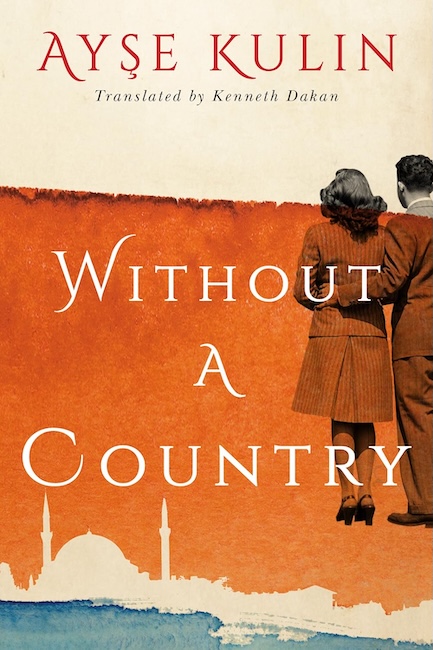
Without a Country
As Hitler’s persecution of Jews intensifies in 1930s Germany, medical professor Gerhard Schliemann and his wife, Elsa, face an impossible choice: remain in the country they call home or flee to protect their family. Their escape leads them to Turkey, where German Jewish academics are offered positions at universities and hospitals as the young republic works to modernise its institutions.
Although the Schliemanns find refuge and the opportunity to rebuild their lives, safety does not guarantee belonging. Across four generations, their descendants navigate political upheaval, military coups, interfaith relationships, and renewed antisemitism. As Turkey itself changes, the family must confront difficult questions about identity, loyalty, and what it means to belong to a country that may never fully accept them.
Spanning nearly a century, Without a Country is a multigenerational saga inspired by the real history of German-speaking Jewish academics who found refuge in Turkey during the Nazi era. Ayşe Kulin explores the complicated relationship between displacement and belonging, showing how the search for a safe home can shape a family’s destiny long after the original refugees are gone.
2016
10

Madonna in a Fur Coat
Madonna in a Fur Coat tells the story of Raif Efendi, a quiet and seemingly unremarkable man whose inner life is revealed through a diary discovered by a colleague. The diary recounts his time in 1920s Berlin, where he meets Maria Puder, an independent and unconventional artist whose portrait captivates him. As their relationship develops, Raif experiences a profound and transformative love that challenges his understanding of himself and human connection. Through themes of loneliness, vulnerability, and emotional restraint, Sabahattin Ali portrays the tragedy of unexpressed feelings and the distance between a person’s outward appearance and inner world. The novel is a poignant reflection on love, missed opportunities, and the lasting impact of a brief but defining relationship.
2020
11
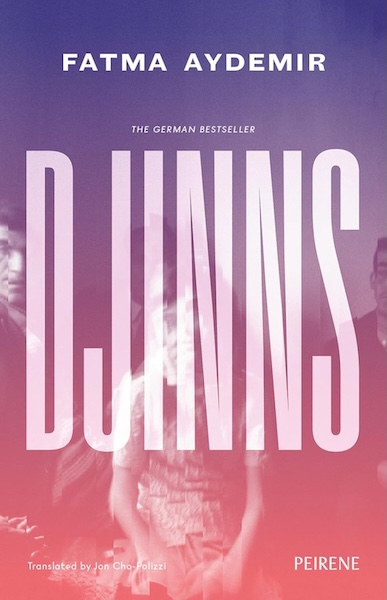
Djinns
Every family has its secrets. Some are buried so deeply that they shape generations before anyone dares to speak them aloud.
After working in Germany for thirty years, Hüseyin Yılmaz finally fulfils his dream of buying an apartment in Istanbul, hoping to spend his retirement in his homeland. But on the very day he moves in, he dies of a heart attack. His wife, Emine, and their four children travel from Germany to Turkey for his funeral, bringing with them years of resentment, unspoken grief, and unresolved questions.
As the story unfolds through the perspectives of each family member, a complicated portrait emerges of a Turkish-Kurdish family navigating life between cultures. A son struggles to understand his sexuality, a daughter wrestles with conflicting identities, and a mother carries painful memories she has never shared. Beneath their everyday conflicts lie deeper wounds shaped by migration, racism, and the expectations of family.
With psychological depth and haunting symbolism, Fatma Aydemir explores the invisible forces that haunt us: inherited trauma, buried memories, and the secrets that pass from one generation to the next. Djinns is a powerful family saga about the longing to be understood—and the ghosts we must confront to find freedom.
2022
12

Kairos
In East Berlin in 1986, nineteen-year-old Katharina meets Hans, a married writer in his fifties, by chance on a bus. Drawn together by their shared passion for music, literature and art, they begin an intense affair that transforms both their lives. Initially filled with excitement and tenderness, their relationship gradually becomes increasingly controlling and destructive, as jealousy, manipulation and emotional cruelty undermine their intimacy. Meanwhile, the world around them is undergoing its own dramatic transformation. As the German Democratic Republic approaches collapse, the political ideals and certainties that have shaped their lives begin to crumble. Erpenbeck intertwines the deterioration of the couple’s relationship with the dissolution of East Germany, creating a powerful parallel between private disillusionment and national upheaval. Through precise, evocative prose, she examines the complicated relationship between love and power, the persistence of nostalgia, and the difficulty of recognising when devotion has become oppression. Winner of the 2024 International Booker Prize, Kairos is both an intimate portrait of a destructive relationship and a profound meditation on history, memory and the cost of holding on to the past
2023