Books from Czech Republic
Suggest a book
All genres
Historical Fiction
Literary Fiction
Fantasy
Romance
Horror
Thriller
Non-Fiction
Mystery
Memoir
Classics
History
Sci-Fi
Contemporary Fiction
Science Fiction
Fiction
Poetry
Essays
Family Saga
Magical Realism
Family Drama
Dark Academia
Psychological Fiction
Dark Comedy
Political Writing
Feminist Fiction
Satire
Campus Fiction
Cultural Studies
Biography
Philosophy
Comedy
Drama
Young Adult
Gothic
Dystopia
Crime
Children's Books
Short Stories
Mythology
Cozy
Retellings
Humour
Adventure
All themes
Love & Passion
Adventure & Journey
Identity & Belonging
War & Conflict
Freedom & Resistance
Family & Heritage
Nature & Landscape
Society & Class
Spirituality & Faith
Solitude & Exile
Coming of Age
Revolution & Change
Friendship
History
Immigration
Myths and Retellings
Colonialism
Women & Society
Mental Health
Motherhood
1
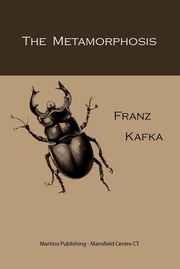
The Metamorphosis
The Metamorphosis follows Gregor Samsa, a travelling salesman who wakes one morning to discover that he has transformed into a gigantic insect. Unable to continue working or communicate normally with his family, Gregor becomes increasingly isolated inside his bedroom. Initially, his family attempts to accommodate his strange condition, but their sympathy gradually gives way to fear, resentment, and exhaustion. As Gregor loses his ability to participate in ordinary life, the family must confront the financial and emotional consequences of his transformation. Kafka combines the fantastic with the mundane to examine alienation, family obligation, and the relationship between personal worth and economic productivity. Gregor’s physical transformation exposes the conditional nature of familial affection and the cruelty of a society that values people primarily for their usefulness. The novella explores the fragility of identity and the devastating consequences of being treated as an outsider.
1915
2
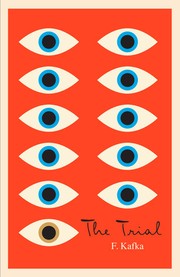
The Trial
The Trial follows Josef K., a bank employee who is unexpectedly arrested one morning without being told what crime he has committed. Although he is allowed to continue his daily life, he becomes increasingly consumed by a mysterious legal process governed by inaccessible authorities and incomprehensible rules. As he attempts to defend himself, he encounters officials, lawyers, and other individuals who offer little clarity about the accusations against him. His efforts to understand the system only deepen his sense of helplessness. Published after Kafka’s death, the novel presents a disturbing vision of a world in which individuals are trapped within institutions they cannot comprehend or challenge. Kafka explores guilt, bureaucracy, power, and alienation, revealing how uncertainty itself can become a form of oppression. Josef K.’s struggle captures the anxiety of confronting an authority that demands obedience while refusing to explain its actions.
1925
3
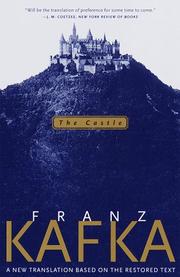
The Castle
The Castle follows a man known as K., who arrives in a remote village claiming to have been hired as a land surveyor by the authorities of a mysterious castle. However, the villagers question his appointment, and K. soon discovers that gaining access to the institution is far more difficult than he imagined. He attempts to establish his legitimacy through conversations with officials, messengers, and residents, but every encounter produces new obstacles and contradictory explanations. The castle remains physically visible yet effectively unreachable, representing an authority that governs people’s lives without making itself accountable. Kafka explores bureaucracy, exclusion, and the human desire for recognition and belonging. The unfinished novel portrays a world where rules seem endlessly complex and acceptance is perpetually deferred, capturing the frustration of individuals attempting to find meaning within systems that resist understanding.
1926
4
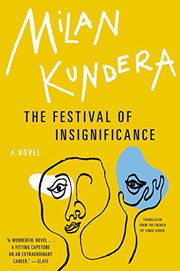
The Festival of Insignificance
The Festival of Insignificance is a playful, philosophical novel in which Milan Kundera explores the absurdity of human existence through the conversations and encounters of four friends in Paris. Alain, Ramón, Charles, and Caliban navigate everyday life while reflecting on vanity, ageing, politics, and the seemingly trivial details that shape human relationships. Their discussions range from the meaning of the human navel to Stalin’s peculiar anecdotes, blending absurd humour with reflections on history, mortality, and the performance of identity. Rather than following a conventional plot, the novel unfolds as a series of interconnected episodes that question humanity’s tendency to assign excessive importance to personal grievances, ambitions, and public events. Kundera suggests that recognising the insignificance underlying much of human life can become a source of freedom, allowing people to approach the world with greater lightness and less resentment. Through irony and philosophical wit, the novel offers a meditation on the fragile boundary between the meaningful and the trivial, inviting readers to reconsider what truly deserves their attention.
2014