Books from Cyprus
Suggest a book
All genres
Historical Fiction
Literary Fiction
Fantasy
Romance
Horror
Thriller
Non-Fiction
Mystery
Memoir
Classics
History
Sci-Fi
Contemporary Fiction
Science Fiction
Fiction
Poetry
Essays
Family Saga
Magical Realism
Family Drama
Dark Academia
Psychological Fiction
Dark Comedy
Political Writing
Feminist Fiction
Satire
Campus Fiction
Cultural Studies
Biography
Philosophy
Comedy
Drama
Young Adult
Gothic
Dystopia
Crime
Children's Books
Short Stories
Mythology
Cozy
Retellings
Humour
Adventure
All themes
Love & Passion
Adventure & Journey
Identity & Belonging
War & Conflict
Freedom & Resistance
Family & Heritage
Nature & Landscape
Society & Class
Spirituality & Faith
Solitude & Exile
Coming of Age
Revolution & Change
Friendship
History
Immigration
Myths and Retellings
Colonialism
Women & Society
Mental Health
Motherhood
1
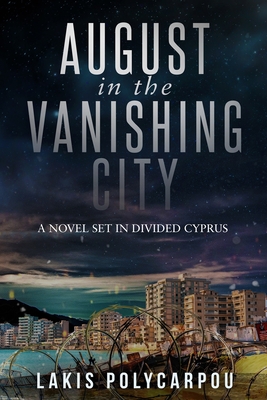
August in the Vanishing City
Set in Cyprus in the mid-1990s, August in the Vanishing City follows Petros, a young Greek Cypriot soldier struggling with love, loss, and the consequences of living on a divided island. Two decades after the Turkish invasion of 1974, the coastal city of Varosha, once a glamorous holiday destination, lies abandoned behind barbed wire and military barriers. For those who were forced to flee, it remains a painful reminder of the homes and lives they lost.
When Petros discovers that Joanna, the woman he has loved since childhood, has fallen for his best friend Elias, he becomes desperate to win her back. His plan leads him to attempt a dangerous journey into Varosha to retrieve a personal keepsake connected to their shared past. Crossing into the restricted city means risking his life, as the area remains under military control.
As Petros navigates the ruins of a vanished world, he must confront not only the dangers surrounding him but also his own ideas about love, loyalty, and what is worth fighting for. His personal struggle unfolds against the broader tensions between Greek and Turkish Cypriots, revealing how political conflict shapes relationships and individual choices.
Combining romance, suspense, and historical context, Polycarpou’s novel explores the meaning of home, the wounds of displacement, and the enduring effects of war on ordinary people. Varosha itself becomes a powerful symbol of interrupted lives and memories that refuse to disappear.
2015
2
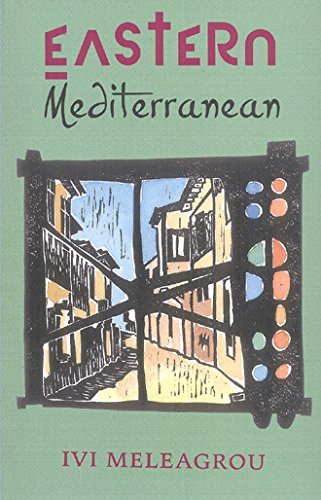
Eastern Mediterranean
Set in Nicosia between 1960 and the beginning of the intercommunal violence in 1963, Eastern Mediterranean portrays Cyprus during the turbulent early years of its independence. Through a cast of interconnected characters, Ivi Meleagrou explores a society caught between hopes for a new national future and the growing tensions threatening to tear it apart.
At the centre of the novel is Margarita, whose relationship with her homeland reflects the emotional and political uncertainty of the period. As the island struggles to define its identity following British colonial rule, longstanding divisions between Greek Cypriots and Turkish Cypriots deepen. Political ideals collide with personal loyalties, while ordinary people find their relationships and everyday lives increasingly shaped by forces beyond their control.
Alongside its portrayal of political upheaval, the novel examines romantic disappointment, marital alienation, and the struggle to preserve one’s sense of self amid collective uncertainty. Meleagrou connects the private lives of her characters with the wider fate of Cyprus, showing how historical events enter homes, reshape relationships, and challenge deeply held beliefs.
First published in Greek in 1969, this landmark work of Cypriot literature offers a nuanced portrait of a society approaching a critical historical turning point. It is particularly significant for its exploration of national identity, political division, and the fragile hopes surrounding independence.
1969