Books from China
Suggest a book
All genres
Historical Fiction
Literary Fiction
Fantasy
Romance
Horror
Thriller
Non-Fiction
Mystery
Memoir
Classics
History
Sci-Fi
Contemporary Fiction
Science Fiction
Fiction
Poetry
Essays
Family Saga
Magical Realism
Family Drama
Dark Academia
Psychological Fiction
Dark Comedy
Political Writing
Feminist Fiction
Satire
Campus Fiction
Cultural Studies
Biography
Philosophy
Comedy
Drama
Young Adult
Gothic
Dystopia
Crime
Children's Books
Short Stories
Mythology
Cozy
Retellings
Humour
Adventure
All themes
Love & Passion
Adventure & Journey
Identity & Belonging
War & Conflict
Freedom & Resistance
Family & Heritage
Nature & Landscape
Society & Class
Spirituality & Faith
Solitude & Exile
Coming of Age
Revolution & Change
Friendship
History
Immigration
Myths and Retellings
Colonialism
Women & Society
Mental Health
Motherhood
1
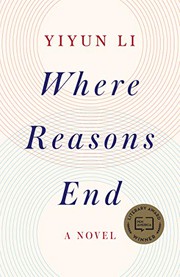
Where Reasons End
Where Reasons End is an intimate, deeply moving novel about a mother’s grief following the death of her teenage son, Nikolai. Unable to accept his absence, the narrator imagines a series of conversations with him in a world suspended between life and death. Through their exchanges, mother and son revisit memories, question language, discuss literature, and reflect on the complexities of their relationship.
Rather than offering simple explanations for an unbearable loss, Yiyun Li explores the limits of understanding and the ways words can both connect people and fail to express what matters most. Their conversations move between tenderness, humour, frustration, and sorrow, revealing the ordinary details that make a relationship unique.
Written in the aftermath of the author’s own loss, the novel blurs the boundaries between fiction and personal experience. It is a profound meditation on motherhood, grief, memory, and the enduring bond between a parent and a child.
2019
2
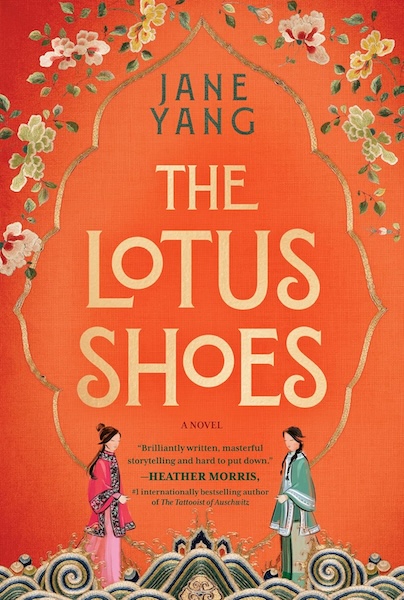
The Lotus Shoes
In nineteenth-century China, bound feet known as “golden lilies” are considered essential to a woman’s marriage prospects and social standing. Little Flower, a talented young girl from a poor family, is sold into servitude as a muizai to Linjing, the privileged daughter of the wealthy Fong family. Despite their unequal positions, both girls possess qualities that could determine their futures: Little Flower has bound feet and an extraordinary gift for embroidery, while Linjing has the family connections and status that Little Flower can only dream of.
Jealous of Little Flower’s talents, Linjing does everything she can to keep her servant under her control. But when scandal destroys the Fong family’s standing, both women are cast out and sent to the Celibate Sisterhood, a community of women who weave silk and seek independence from traditional marriage. There, Little Flower’s embroidery attracts the attention of a nobleman, offering her a possible escape—but also putting her life in danger.
Rich in historical detail, The Lotus Shoes explores female ambition, class divisions, and the restrictive traditions governing women’s lives. Through two women whose relationship shifts between rivalry and solidarity, Jane Yang examines the difficult choices women make to survive and the unexpected ways they can shape one another’s destinies.
2025
3
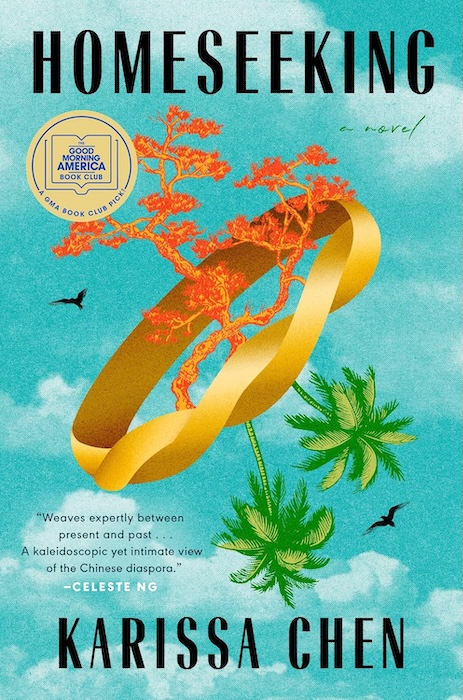
Homeseeking
Homeseeking follows Suchi and Haiwen, childhood sweethearts whose lives are transformed by the political upheavals of twentieth-century China. They first meet in Shanghai, where Haiwen’s violin draws Suchi into his world. Their young love is interrupted when Haiwen joins the Nationalist army in 1947, leaving Suchi behind with little explanation. Over the following decades, war, migration, and changing political circumstances carry them through Hong Kong, Taiwan, and the United States, shaping their lives in different ways. Sixty years later, they unexpectedly encounter one another again in Los Angeles. Chen moves between their perspectives to explore memory, sacrifice, and the meaning of home. The novel examines how historical forces can separate people while emotional attachments continue to endure across distance and time.
2025
4
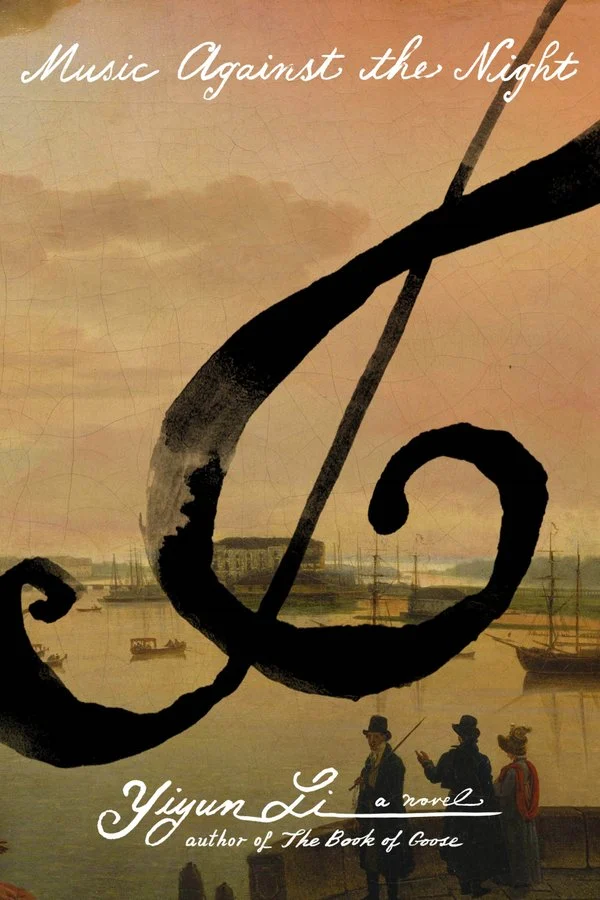
Music Against the Night
Set against the political and cultural upheavals of the late eighteenth and nineteenth centuries, Yiyun Li’s sweeping historical novel follows two gifted musicians whose ambitions take them across continents.
John Field, born in Dublin in 1782, is a musical prodigy whose father dreams of making him the next Mozart. His talent carries him from Ireland to England, France, and eventually Russia, where he becomes a celebrated pianist and composer. He helps popularize the nocturne, a musical form later associated most famously with Frédéric Chopin.
Meanwhile, in Pondicherry, French India, Adelaide Percheron—an orphan raised by her formidable grandmother—discovers her own passion for music. Determined to escape the limitations imposed by her circumstances, she pursues opportunities in Paris and Moscow, striving to build a life beyond the expectations placed upon women of her time.
When their paths eventually converge, John and Adelaide must navigate the complexities of marriage, artistic ambition, and competing desires. Through their intertwined lives, Li examines the price of genius, the exploitation of talent, and the fragile boundary between artistic achievement and personal fulfilment. The novel asks what artists must sacrifice for recognition—and whether their work can outlive the people who create it.
2026
5
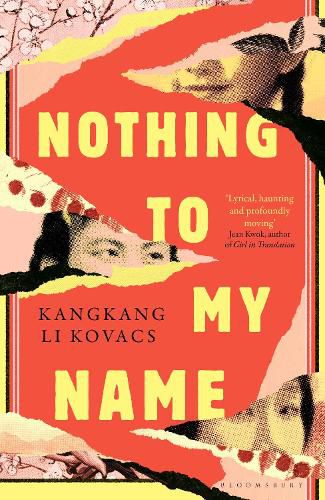
Nothing to My Name
Nothing to My Name is a multigenerational family saga following three Chinese women whose lives are shaped by political upheaval, social expectations, and the enduring bonds between mothers and daughters. Inspired by the author’s family history, the novel spans four decades of modern Chinese history, from the Communist Revolution to the aftermath of the 1989 Tiananmen Square protests.
In 1948, twelve-year-old Ah Xue grows up in a small fishing village in Zhoushan, where her mother earns a modest living combing the hair of wealthy women. As the civil war approaches, their already precarious existence becomes increasingly uncertain. Her daughter, Mimosa, later comes of age during the Cultural Revolution, when political tensions threaten to tear her family apart. In the next generation, Fei struggles with questions of gender identity under the influence of her activist father, whose expectations are shaped by China’s turbulent recent history.
Through these intertwined stories, Kovacs explores the lasting effects of trauma, the sacrifices women make to protect their families, and the ways history echoes across generations. The novel is a portrait of resilience, identity, and the complicated love that binds families together despite profound change.
2026