Books from China
Suggest a book
All genres
Historical Fiction
Literary Fiction
Fantasy
Romance
Horror
Thriller
Non-Fiction
Mystery
Memoir
Classics
History
Sci-Fi
Contemporary Fiction
Science Fiction
Fiction
Poetry
Essays
Family Saga
Magical Realism
Family Drama
Dark Academia
Psychological Fiction
Dark Comedy
Political Writing
Feminist Fiction
Satire
Campus Fiction
Cultural Studies
Biography
Philosophy
Comedy
Drama
Young Adult
Gothic
Dystopia
Crime
Children's Books
Short Stories
Mythology
Cozy
Retellings
Humour
Adventure
All themes
Love & Passion
Adventure & Journey
Identity & Belonging
War & Conflict
Freedom & Resistance
Family & Heritage
Nature & Landscape
Society & Class
Spirituality & Faith
Solitude & Exile
Coming of Age
Revolution & Change
Friendship
History
Immigration
Myths and Retellings
Colonialism
Women & Society
Mental Health
Motherhood
1
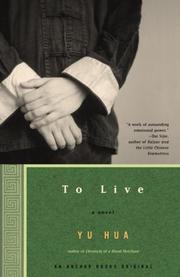
To Live
To Live follows Fugui, the son of a wealthy Chinese landowner whose reckless gambling eventually costs his family its fortune. Forced to abandon his privileged lifestyle, Fugui begins a difficult journey through decades of political and social upheaval in twentieth-century China, including the Chinese Civil War, the Great Leap Forward, and the Cultural Revolution. As the country undergoes profound transformations, Fugui and his family struggle to survive poverty, political persecution, and personal tragedy.
Told through Fugui’s recollections to a travelling folk singer, the novel offers an intimate portrait of ordinary people caught in the forces of history. Despite repeated losses, Fugui continues to endure, finding meaning in the simple act of living. Yu Hua combines stark realism with moments of dark humour and tenderness, exploring family bonds, resilience, and the fragility of human happiness. Ultimately, To Live is a moving reflection on suffering and survival, suggesting that the determination to continue can itself become a form of courage.
1993
2
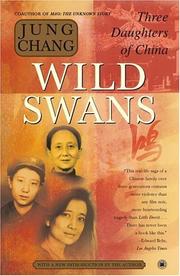
Wild Swans
Wild Swans: Three Daughters of China is a multigenerational memoir tracing the lives of Jung Chang, her mother, and her grandmother against the backdrop of China’s turbulent twentieth-century history. Beginning with her grandmother’s life under imperial rule, the narrative follows her mother’s experiences during the rise of the Communist Party and Chang’s own childhood during the Cultural Revolution. Through their personal stories, the book reveals the profound impact of political upheaval, traditional gender roles, and ideological control on ordinary Chinese families. Chang recounts her family’s experiences of arranged marriage, political persecution, forced labor, and shifting loyalties, illustrating how individual lives become entangled with national history. Combining intimate family memories with historical testimony, the memoir offers a powerful portrait of resilience, sacrifice, and the struggle for personal freedom across three generations of Chinese women.
2003
3
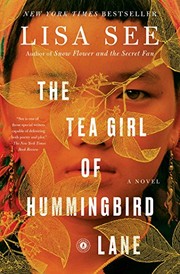
The Tea Girl of Hummingbird Lane
Set in the mountains of Yunnan, China, The Tea Girl of Hummingbird Lane follows Li-yan, a young woman from the Akha ethnic community whose life is shaped by centuries-old traditions surrounding tea cultivation, marriage, and family. When Li-yan gives birth to a daughter outside marriage, she makes the painful decision to leave her baby near an orphanage rather than follow a tradition that threatens the child’s life. The girl, Haley, is adopted by an American family and grows up far from her biological roots. As the years pass, both mother and daughter struggle with questions about their identities and origins. Connected by their shared heritage and the ancient tea trade, their stories explore motherhood, cultural change, adoption, and the enduring bonds between generations.
2017
4
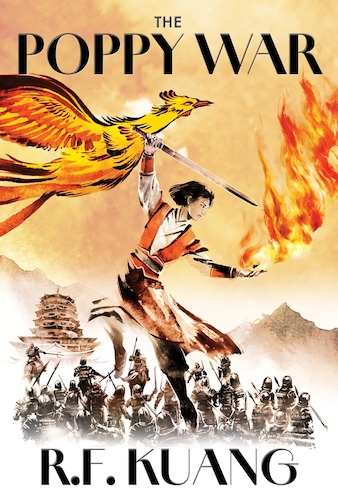
The Poppy War
An orphan from a poor southern province. An elite military academy. A power that could destroy an empire.
When Rin unexpectedly earns a place at Sinegard, the Nikara Empire’s most prestigious military academy, she believes she has finally escaped a future of poverty and forced marriage. But prejudice, relentless training, and the discovery of her extraordinary shamanic abilities soon push her into a world far more dangerous than she imagined. As war threatens to engulf the empire, Rin discovers that the gods are real—and that the power they offer comes at a terrible price. Inspired by twentieth-century Chinese history, particularly the Second Sino-Japanese War, this dark and uncompromising fantasy explores the brutal realities of warfare, the seduction of vengeance, and the devastating consequences of power. Rin must decide what she is willing to sacrifice to protect her people—and what remains of her humanity when survival demands unimaginable choices.
2019
5
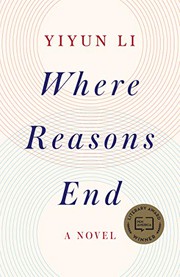
Where Reasons End
Where Reasons End is an intimate, deeply moving novel about a mother’s grief following the death of her teenage son, Nikolai. Unable to accept his absence, the narrator imagines a series of conversations with him in a world suspended between life and death. Through their exchanges, mother and son revisit memories, question language, discuss literature, and reflect on the complexities of their relationship.
Rather than offering simple explanations for an unbearable loss, Yiyun Li explores the limits of understanding and the ways words can both connect people and fail to express what matters most. Their conversations move between tenderness, humour, frustration, and sorrow, revealing the ordinary details that make a relationship unique.
Written in the aftermath of the author’s own loss, the novel blurs the boundaries between fiction and personal experience. It is a profound meditation on motherhood, grief, memory, and the enduring bond between a parent and a child.
2019
6
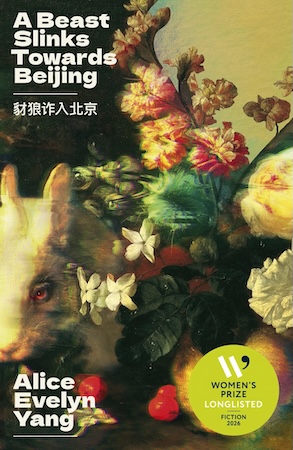
A Beast Slinks Towards Beijing
Spanning three generations and moving between Japanese-occupied Manchuria, the Cultural Revolution, and contemporary America, A Beast Slinks Towards Beijing is a dark, magical-realist family saga about inherited trauma, historical violence, and the stories families carry across generations.
Twenty-five-year-old Qianze has not seen her father, Weihong, since he abandoned her on the night of her fourteenth birthday. Eleven years later, he reappears at her childhood home in Virginia, aged beyond recognition and struggling with dementia and alcoholism. Haunted by a half-forgotten prophecy, he begins recounting his past, including his violent experiences as a Red Guard during the Cultural Revolution and the hardships endured by his mother under Japanese occupation. As Qianze listens, she discovers a family history far more disturbing than she imagined. Strange visions begin to invade her everyday life: fox spirits follow her through the city, and a terrifying mythical creature stalks her nightmares.
Blending Chinese and Japanese folklore with historical fiction and supernatural horror, Yang explores how colonialism, political violence, and family secrets shape successive generations. The novel asks whether understanding the past can offer a path toward forgiveness—or whether some histories continue to haunt the living.
2026
7
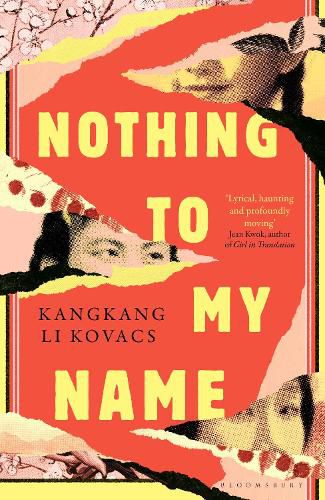
Nothing to My Name
Nothing to My Name is a multigenerational family saga following three Chinese women whose lives are shaped by political upheaval, social expectations, and the enduring bonds between mothers and daughters. Inspired by the author’s family history, the novel spans four decades of modern Chinese history, from the Communist Revolution to the aftermath of the 1989 Tiananmen Square protests.
In 1948, twelve-year-old Ah Xue grows up in a small fishing village in Zhoushan, where her mother earns a modest living combing the hair of wealthy women. As the civil war approaches, their already precarious existence becomes increasingly uncertain. Her daughter, Mimosa, later comes of age during the Cultural Revolution, when political tensions threaten to tear her family apart. In the next generation, Fei struggles with questions of gender identity under the influence of her activist father, whose expectations are shaped by China’s turbulent recent history.
Through these intertwined stories, Kovacs explores the lasting effects of trauma, the sacrifices women make to protect their families, and the ways history echoes across generations. The novel is a portrait of resilience, identity, and the complicated love that binds families together despite profound change.
2026