Books from Australia
Suggest a book
All genres
Historical Fiction
Literary Fiction
Fantasy
Romance
Horror
Thriller
Non-Fiction
Mystery
Memoir
Classics
History
Sci-Fi
Contemporary Fiction
Science Fiction
Fiction
Poetry
Essays
Family Saga
Magical Realism
Family Drama
Dark Academia
Psychological Fiction
Dark Comedy
Political Writing
Feminist Fiction
Satire
Campus Fiction
Cultural Studies
Biography
Philosophy
Comedy
Drama
Young Adult
Gothic
Dystopia
Crime
Children's Books
Short Stories
Mythology
Cozy
Retellings
Humour
Adventure
All themes
Love & Passion
Adventure & Journey
Identity & Belonging
War & Conflict
Freedom & Resistance
Family & Heritage
Nature & Landscape
Society & Class
Spirituality & Faith
Solitude & Exile
Coming of Age
Revolution & Change
Friendship
History
Immigration
Myths and Retellings
Colonialism
Women & Society
Mental Health
Motherhood
1
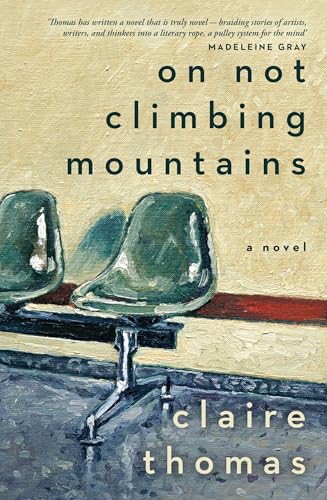
On Not Climbing Mountains
A woman arrives in Geneva, beginning a train journey through Switzerland, the country where her father was born. Seeking solitude and a temporary escape from the demands of ordinary life, she hopes to exist outside the usual rhythms of time. Yet as she travels through snowy landscapes, museums, and historic towns, she becomes immersed in the stories embedded in the places she encounters. She discovers traces of writers and artists including Mary Shelley, James Baldwin, Charlie Chaplin, and Patricia Highsmith, alongside the histories of political revolutionaries, scientific pioneers, and workers who carved tunnels through the Alps. Gradually, these fragments of art, history, and human experience begin to resonate with her own memories and grief. Blending travel writing, historical reflection, and literary fiction, On Not Climbing Mountains is a contemplative novel about the connections between landscape and memory, the fragility of the natural world, and the ways art allows us to encounter lives beyond our own.
2026
2
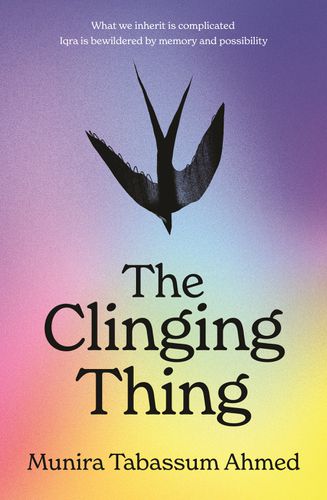
The Clinging Thing
After the loss of a pregnancy, Iqra returns to her mother’s home in the place where she grew up, seeking a way forward while struggling with grief and the weight of memory. As she revisits the stories of her parents and the generations of women who came before her, the boundaries between past and present begin to blur. Memories, dreams, and uncertainties intertwine as Iqra confronts the complicated ties that bind families together.
Set within a Bangladeshi-Australian cultural context, The Clinging Thing explores motherhood, inherited expectations, faith, and the obligations we feel toward those who shaped our lives. Through Iqra’s return to her roots, Munira Tabassum Ahmed examines the tension between honouring family history and finding the freedom to define one’s own future. Poetic and introspective, the novel reflects on grief, intergenerational relationships, and the possibility of discovering wonder even when the future remains uncertain.
2026
3
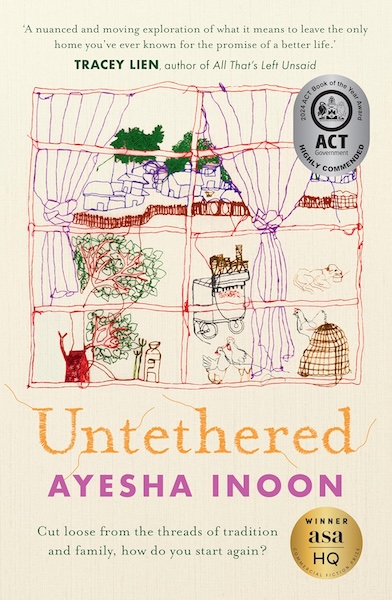
Untethered
Leaving home promises freedom, but what happens when the life you find is more restrictive than the one you left behind?
Zia secretly dreams of going to university, but growing up in a traditional Muslim family in Sri Lanka, she follows expectations and agrees to an arranged marriage with Rashid, a man she barely knows. At first, the security of family wealth and familiar customs softens the difficulties of their relationship. But when political unrest pushes the couple to immigrate to Australia, everything changes.
Far from her family and the life she once knew, Zia faces isolation, financial hardship, and a marriage that becomes increasingly suffocating. The new country offers the promise of independence, yet visa restrictions and unfamiliar social expectations make building a life of her own far more difficult than she imagined. As she discovers friendship, experiences devastating loss, and begins questioning the choices made for her, Zia must decide whether she can find the courage to shape her own future.
Inspired in part by Ayesha Inoon’s experiences as an immigrant Muslim woman, Untethered is a moving exploration of displacement, cultural expectations, and the complicated freedom of starting over. It asks what we must leave behind to discover who we truly are.
2023
4
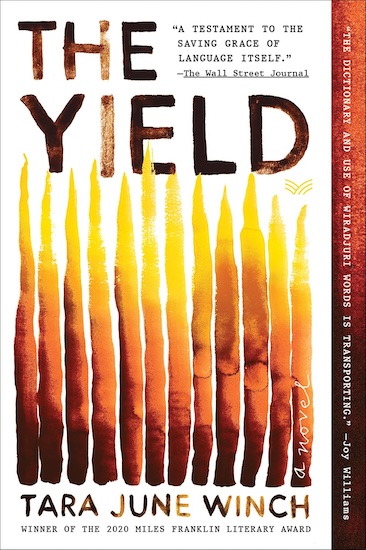
The Yield
In The Yield, Tara June Winch tells the story of Albert Gondiwindi, an elderly Wiradjuri man determined to preserve his people’s language and cultural knowledge before he dies. When Albert passes away, his granddaughter August returns to her family’s home in rural New South Wales after spending ten years in England. Her homecoming brings her face-to-face with painful memories, including the disappearance of her older sister, Jedda, and the colonial history that has shaped her family’s life.
August soon discovers that their ancestral home, Prosperous House, is threatened by a mining company seeking to take over the surrounding land. Determined to protect her family’s heritage, she searches for the dictionary Albert was compiling, a collection of Wiradjuri words and stories that preserves generations of knowledge. His work becomes a vital link to the past, helping August reconnect with her identity and understand the experiences of her ancestors.
The novel unfolds through three interwoven narratives: August’s return, Albert’s dictionary, and the historical account of a missionary whose actions reveal the destructive effects of colonial intervention. Through these different perspectives, Winch explores the connections between language, land, memory, and belonging. The Yield is both a powerful examination of Indigenous dispossession and a celebration of cultural survival, showing how reclaiming language and storytelling can help restore what history has attempted to erase.
2019
5
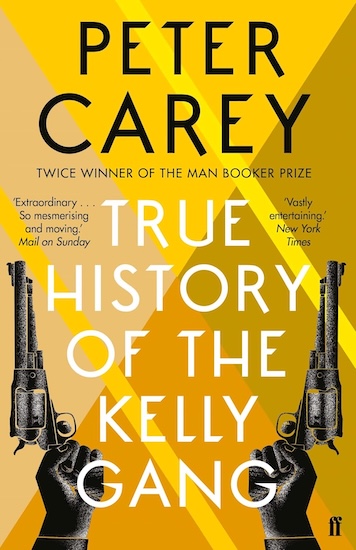
True History of the Kelly Gang
In True History of the Kelly Gang, Australian novelist Peter Carey reimagines the life of Ned Kelly, one of Australia’s most notorious historical outlaws, through a fictional autobiography written in Kelly’s own voice. Growing up in colonial Victoria during the nineteenth century, Ned experiences poverty, discrimination, and repeated confrontations with the authorities. His Irish family is treated with suspicion by the British colonial establishment, and his early encounters with the police help shape his growing resentment of a system he sees as unjust.
As Ned becomes a bushranger, he transforms from a struggling young man into a legendary outlaw whose exploits divide public opinion. To the authorities, he is a dangerous criminal; to some members of the impoverished colonial population, he represents resistance to oppression. Writing his account for the daughter he hopes will one day understand him, Ned attempts to reclaim his story from those who would define him as a villain.
Blending historical events with imaginative storytelling, Carey explores the relationship between truth and myth, the legacy of colonialism, and the ways poverty and injustice can shape a person’s destiny. Written in a distinctive vernacular style, the novel challenges readers to question who has the power to tell history and whose voices are remembered.
2000