Books from Argentina
Suggest a book
All genres
Historical Fiction
Literary Fiction
Fantasy
Romance
Horror
Thriller
Non-Fiction
Mystery
Memoir
Classics
History
Sci-Fi
Contemporary Fiction
Science Fiction
Fiction
Poetry
Essays
Family Saga
Magical Realism
Family Drama
Dark Academia
Psychological Fiction
Dark Comedy
Political Writing
Feminist Fiction
Satire
Campus Fiction
Cultural Studies
Biography
Philosophy
Comedy
Drama
Young Adult
Gothic
Dystopia
Crime
Children's Books
Short Stories
Mythology
Cozy
Retellings
Humour
Adventure
All themes
Love & Passion
Adventure & Journey
Identity & Belonging
War & Conflict
Freedom & Resistance
Family & Heritage
Nature & Landscape
Society & Class
Spirituality & Faith
Solitude & Exile
Coming of Age
Revolution & Change
Friendship
History
Immigration
Myths and Retellings
Colonialism
Women & Society
Mental Health
Motherhood
1
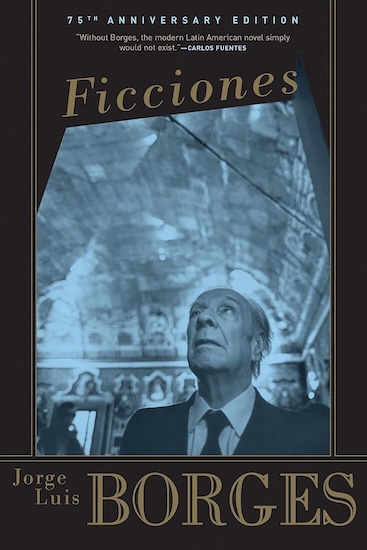
Ficciones
Ficciones is a collection of short stories that transforms philosophical questions into intricate literary puzzles. Across its imagined libraries, fictional encyclopedias, labyrinths, and mysterious texts, Borges explores the nature of reality, time, memory, and human knowledge. In stories such as “The Garden of Forking Paths” and “The Library of Babel,” ordinary concepts become extraordinary intellectual landscapes in which infinite possibilities and impossible structures challenge the reader’s understanding of the universe. Blending detective fiction, fantasy, philosophy, and literary criticism, Borges repeatedly blurs the boundaries between reality and invention. The collection invites readers to question whether the world can ever be fully understood or whether every explanation simply opens the door to another mystery.
1944
2
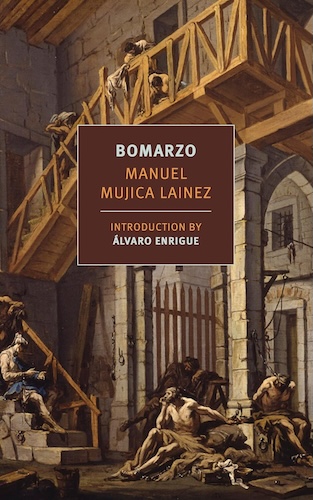
Bomarzo
Set in Renaissance Italy, Bomarzo tells the story of Pier Francesco Orsini, a physically deformed nobleman who becomes the Duke of Bomarzo. Intelligent, sensitive, and deeply conscious of his appearance, he grows up surrounded by cruelty, political intrigue, and family rivalries. Determined to overcome his vulnerabilities and secure his place in a world obsessed with power and beauty, he navigates the dangerous world of Renaissance aristocracy. Narrated from beyond the grave, his story blends historical events with fantasy, philosophical reflection, and dark humor. Through Orsini’s life and his creation of the extraordinary Garden of Monsters, Manuel Mujica Lainez explores mortality, ambition, identity, and humanity’s enduring desire to defy death.
1962
3
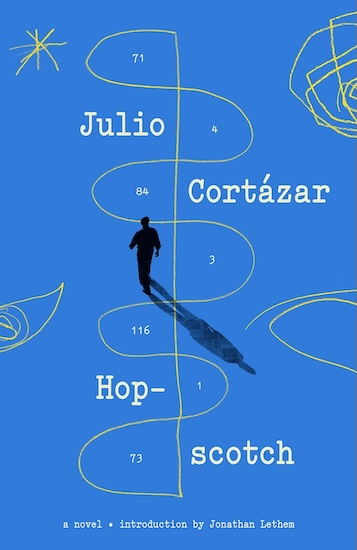
Hopscotch
Hopscotch follows Horacio Oliveira, an Argentine intellectual living in Paris who struggles to find meaning in relationships, art, and everyday existence. His complicated relationship with La Maga, a young Uruguayan woman, forms the emotional centre of a novel that resists conventional storytelling. Cortázar offers readers different ways to navigate the chapters, allowing the narrative to unfold in alternative sequences and challenging the traditional relationship between author and audience. As Oliveira returns to Argentina, his search for understanding becomes increasingly entangled with alienation and uncertainty. The novel explores the limitations of rational thought, the instability of identity, and the desire to discover a deeper reality beneath ordinary experience. Its experimental structure reflects a central question: whether a different way of reading might lead to a different way of living.
1963