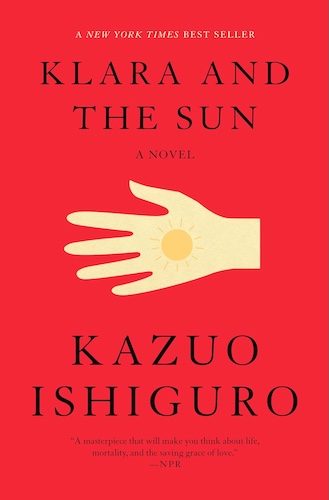
Klara and the Sun
Summary
In Klara and the Sun, Kazuo Ishiguro tells the story of Klara, an Artificial Friend designed to provide companionship to children. From her place in a shop window, Klara carefully observes the world around her, developing a remarkable understanding of human behavior and emotions. When a teenage girl named Josie chooses her as a companion, Klara enters a world shaped by love, illness, family tensions, and technological inequality. Narrated through Klara’s perceptive yet limited perspective, the novel explores what it means to be human and whether love and devotion can transcend the boundaries between artificial intelligence and human life. With quiet poignancy, Ishiguro examines loneliness, mortality, sacrifice, and the human desire to believe in something greater than ourselves.
Reviews
Login to leave a review.
No reviews yet. Be the first!
You might also like





- Published
- 2022
- Author
- Kazuo Ishiguro