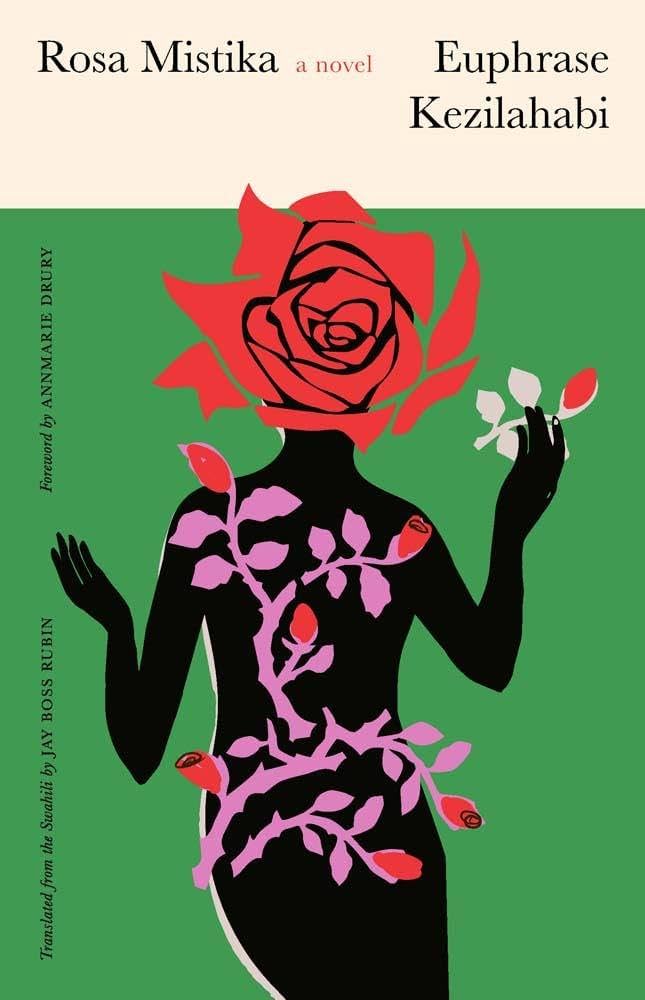
Rosa Mistika
Tanzania

Rosa Mistika

by Euphrase Kezilahabi

Summary

In a rural Tanzanian village, young Rosa grows up in a family where the home offers little protection from cruelty. Her father’s alcoholism and abuse cast a shadow over Rosa and her four younger sisters, while the expectations placed on girls leave them few ways to escape. When Rosa earns a place at a boarding school away from home, she hopes for a fresh start. Instead, she enters a world where sexual desire, manipulation, and unequal power complicate her search for independence. As she learns to navigate the double standards imposed on women, her attempts to gain control over her own life come at a devastating cost. First published in 1971, this groundbreaking novel challenged social and religious conventions in Tanzania, confronting domestic violence, sexual coercion, and women’s autonomy with striking directness.

Reviews

Login to leave a review.

No reviews yet. Be the first!

You might also like
Euphrase Kezilahabi
Euphrase Kezilahabi

Euphrase Kezilahabi (1944–2020) was a celebrated Tanzanian novelist, poet, and academic who transformed modern Swahili literature. Born on Ukerewe Island in Lake Victoria, he studied education and literature at the University of Dar es Salaam before pursuing postgraduate research in African literature and philosophy. Writing primarily in Swahili, Kezilahabi challenged conventional storytelling and introduced existentialist ideas into East African fiction, exploring questions of identity, morality, freedom, and the meaning of life. His first novel, Rosa Mistika (1971), caused controversy for its frank portrayal of sexual violence, religious authority, and women’s experiences; it was banned shortly after publication but later became a landmark of modern Swahili literature. Other important works include Kichwamaji (1974), Dunia Uwanja wa Fujo (1975), Nagona (1990), and Mzingile (1991). He later taught at the University of Botswana, where he served as a professor of African languages. His work remains influential for its literary experimentation and its willingness to question entrenched social values.

View author page
Published
2025
Author
Euphrase Kezilahabi