Ak Welsapar

Ak Welsapar

Turkmenistan

About

Ak Welsapar is a Turkmen-Swedish novelist, poet, and journalist born in 1956 in the former Soviet Republic of Turkmenistan. He studied journalism at Moscow State University, graduating in 1979, and later earned a second master’s degree in literary theory from the Maxim Gorky Literature Institute in Moscow in 1989. His writing addresses political repression, environmental destruction, cultural identity, and the lives of ordinary people under authoritarian rule. Welsapar faced persecution after publishing investigative journalism critical of the authorities and environmental mismanagement in Central Asia. Following a period of house arrest and the banning of his works, he left Turkmenistan in 1993 and settled in Sweden in 1994. Many of his books remain prohibited in his homeland. He writes in Turkmen, Russian, and Swedish and has published more than twenty books, including novels, poetry collections, short stories, and children’s literature. His notable works include The Melon Head, Cobra, and The Revenge of the Foxes. The Tale of Aypi, originally published in Turkmenistan in 2012 and translated into English by W. M. Coulson in 2016, combines folklore and political allegory to examine resistance, injustice, and attachment to one’s homeland. The novel received a Swedish cultural award in 2016, and Welsapar has also been recognised by the International PEN Club and literary organisations in Russia and Ukraine. He continues to live and write in Sweden.

Books on TheBookRoads
1
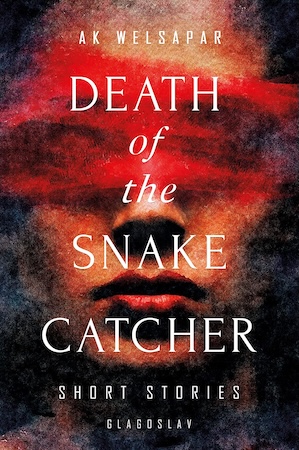
Death of the Snake Catcher
Set against the stark beauty of Central Asia, Death of the Snake Catcher is a collection of short stories by Turkmen writer Ak Welsapar, blending magical realism, folklore, political commentary, and intimate portraits of human life. The title story follows an elderly snake catcher who confronts a giant cobra in the heart of the desert. Their encounter becomes a symbolic dialogue about humanity’s relationship with the natural world, exploring the uneasy balance between fear, power, vulnerability, and survival. Elsewhere in the collection, Welsapar depicts lovers separated by political divisions, young people confronting injustice, and ordinary individuals navigating a world shaped by repression and uncertainty. His stories move between the mythical and the everyday, revealing the emotional richness of Turkmen culture while exposing the pressures faced by people living under authoritarian rule. Drawing on vivid landscapes and expressive storytelling, Welsapar portrays characters who endure hardship with remarkable resilience and optimism. The collection offers an unusual literary window into a country whose culture and experiences remain relatively unfamiliar to many international readers.
2018 Turkmenistan
2
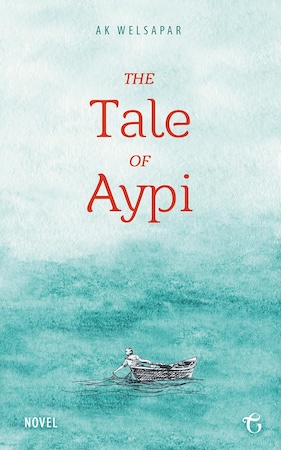
The Tale of Aypi
The Tale of Aypi
On the shores of the Caspian Sea, in a small fishing village in Soviet Turkmenistan, the inhabitants face the threat of losing their ancestral home. The authorities have ordered the community to relocate so that their land can be redeveloped, while a ban on fishing threatens the villagers’ traditional way of life. Most residents reluctantly accept their fate, but Araz, a stubborn and principled fisherman, refuses to surrender the place where his family has lived for generations. As he challenges the authorities, his resistance exposes the fear, conformity, and quiet compromises that allow injustice to flourish. Woven into the contemporary struggle is the haunting legend of Aypi, a beautiful young woman who was unjustly executed centuries earlier. Her restless spirit returns to seek vengeance, linking the village’s buried past with its present crisis. Blending political allegory, folklore, and supernatural elements, Ak Welsapar’s novel explores freedom, cultural identity, and humanity’s enduring connection to the land. It is also a powerful reflection on the consequences of authoritarian rule and the courage required to resist it.
2016 Turkmenistan