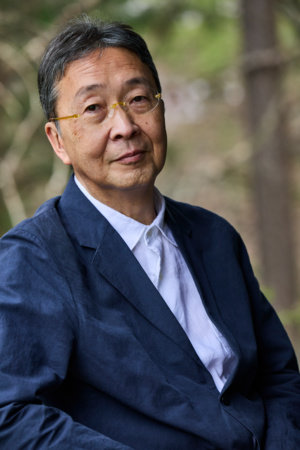
Yoko Tawada

Yoko Tawada

Japan

About

Yoko Tawada is an internationally acclaimed Japanese-German writer born in Tokyo in 1960. After studying Russian literature at Waseda University, she moved to Germany in 1982 and later settled in Berlin. Writing in both Japanese and German, she has developed a distinctive literary voice that explores language, migration, cultural identity, and the boundaries between human beings and the world around them. Tawada’s work spans novels, short stories, poetry, essays, and plays. Her internationally recognised books include The Bridegroom Was a Dog, The Naked Eye, Memoirs of a Polar Bear, and The Emissary, which won the National Book Award for Translated Literature in 2018 in Margaret Mitsutani’s English translation. Her numerous honours include Japan’s Akutagawa Prize, the Tanizaki Prize, Germany’s Goethe Medal, and the Kleist Prize. Known for her playful treatment of language and her ability to make familiar realities seem strange, Tawada is regarded as one of the most original contemporary writers working across linguistic and cultural boundaries. She continues to live in Berlin.

Books on TheBookRoads
1
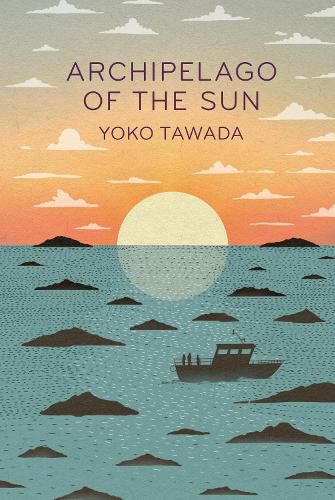
Archipelago of the Sun
In the concluding volume of Yoko Tawada’s imaginative Scattered All Over the Earth trilogy, Hiruko continues her search for her lost homeland, a country that seems to have disappeared from maps and from collective memory. Travelling aboard a mail boat across the Baltic Sea, she is accompanied by an unusual group of companions: Knut, a Danish linguist; Akash, an Indian man exploring gender identity; Nanook, a Greenlander and former sushi chef; Nora, a German museum worker concerned with social justice and the environment; and Susanoo, a mysterious Japanese cook. As the voyage unfolds, unexpected passengers—including figures from literature and mythology—complicate their journey and challenge their understanding of history, nationality and belonging. Blending surrealism, humour and philosophical speculation, Tawada explores how language shapes identity and how people build connections across cultural boundaries. The novel ultimately imagines belonging not as a fixed geographical inheritance, but as something that can emerge through dialogue, storytelling and shared experience.
2026 Japan
2
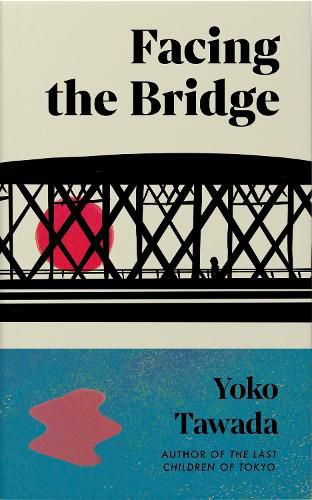
Facing the Bridge
Facing the Bridge
In Facing the Bridge, Yoko Tawada brings together three surreal, interconnected tales that challenge conventional ideas of identity, language, and belonging. Moving between Japan, Germany, Vietnam, and the Canary Islands, these stories follow characters whose lives are shaped by cultural displacement, unexpected encounters, and the strange instability of the world around them. In one tale, Amo, an African boy kidnapped and brought to Europe, and Tamao, a Japanese exchange student in Germany, inhabit different historical periods yet find themselves pursued by the same mysterious shadow. Another follows Kazuko, a young Japanese woman whose journey to Vietnam begins with a mysterious postcard and develops into an unsettling exploration of identity. In the third, an unnamed translator retreats to the Canary Islands, where her attempt to interpret a text becomes entangled with banana groves, literary references, and strange encounters. With dreamlike logic, playful language, and unexpected transformations, Tawada blurs the boundaries between cultures, histories, and realities. The collection explores what happens when familiar categories of nationality, language, and selfhood begin to dissolve. Rather than presenting identity as something fixed, these stories suggest that it is continually reshaped through encounters with other people, places, and languages.
2007 Japan