Inger Christensen
DenmarkAbout
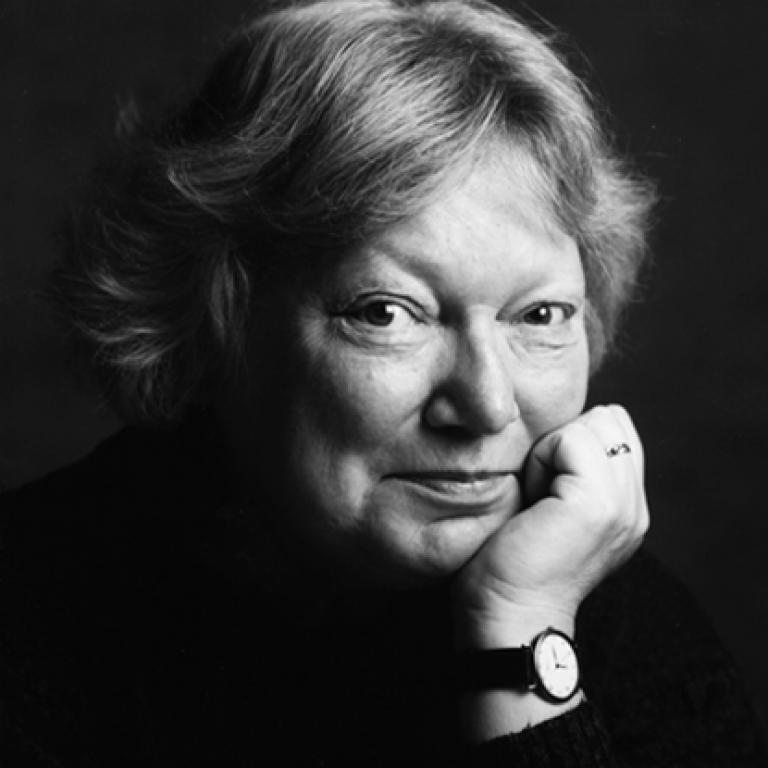
Inger Christensen (1935–2009) was one of Denmark’s most celebrated poets and literary innovators. Born in Vejle, Denmark, she trained as a teacher and began her literary career in the early 1960s. Her writing spans poetry, prose, essays, and experimental fiction, distinguished by its musical language, philosophical depth, and fascination with the relationship between language, nature, and human existence. Christensen became internationally renowned for collections such as it (1969), alphabet (1981), and Butterfly Valley (1991). In alphabet, she combines the alphabet with the Fibonacci sequence to explore the interconnectedness of life, beauty, and destruction. Her work often brings mathematical structures into conversation with ecological concerns and questions about humanity’s place in the universe. Throughout her career, Christensen received numerous prestigious literary honours, including the Nordic Prize of the Swedish Academy and the Austrian State Prize for European Literature. She was a member of the Danish Academy from 1978 and was repeatedly mentioned as a possible Nobel Prize in Literature laureate. Her work has been translated into more than thirty languages and continues to influence poets and writers around the world.