
Denmark

Europe
Denmark
6
books
5
authors

Books from Denmark

1
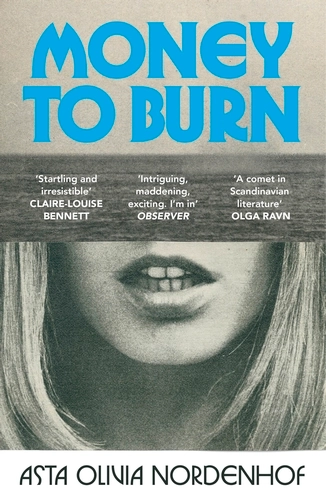
Money to Burn
Money to Burn
Maggie and Kurt live in an old farmhouse in Nyborg, Denmark, struggling to maintain their marriage after their only daughter leaves home. Although they share a life, they seem unable to reach one another, trapped in a relationship shaped by longing, disappointment, and painful silences. As their story unfolds, the novel explores the circumstances that brought them together and the forces that have gradually shaped their lives. Their personal history intersects with one of Scandinavia’s most devastating tragedies: the 1990 fire aboard the passenger ferry Scandinavian Star, which killed 159 people. The disaster, later linked to insurance fraud, becomes a lens through which Nordenhof examines the relationship between private suffering and wider economic systems. Moving between intimate family drama and a broader critique of capitalism, the novel asks whether love can survive in a world where money determines so much of human existence. With fragmented storytelling and emotionally intense prose, Nordenhof explores how economic inequality, gender, and violence shape intimate relationships. Money to Burn is the first instalment in the Scandinavian Star series, an ambitious literary project connecting individual lives with the consequences of greed and exploitation.
2020
2
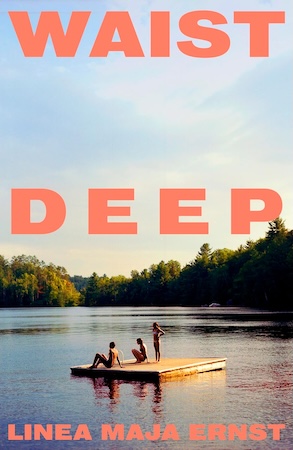
Waist Deep
Waist Deep
Five university friends reunite for seven summer days at a lakeside house in the Danish countryside, hoping to recapture the freedom and intimacy of their younger years. Sylvia, who has always dreamed of a more unconventional way of living, finds herself increasingly disillusioned as her friends arrive with careers, children, and established relationships. The situation becomes even more complicated when Esben, the object of Sylvia’s long-standing crush, announces that he intends to marry Karen at the end of the week. Meanwhile, Sylvia’s relationship with her girlfriend, Charlie, forces her to confront the tension between romantic commitment and her desire for something less conventional. As the friends swim, drink, flirt, and argue beneath the midsummer sky, old attractions resurface and carefully maintained boundaries begin to dissolve. Through their conversations and intimate encounters, Linea Maja Ernst explores the contradictions of adulthood, the changing nature of friendship, and the difficulty of reconciling youthful ideals with the realities of everyday life. Sensual, witty, and emotionally perceptive, Waist Deep asks whether growing up necessarily means abandoning the freedom to imagine a different kind of life.
2024
3
Natalja’s Stories
Natalja’s Stories
Spanning generations of women and moving between Denmark and Russia, Natalja’s Stories is an inventive, surrealist exploration of family history, migration, and the elusive nature of identity. The story begins with Marie, a young woman living in Copenhagen who leaves her home with a Russian admirer and travels to St. Petersburg. As political upheaval engulfs Russia following the Revolution, Marie dies, and her daughter, Natalja, undertakes the journey back to Denmark carrying her mother’s ashes. But Natalja’s story refuses to unfold as a conventional tale of exile and loss. Retold through the memories and imaginations of successive generations, it becomes a shifting narrative filled with mysterious encounters, murders, absurd characters, and unexpected connections. A particularly unsettling figure, Viktor Blanke, appears across the lives of three generations of mothers and daughters, blurring the boundaries between past and present, memory and invention. As the stories accumulate, identities overlap and family history becomes increasingly difficult to distinguish from fiction. Originally published in Danish in 1988 as Nataljas fortællinger, this playful, formally experimental novella challenges familiar narratives about migration and belonging. Christensen combines dark humour, surrealism, and philosophical reflection to suggest that identity is never fixed: we continually reinvent ourselves through the stories we tell about our lives.
2025
4
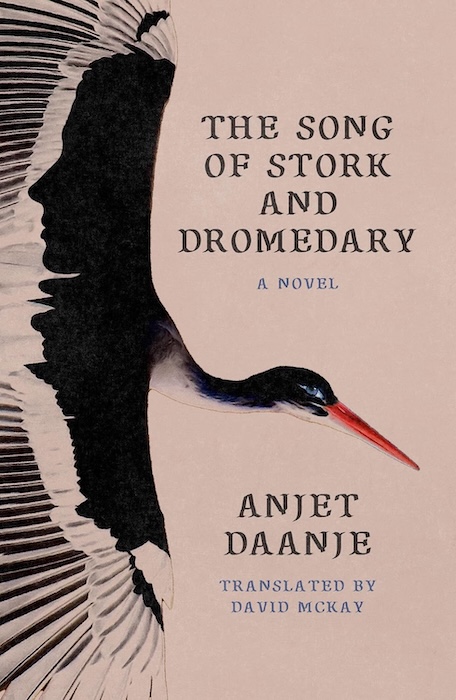
The Song of Stork and Dromedary
Inspired by the lives and literary legacies of the Brontë sisters, The Song of Stork and Dromedary is an intricate literary mystery about an elusive writer whose work continues to fascinate readers long after her death. In nineteenth-century Yorkshire, Eliza May Drayden and her sisters grow up in relative isolation, finding refuge in their shared passion for literature. When Eliza May finally publishes her only novel, Haeger Mass, it is condemned as disturbing and immoral. Yet, over time, the book acquires a devoted following, and its mysterious author becomes the subject of endless speculation. Who was Eliza May Drayden, and what secrets lie within her strange and unsettling work? Told across eleven interconnected narratives spanning almost three centuries, the novel unfolds through letters, biographies, personal recollections, mysterious notebooks, and the lives of people touched by Eliza May’s writing. As each perspective reveals new details, conflicting interpretations emerge, making the truth increasingly elusive. Blending Gothic fiction, historical storytelling, and philosophical mystery, Daanje explores artistic identity, the relationship between an author and her readers, and the human desire to find meaning in stories. Ultimately, the novel reflects on literature’s extraordinary ability to transcend time and mortality.
2026
5
Niels Lyhne
Niels Lyhne
Niels Lyhne follows a young Danish man who grows up dreaming of becoming a poet and struggles to reconcile his artistic ambitions with the realities of adult life. Raised in a world shaped by religious traditions, Niels gradually develops a sceptical worldview, rejecting Christianity in favour of a belief in human reason and the possibility of living without religious faith. Yet his intellectual convictions offer little protection against the emotional turmoil, disappointments, and losses that shape his life. Through Niels’s relationships, artistic aspirations, and encounters with suffering, Jens Peter Jacobsen explores the tension between idealism and reality. The novel examines love, mortality, the limits of human understanding, and the search for meaning in a universe that offers no clear answers. Considered an important work of European naturalism, Niels Lyhne challenges traditional religious beliefs while questioning whether rational thought alone can provide comfort in times of crisis. Its deeply introspective protagonist embodies the struggle to live authentically without relying on spiritual certainty.
1880

Famous authors from Denmark

About Denmark

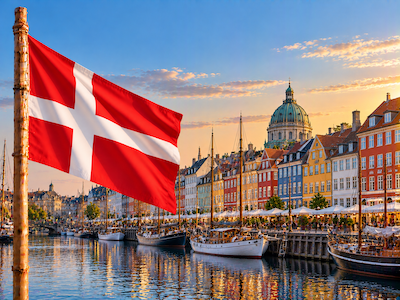
Denmark is a Nordic country of islands, coastal towns, sandy beaches, and gently rolling countryside. Its capital, Copenhagen, is known for colorful harbor houses, historic palaces, cycling culture, and modern Scandinavian design. Danish culture often emphasizes community, simplicity, and everyday comfort, reflected in the concept of hygge—creating warmth and coziness in daily life.

Region
Europe
Literary Context

Danish literature ranges from the fairy tales of Hans Christian Andersen to the philosophical writings of Søren Kierkegaard and the modern novels of Karen Blixen, author of Out of Africa. Andersen’s stories, including The Little Mermaid and The Snow Queen, have become internationally known, while Blixen explored memory, identity, and colonial encounters. Danish literature frequently examines belonging, social expectations, human relationships, and the tension between individual freedom and community.

Europe