Elias Khoury

Elias Khoury

Lebanon

About

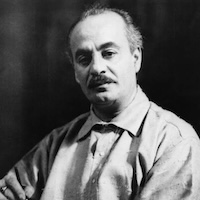
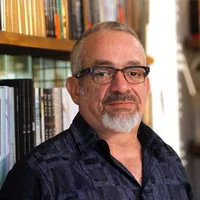
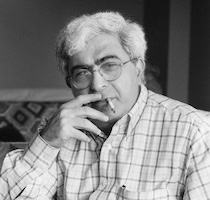
Elias Khoury (1948–2024) was a Lebanese novelist, literary critic, and public intellectual, widely regarded as one of the most significant figures in modern Arabic literature. Born in Beirut, he wrote extensively about memory, displacement, war, and the complex histories of Lebanon and Palestine. His fiction often blends personal narratives with collective history, exploring how political violence shapes individual lives and how stories preserve the experiences of displaced communities. Among his most celebrated works is Gate of the Sun (Bab al-Shams, 1998), an epic novel recounting the Palestinian experience of exile and dispossession through interconnected stories. His other notable novels include Little Mountain (1977), set during the Lebanese Civil War, and Yalo (2002), which examines memory, torture, and the instability of truth. Through experimental narrative structures and richly layered storytelling, Khoury challenged conventional historical narratives and explored the relationship between identity, trauma, and belonging. His literary legacy remains central to contemporary Arabic fiction.

Books on TheBookRoads
1
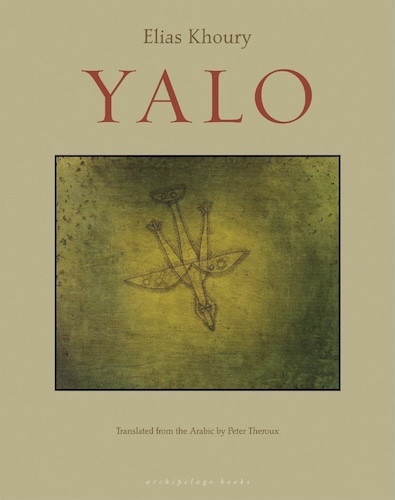
Yalo
Yalo
Set in Beirut in the aftermath of Lebanon’s long civil war, Yalo follows Daniel Habil Abyad, a young Lebanese man of Assyrian Christian background whose life has been shaped by violence, displacement, and fractured family relationships. Known as Yalo, he is arrested and accused of rape and armed robbery, then subjected to brutal interrogation and torture. His interrogators demand a confession, forcing him to write and rewrite the story of his life until his memories become entangled with their expectations. As he revisits his childhood, his troubled relationship with his mother, and his obsessive pursuit of a woman named Shireen, the boundaries between truth, guilt, and imposed identity begin to dissolve. Through this disturbing psychological journey, Elias Khoury examines how violence distorts memory and how authoritarian power can manufacture a person’s identity. Both unsettling and deeply humane, Yalo asks whether we can ever truly understand ourselves when our stories are shaped by fear, desire, and the need to survive.
2015 Lebanon
2
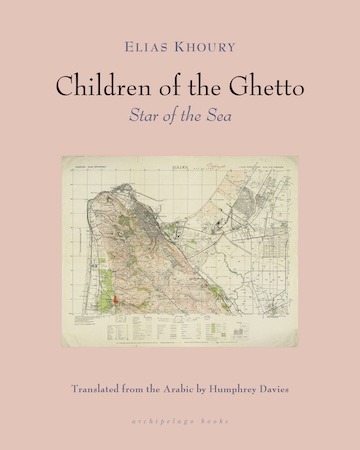
Children of the Ghetto: Star of the Sea
How many lives can one person inhabit before losing sight of who he really is? Adam Dannoun was an infant when the 1948 Nakba tore his family apart and destroyed his childhood home in Lydda, Palestine. Years later, after fleeing an oppressive stepfather, he arrives in Haifa determined to reinvent himself. He becomes Adam Danon, a young man with a fabricated past who claims to be Jewish and born in the Warsaw Ghetto. His new identity offers him a chance to escape his history, but it also traps him in a web of lies, particularly when he falls in love with the daughter of the man who has taken him in. As Adam moves between identities, Elias Khoury explores the devastating consequences of displacement and the impossibility of escaping collective memory. Both a deeply personal story and a sweeping reflection on Palestinian history, this novel asks whether reinvention can ever erase the wounds of the past.
2024 Palestine
3
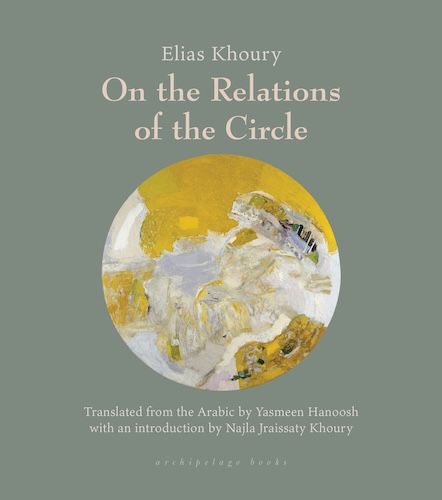
On the Relations of the Circle
In Beirut on the eve of the Lebanese Civil War, a young orphan named Mansour searches for the fragments of his identity: his origins, his family name, and the father he has never known. Yet his journey unfolds in a world where reality and imagination constantly overlap. Birds speak, trees become companions, and ordinary objects seem to possess lives of their own. Through dreamlike episodes, shifting perspectives, and stories that circle back upon themselves, Elias Khoury creates a portrait of a city poised on the edge of catastrophe. Published in 1975, the same year the Lebanese Civil War began, the novel explores how individuals construct their identities amid uncertainty and how storytelling can preserve a sense of belonging when history threatens to destroy it. Both playful and haunting, this experimental work introduces themes that would become central to Khoury’s writing: memory, displacement, fractured identity, and the enduring power of imagination.
2026 Lebanon