Amitav Ghosh

Amitav Ghosh

India

About

Amitav Ghosh is an Indian novelist and essayist celebrated for his historically rich fiction exploring colonialism, migration, cultural identity, and the relationship between humans and the natural world. Born in Calcutta (now Kolkata) in 1956, he grew up across India, Bangladesh, and Sri Lanka, experiences that influenced his interest in interconnected histories and cultures. His novels frequently weave together personal stories and major historical events, examining how imperialism, trade, and displacement shape societies. His notable works include The Shadow Lines (1988), The Glass Palace (2000), and the acclaimed Ibis trilogy, beginning with Sea of Poppies (2008). Ghosh has also become a prominent voice on climate change and environmental history, particularly through The Great Derangement (2016). In 2018, he received the Jnanpith Award, one of India’s highest literary honors.

Books on TheBookRoads
1
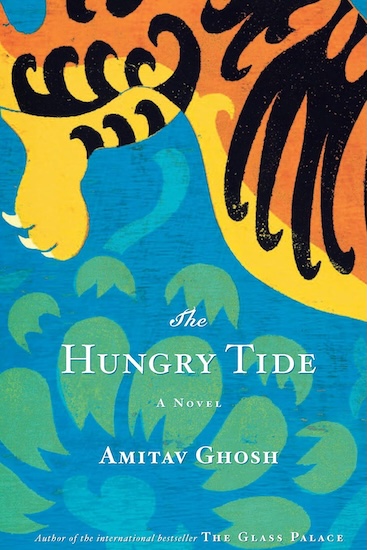
The Hungry Tide
The Hungry Tide
Set in the Sundarbans, a vast archipelago of mangrove forests and tidal rivers on the eastern coast of India, The Hungry Tide brings together three people from different worlds. Piya Roy, an American marine biologist of Indian descent, arrives to study the endangered Irrawaddy dolphins. She meets Fokir, a local fisherman whose intimate knowledge of the waterways makes him an invaluable guide, and Kanai Dutt, a translator and businessman visiting his aunt on the islands. As their lives become intertwined, they encounter the region’s dangerous wildlife, political tensions, and precarious relationship between humans and nature. Through this richly layered story, Amitav Ghosh explores environmental conservation, cultural differences, displacement, and the struggle of vulnerable communities to survive in an unforgiving landscape. The novel examines the complex relationship between people and the natural world, questioning whether scientific knowledge, local traditions, and human ambition can coexist.
2004 India
2
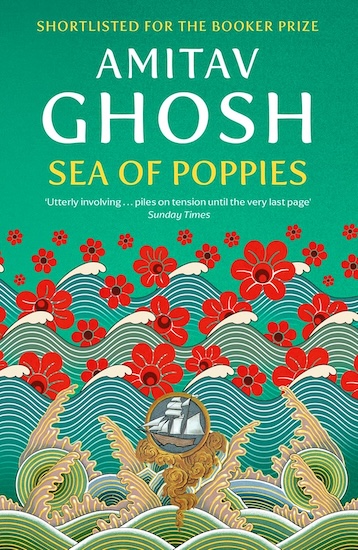
Sea of Poppies
Sea of Poppies
Set in 1838, shortly before the First Opium War, Sea of Poppies follows a diverse group of characters whose lives converge aboard the Ibis, a former slave ship sailing from India to Mauritius. Among them are Deeti, a village woman escaping an oppressive marriage; Kalua, a low-caste ox-cart driver; Neel Rattan Halder, a wealthy landowner facing ruin; and Zachary Reid, an American sailor navigating questions of race and identity. As they journey across the Indian Ocean, these individuals find themselves bound together by circumstances shaped by colonialism, the opium trade, caste discrimination, and economic exploitation. Through their intertwined stories, Amitav Ghosh brings to life a turbulent period in Indian history, revealing how imperial ambitions transform ordinary lives. Blending historical detail, adventure, and rich linguistic diversity, the novel explores displacement, social inequality, and the universal desire for freedom and belonging.
2008 India
3
Gun Island
Gun Island
In Gun Island, Amitav Ghosh follows Deen Datta, a Brooklyn-based Indian rare-book dealer whose fascination with an obscure Bengali legend leads him on an unexpected journey from Kolkata to the Sundarbans and Venice. As he investigates the story of a merchant who escaped the wrath of the snake goddess Manasa Devi, Deen encounters mysterious coincidences, ancient myths, and people whose lives have been transformed by migration and environmental upheaval. Along the way, he witnesses the devastating effects of climate change, including rising seas, extreme weather, and threats to vulnerable communities. Blending folklore, history, and contemporary fiction, Ghosh explores the connections between human migration, ecological crisis, and cultural memory, questioning whether ancient stories might offer new ways of understanding the environmental challenges of the modern world.
2020 India
4
Ghost-Eye
Ghost-Eye
In Ghost-Eye, Amitav Ghosh weaves together reincarnation, family secrets, and environmental concerns across two generations. In 1969 Calcutta, three-year-old Varsha Gupta begins describing memories of a previous life, including a different mother and a home beside a river. Her unusual claims lead her family to Dr. Shoma Bose, a psychiatrist investigating cases of apparent reincarnation. Decades later, Varsha’s case file attracts the attention of environmental activists, drawing Shoma’s nephew Dinu into a search that brings buried memories and unexpected connections to light. Moving between India and contemporary Brooklyn, the novel blends magical realism, mystery, and ecological fiction to explore the relationship between human identity, memory, and the natural world. It raises questions about how lives are interconnected and how humanity’s relationship with the environment shapes both personal histories and collective futures.
2026 India