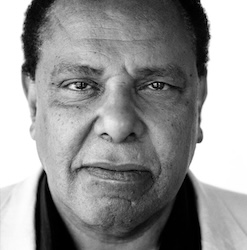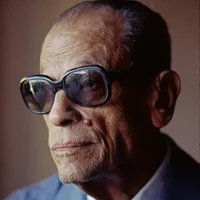
Naguib Mahfouz
EgyptAbout
Egyptian novelist and Nobel laureate (1911–2006), the first Arabic-language writer to win the prize. He wrote over 50 novels and 350 short stories, most set in Cairo's streets and coffeehouses, chronicling Egyptian life across the 20th century.
Books on TheBookRoads
1
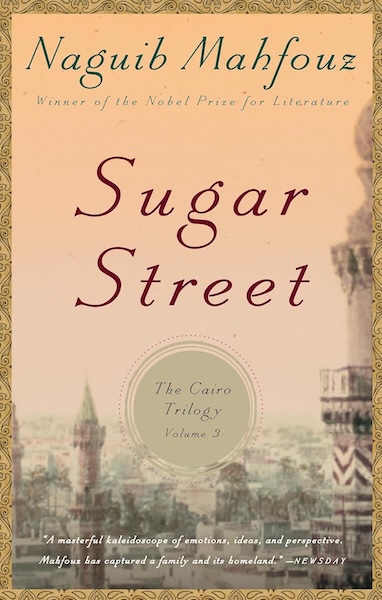
Sugar Street
Sugar Street is the final novel in Naguib Mahfouz’s Cairo Trilogy, following the al-Sayyid family into the 1930s and the political and social changes that reshape Egypt. As the country moves toward greater independence, a new generation emerges with different ideas about religion, politics, and personal freedom. The family patriarch, Ahmad Abd al-Jawad, is now ageing, while his children and grandchildren navigate a world increasingly distant from the traditions that once governed their lives.
The novel focuses on the consequences of these generational shifts, particularly as family members become involved in competing political movements and question established beliefs. Kamal, now a teacher, struggles with disillusionment and the loss of the ideals that once shaped his youth. Through the family’s experiences, Mahfouz examines the rise of nationalism, the appeal of secular thought, and the tensions between religious conservatism and modernity. Set against the lively streets and changing social landscape of Cairo, Sugar Street explores how political transformation influences private lives and how each generation must negotiate the relationship between inherited traditions and an uncertain future.
1957
Egypt
2
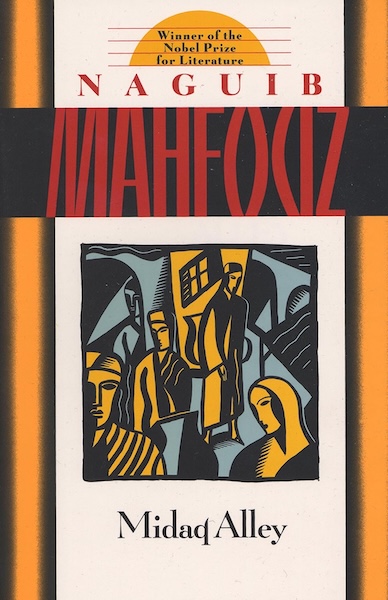
Midaq Alley
Midaq Alley portrays life in a small, crowded alley in Cairo during the Second World War, where shopkeepers, barbers, café owners, and residents struggle to survive amid poverty and social change. At the centre of the story is Hamida, a beautiful and ambitious young woman who dreams of escaping the limitations of her neighbourhood and achieving wealth and independence. Her desire for a different life brings her into conflict with Abbas, a humble barber who hopes to marry her and build a future together.
As Hamida becomes increasingly attracted to the promises of modernity and material success, her choices lead her toward a darker world shaped by exploitation and disillusionment. Meanwhile, the other residents pursue their own ambitions, revealing the contradictions, humour, and hardships of everyday life. Through this interconnected portrait of a Cairo community, Naguib Mahfouz explores class inequality, gender expectations, ambition, and the impact of historical change on ordinary people. The alley becomes a microcosm of Egyptian society, where dreams of escape coexist with the powerful forces that keep people trapped in familiar circumstances.
1947
Egypt