Orhan Pamuk
TürkiyeAbout
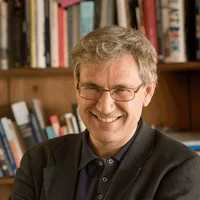
Turkish novelist and Nobel laureate (born 1952) whose work bridges East and West, exploring Istanbul's history and Turkey's cultural identity. He has faced legal prosecution in Turkey for statements about the Armenian genocide and Kurdish deaths.
Books on TheBookRoads
All genres
Historical Fiction
Literary Fiction
Romance
Non-Fiction
Mystery
Memoir
Fiction
Essays
Family Saga
1
Silent House
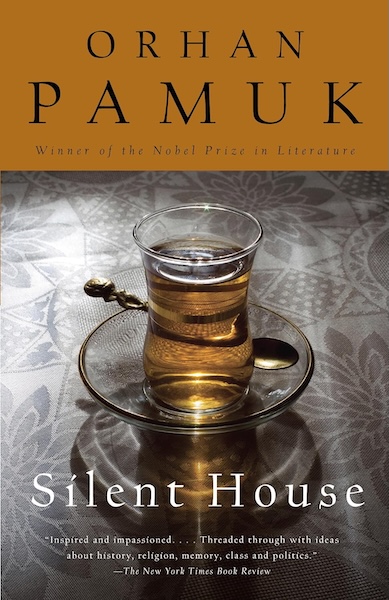
Every summer, three siblings travel to a coastal town near Istanbul to visit their elderly grandmother, Fatma, who lives in a house filled with memories of a vanished world. Their grandfather, a doctor and idealist, built the house decades earlier, but his ambitions and radical ideas left painful marks on the family.
During their visit, the siblings reveal contrasting visions of Turkey’s future. Faruk, a disillusioned historian, struggles with his sense of purpose; Nilgün, a politically engaged young woman, dreams of a more egalitarian society; and Metin longs for wealth and the opportunities he associates with the West. Meanwhile, Fatma’s memories return to a past shaped by resentment, regret, and family secrets.
Set against the political polarisation of late-1970s Turkey, Silent House examines the tensions between generations, social classes, and competing ideologies. Through the voices of its deeply different characters, Pamuk reveals how a family’s private conflicts can mirror the divisions of an entire nation.
1983
Türkiye
2
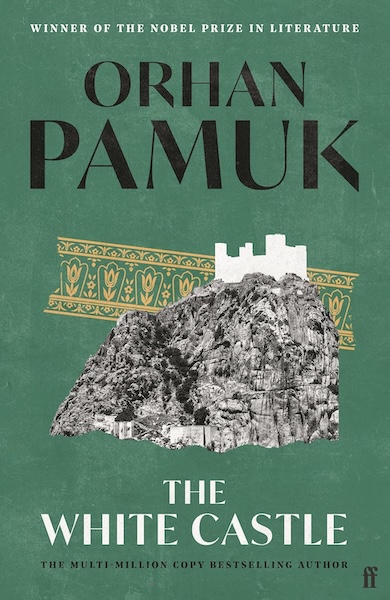
The White Castle
In the seventeenth century, a young Italian scholar travelling from Venice is captured by pirates and taken to Constantinople, where he becomes a slave. His new master, Hoja, is an Ottoman scholar fascinated by Western science and technology. But their relationship becomes increasingly strange when they discover that they look almost exactly alike.
As the Italian teaches Hoja everything he knows about astronomy, medicine, and engineering, their intellectual partnership develops into a psychological struggle. Each man becomes obsessed with understanding the other, probing his memories, fears, and deepest secrets. Gradually, the boundaries between master and slave begin to blur, raising an unsettling question: if two people know everything about each other, can they exchange identities?
Set against the grandeur and brutality of the Ottoman Empire, The White Castle is a philosophical tale about selfhood, cultural differences, and the fragile boundaries separating East from West.
1985
Türkiye
3
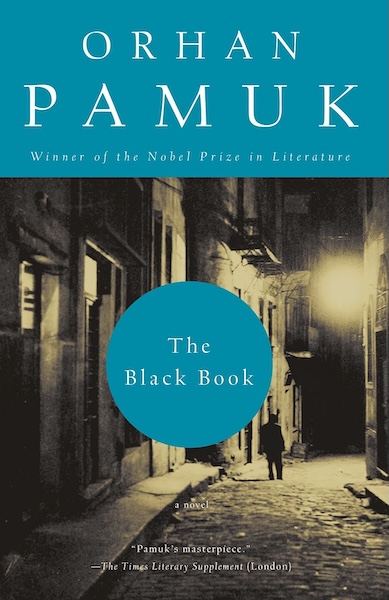
The Black Book
On a snowy day in Istanbul, lawyer Galip discovers that his wife, Rüya, has disappeared. Unable to understand why she has left, he begins searching the city’s crowded streets, old neighbourhoods, and hidden corners for clues. His investigation becomes even more mysterious when he discovers that Rüya’s half-brother, Celâl, a famous newspaper columnist, has vanished too.
As Galip follows the traces they have left behind, he becomes immersed in Celâl’s newspaper columns, which explore Istanbul’s history, its forgotten stories, and the secrets concealed beneath everyday life. The search gradually transforms into something more profound: a journey through the city’s collective memory and Galip’s own uncertain identity.
Blending mystery, philosophical reflection, and a vivid portrait of Istanbul, The Black Book explores the desire to become someone else and the difficulty of knowing who we really are. Pamuk transforms the city into a labyrinth of stories in which the search for a missing person becomes a search for the self.
1990
Türkiye
4
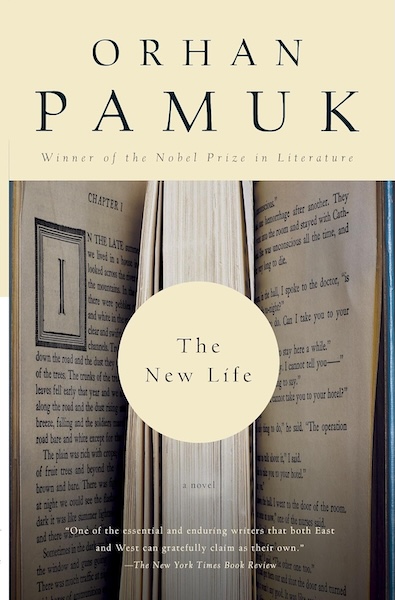
The New Life
“One day I read a book, and my whole life changed.”
With this extraordinary declaration, university student Osman begins a journey that will pull him away from everything familiar. After reading a mysterious book, he becomes convinced that its pages contain the promise of another existence—a hidden world waiting just beyond the boundaries of ordinary life. Captivated by its message, Osman abandons his studies and sets out to discover the transformation it promises.
He is joined in his search by Canan, a fellow student who has also been profoundly affected by the book. Their journey takes them across Turkey on endless bus rides through provincial towns and anonymous highways, where strange encounters and sudden accidents blur the line between reality and illusion. As Osman searches for the book’s secrets, his quest becomes increasingly entangled with love, obsession, and the possibility that his old identity is disappearing.
Part philosophical mystery and part surreal road novel, The New Life explores the power of literature to transform—and sometimes consume—the lives of its readers. Pamuk questions whether we can truly escape our former selves or whether the search for a new life is itself another form of illusion.
1994
Türkiye
5
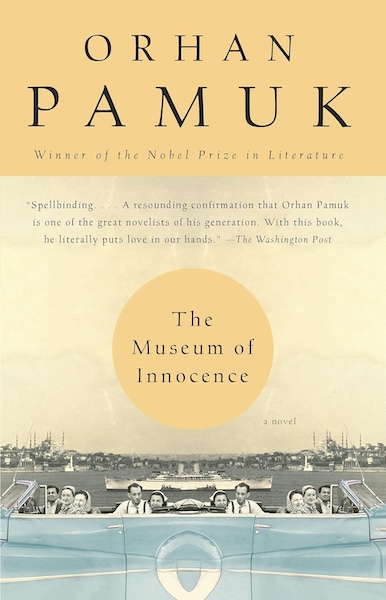
The Museum of Innocence
Istanbul, 1975. Kemal, the privileged son of a wealthy family, is preparing to marry Sibel, a woman who belongs to his own sophisticated social circle. But a chance encounter with Füsun, a beautiful young shop assistant and distant relative, sets his carefully ordered life on an unexpected course. Their passionate affair soon becomes complicated by social conventions, class divisions, and the expectations placed on women in a rapidly modernising Turkey.
When Füsun disappears from his life, Kemal begins collecting objects connected to her: earrings, hair clips, cigarette butts, and countless other seemingly insignificant things. Each item becomes a vessel for memory, allowing him to preserve moments that time would otherwise erase. Over the years, his collection grows into an extraordinary personal museum, reflecting both his devotion and his inability to let go.
Spanning decades of Istanbul’s social and cultural transformation, The Museum of Innocence is a richly layered exploration of love, obsession, memory, and longing. Nobel Prize-winning author Orhan Pamuk transforms ordinary objects into fragments of a vanished world, asking whether preserving the past can bring happiness—or merely keep us imprisoned within it.
2008
Türkiye
6
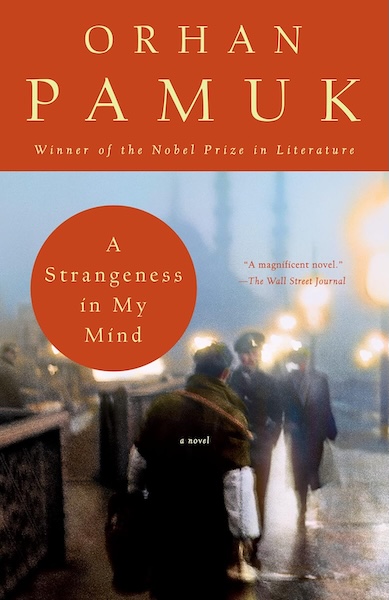
A Strangeness in My Mind
In 1969, twelve-year-old Mevlut leaves his village in central Anatolia and arrives in Istanbul, a city expanding so rapidly that familiar streets and entire neighbourhoods seem to disappear almost overnight. Hoping to build a better life, he works alongside his father selling boza, a traditional fermented drink, on the city’s streets. Over the years, he takes on different jobs, falls in love, marries, and raises a family while watching Istanbul transform around him.
Mevlut is neither a great success nor a complete failure. While others grow wealthy from the city’s rapid development, he remains an outsider in a place he has called home for decades. Even as his life changes, he continues to wonder about the peculiar feeling inside him—a sense that the world he inhabits never quite matches the world he imagines.
Spanning more than forty years, A Strangeness in My Mind is a sweeping portrait of urban migration, ordinary working lives, and the transformation of modern Istanbul. Through Mevlut’s quiet resilience, Pamuk explores love, social mobility, and the search for belonging in a city that is always becoming something new.
2014
Türkiye
7
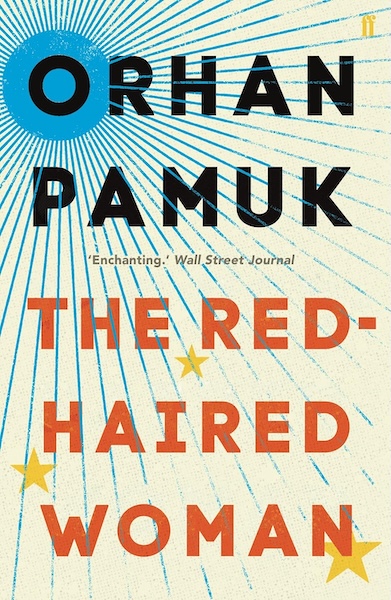
The Red-Haired Woman
In the mid-1980s, teenage Cem leaves Istanbul to work as an apprentice to Mahmut, an experienced well-digger. Together, they travel to a small town outside the city, where they labour to find water in the dry earth. As they work, Mahmut becomes a father figure to Cem, teaching him practical skills and sharing stories that shape the young man’s understanding of the world.
One summer, Cem encounters a mysterious red-haired woman performing with a travelling theatre troupe. Fascinated by her, he becomes entangled in an experience that will haunt him for decades. A terrible incident at the well changes the course of his life, and years later, when Cem has become a successful businessman, the past returns with consequences he could never have anticipated.
Drawing on the ancient myths of Oedipus and Rostam and Sohrab, The Red-Haired Woman explores fathers and sons, guilt, authority, and the forces that shape our destinies. It is a compact, unsettling novel about the stories we inherit and whether we can ever escape them.
2016
Türkiye
8
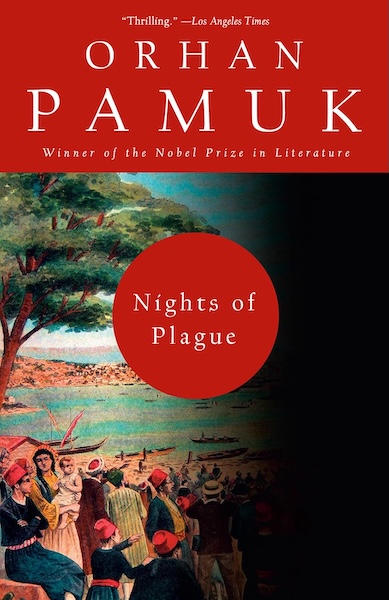
Nights of Plague
In 1901, a deadly plague reaches Mingheria, a fictional island in the eastern Mediterranean and the twenty-ninth province of the declining Ottoman Empire. Home to both Muslim and Greek Orthodox communities, the island is already divided by religious tensions and political rivalries. As the epidemic spreads, the Ottoman authorities send experts to impose quarantine measures, but suspicion, resistance, and competing loyalties threaten to undermine every attempt to contain the disease.
When a mysterious murder complicates the crisis, the island descends into a struggle involving religious leaders, government officials, scientists, and ordinary people desperate to survive. As the Ottoman administration loses control, the epidemic becomes a catalyst for rebellion and the emergence of a new national identity.
Blending historical epic, detective story, and political satire, Nights of Plague explores how fear reshapes societies and how crises expose the fragility of authority. Through an imagined history of an Ottoman island, Pamuk examines nationalism, religious conflict, scientific reasoning, and the human tendency to choose ideology over evidence.
2021
Türkiye