About

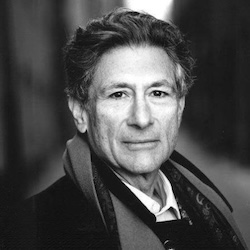
Edward W. Said (1935–2003) was a Palestinian-American literary critic, professor, and public intellectual. Born in Jerusalem and raised between Jerusalem and Cairo, he moved to the United States for his education, studying at Princeton and Harvard. In 1963, he joined Columbia University, where he became a leading scholar of comparative literature. Said became internationally known for examining the relationships between literature, culture, politics, and imperialism. His most influential work, Orientalism (1978), challenged the ways Western scholarship and cultural production represented the Middle East and helped establish postcolonial studies as a major field of academic inquiry. Beyond his academic career, Said was a prominent advocate for Palestinian rights and wrote extensively about Palestine, exile, and the Israeli-Palestinian conflict. His other major works include The Question of Palestine (1979), Covering Islam (1981), Culture and Imperialism (1993), and his memoir, Out of Place (1999). Said died in New York City in 2003. His work continues to influence literary criticism, history, cultural studies, and debates about colonial legacies and the power to represent other societies.

Books on TheBookRoads
1
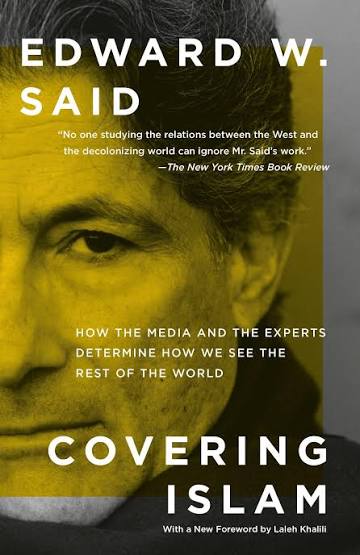
Covering Islam
Covering Islam
How does the media shape what the world believes about Islam? In Covering Islam, Edward W. Said investigates how Western news organisations, academics, and political commentators represent Islam and Muslim societies. He argues that media coverage often reduces diverse communities to simplified images associated with extremism, conflict, and political threat, obscuring the complexity of their histories and everyday lives. Said explores the relationship between knowledge, media institutions, and political power, asking readers to question who gets to define another culture and whose perspectives are excluded. The book remains an important study of representation, stereotyping, and the influence of public narratives on international understanding.
1981 Palestine United States
2
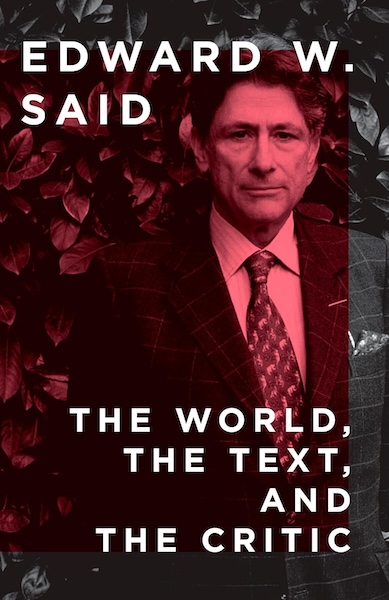
The World, the Text, and the Critic
Can literature ever be separated from the world in which it is created? In The World, the Text, and the Critic, Edward W. Said challenges the idea that literary works should be understood independently of their historical and political contexts. Through a series of essays, he examines the relationship between literature, intellectual life, institutions, and social power. Said introduces the idea of worldliness: texts are produced within particular historical circumstances and participate in the societies around them, whether their authors acknowledge it or not. He also considers the critic’s responsibility to question established assumptions rather than simply reinforce dominant ideas. This influential collection explores how literary criticism can become a form of intellectual independence and public engagement.
1983 Palestine United States
3
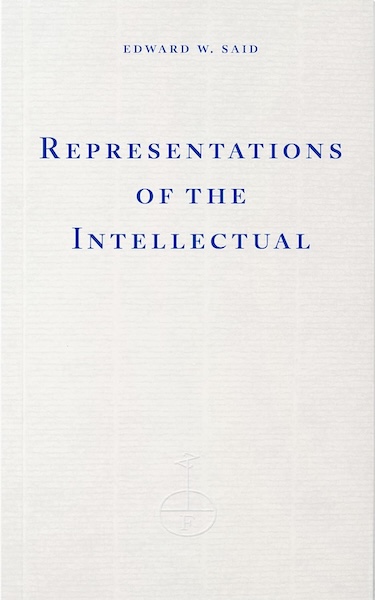
Representations of the Intellectual
Should intellectuals challenge those in power, even when doing so threatens their careers, reputations, or personal safety? Based on his 1993 BBC Reith Lectures, Representations of the Intellectual explores the role of the thinker in public life. Edward W. Said argues that intellectuals have a responsibility to question accepted wisdom, resist political and institutional pressure, and speak honestly about injustice—even when their views are unpopular. Drawing on figures such as Theodor Adorno and Jonathan Swift, as well as contemporary political events, Said examines the dangers of allowing expertise, ambition, nationalism, or financial interests to silence independent thought. He presents the intellectual as an outsider who must remain willing to challenge authority rather than simply serve it. Passionate and provocative, this short collection asks what it means to preserve intellectual independence in a world shaped by powerful institutions and competing interests. It remains a compelling reflection on the relationship between knowledge, conscience, and public responsibility.
1994 Palestine United States