Ričardas Gavelis
LithuaniaAbout
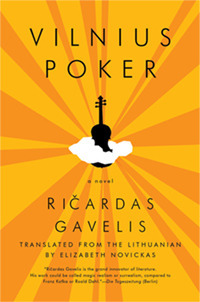
Ričardas Gavelis (1950–2002) was a Lithuanian novelist, playwright, journalist, and essayist, widely regarded as one of the most influential writers in modern Lithuanian literature. Born in Vilnius, he studied theoretical physics at Vilnius University, graduating in 1973. He subsequently worked at the Institute of Physics and Mathematics before moving into journalism and literary writing. Gavelis began publishing short stories in the 1970s, but his work increasingly challenged the conventions of Soviet-era literature. Rather than conforming to socialist realism, he explored psychological instability, moral ambiguity, sexuality, violence, and the nature of evil. His writing often combines intellectual precision with surreal imagery, fragmented narration, and dark humour to examine how political systems shape individual consciousness. His best-known novel, Vilnius Poker (1989), broke new ground in Lithuanian literature through its uncompromising portrayal of Soviet repression and its experimental narrative structure. The city of Vilnius recurs throughout his later works, becoming almost a character in its own right and a symbol of the historical and psychological forces that shape human lives. Other notable novels include Memoirs of a Life Cut Short and Vilnius Jazz. Although Gavelis died in Vilnius in 2002, his work continues to attract international attention. His novels are valued for their willingness to confront uncomfortable aspects of Lithuanian history and for their exploration of the relationship between political oppression, personal identity, and the limits of truth. Vilnius Poker, translated into English by Elizabeth Novickas in 2009, introduced a wider international readership to his distinctive literary vision.