Lithuania
Europe
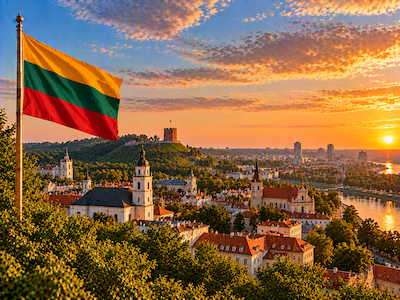
Lithuania is the largest of the Baltic states, stretching from the Baltic Sea coast and Curonian Spit to forests, lakes, rivers, and gently rolling countryside. Vilnius, the capital, is known for its historic Old Town, baroque architecture, and multicultural heritage, while cities such as Kaunas and Klaipėda reflect different chapters of the country’s history. Lithuanian culture has been shaped by Baltic traditions, Christianity, the Grand Duchy of Lithuania, and centuries of interaction with neighboring Central and Eastern European cultures.
Lithuanian literary culture has deep roots in folk songs, legends, mythology, and oral storytelling. Traditional dainos—folk songs dealing with nature, family, work, love, and seasonal rituals—remain an important part of Lithuanian cultural heritage. Written literature developed largely in Lithuanian from the 16th century onward, alongside religious and scholarly works. A central figure of Lithuanian literature is Kristijonas Donelaitis, whose 18th-century poem The Seasons is considered one of the foundations of Lithuanian literature. Later writers such as Maironis, Žemaitė, Vincas Krėvė, and Vincas Mykolaitis-Putinas explored national identity, rural life, social change, and the relationship between tradition and modernity. Contemporary Lithuanian literature often engages with occupation and historical memory, exile, identity, family, migration, and the changing relationship between Lithuania and Europe.