About

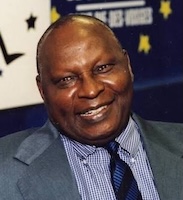
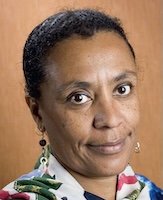
GauZ’ (born Armand Patrick Gbaka-Brédé in 1971) is an Ivorian novelist, journalist, screenwriter, photographer, and filmmaker known for his sharp social criticism and satirical approach to contemporary African and European society. Born in Abidjan, Côte d’Ivoire, he studied biochemistry before moving to Paris in 1999, initially to continue his studies. While living in France as an undocumented migrant, he worked in various jobs, including as a security guard in luxury retail stores. This experience later became the foundation for his acclaimed debut novel, Standing Heavy. GauZ’ draws on his experiences between Côte d’Ivoire and France to explore immigration, colonial legacies, racism, labour, and economic inequality. His writing often combines humour and irony with incisive observations about power and social class. Rather than presenting migration solely through suffering, he uses satire to reveal the contradictions of consumer culture and the complex relationships between African societies and former colonial powers. His debut novel, originally published in French as Debout-Payé in 2014, won the Prix des libraires Gibert Joseph. Its English translation, Standing Heavy, was shortlisted for the 2023 International Booker Prize. His subsequent works include Comrade Papa (2018), which received the Grand Prix littéraire d’Afrique noire, and Black Manoo (2020). Alongside his literary career, GauZ’ has written screenplays and documentaries and served as editor-in-chief of the satirical economic newspaper News & co. He returned to Côte d’Ivoire after years in France and continues to explore the country’s history, politics, and cultural identity through his multidisciplinary work.

Books on TheBookRoads
1
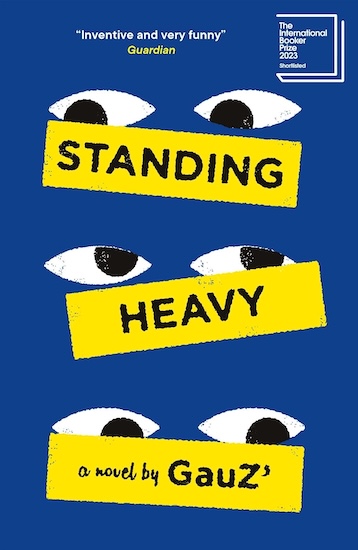
Standing Heavy
Standing Heavy
Set in Paris, Standing Heavy is a witty, politically charged novel about African immigrants working as security guards in a society that often overlooks their presence. Through the interconnected experiences of Ferdinand, Ossiri, and Kassoum, three men from Côte d’Ivoire navigating life in France across different decades, Gauz’ explores the realities of undocumented work, racial discrimination, and the enduring consequences of colonialism. Drawing on the security guards’ observations of shoppers, wealthy passers-by, and everyday consumer habits, the novel exposes the contradictions of a society where the people responsible for protecting luxury stores remain largely invisible themselves. Its narrative moves between the 1960s, 1990s, and 2010s, connecting individual lives to France’s changing immigration policies and its complicated relationship with Africa. Combining sharp humour, social observation, and historical reflection, Gauz’ challenges conventional ideas about belonging, labour, and power. The novel offers a distinctive perspective on the immigrant experience, showing how those positioned at the margins of society can see its inequalities more clearly than those at its centre. It was shortlisted for the 2023 International Booker Prize.
2022 Côte d’Ivoire (Ivory Coast) France
2
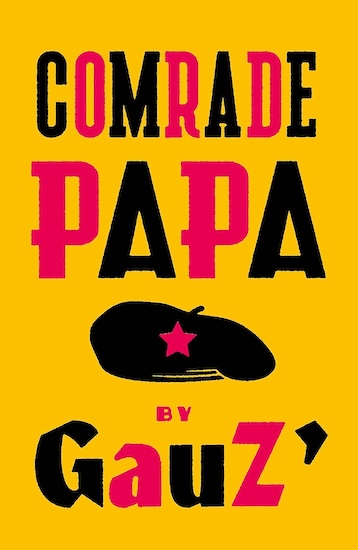
Comrade Papa
Comrade Papa
In Comrade Papa, Ivorian writer Gauz’ weaves together two stories separated by a century to examine colonialism, political ideology, and the complicated connections between Africa and Europe. In 1880, Maxime Dabilly, a young Frenchman grieving the deaths of his parents, leaves France in search of adventure and joins a colonial expedition into Côte d’Ivoire. As he travels deeper into African territory, he becomes involved in the establishment of French trading routes and encounters the people whose lives and lands are about to be transformed by European expansion. Nearly a century later, Anouman, a Black boy growing up in Amsterdam in a family of committed communists, is raised by a father who teaches him to oppose capitalism and imperialism. When family circumstances bring him to Côte d’Ivoire to live with his grandmother, he begins discovering his African heritage and unexpected connections to the past. Through these parallel coming-of-age stories, Gauz’ uses irony, humour, and contrasting perspectives to challenge conventional narratives of colonial history. The novel explores how ideology shapes identity, how colonial power affects generations, and how personal histories can reveal the enduring consequences of imperialism.
2024 Côte d’Ivoire (Ivory Coast)