Women & Society
All countries
Afghanistan
Bangladesh
Barbados
China
Egypt
El Salvador
India
Iraq
Ireland
Jordan
Lebanon
Nigeria
Pakistan
Palestine
Saudi Arabia
Singapore
Sweden
Tanzania
Türkiye
Uganda
United Arab Emirates
United Kingdom
United States
1
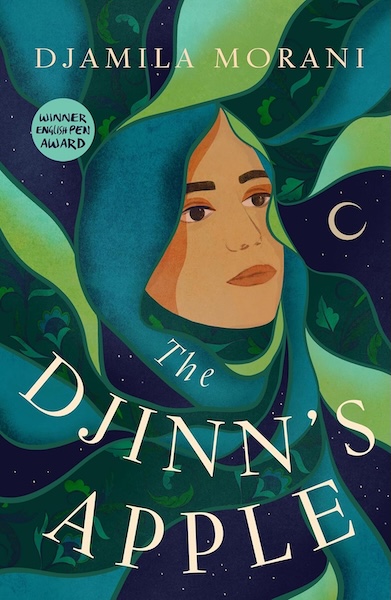
The Djinn's Apple
In the golden age of Baghdad, a young girl must transform her grief into the strength to uncover a deadly secret.
Twelve-year-old Nardeen Baramika dreams of becoming a doctor, an extraordinary ambition for a girl living in the Abbasid Caliphate. But when armed men storm her family home, she escapes while the rest of her family are murdered. Suddenly alone, Nardeen discovers that their deaths may be connected to a mysterious manuscript—and a powerful man determined to keep its secrets hidden.
Taken under the protection of a respected medical scholar, Nardeen begins studying medicine while secretly pursuing justice for her family. As she navigates a world of political intrigue, dangerous alliances, and shifting loyalties, she must decide whom she can trust and how far she is willing to go for revenge.
Blending historical mystery with the atmosphere of medieval Baghdad, The Djinn’s Apple follows a determined young heroine who refuses to let tragedy dictate her future. It explores knowledge, ambition, and the courage required to challenge the expectations imposed on women. Originally written in Arabic, the novel was translated into English by Sawad Hussain.
Iraq
2017
2
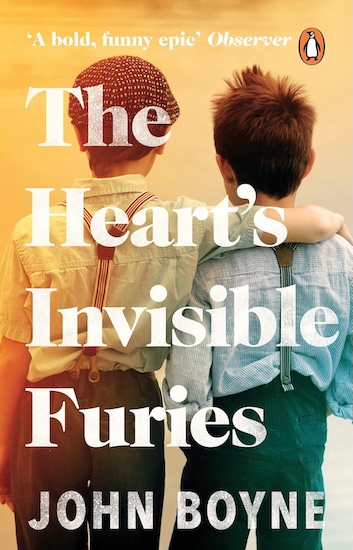
The Heart’s Invisible Furies
Spanning seven decades of Irish history, The Heart’s Invisible Furies follows Cyril Avery, a boy born in 1940s Ireland to an unmarried teenage mother who is publicly shamed by her community and forced to leave her home. Adopted by a wealthy couple in Dublin, Cyril grows up in a household where he is constantly reminded that he is not their biological son. Feeling like an outsider, he embarks on a lifelong search for love, acceptance, and a place where he truly belongs.
As Cyril moves through adulthood, his experiences unfold against the backdrop of a changing Ireland. Growing up in a deeply conservative Catholic society, he struggles to understand and accept his sexuality in a country where homosexuality is criminalised and social prejudice shapes countless lives. His journey takes him beyond Ireland, through relationships, personal losses, and difficult discoveries, before eventually bringing him back to his homeland.
Combining dark humour with moments of profound tenderness, Boyne explores the consequences of religious intolerance, social exclusion, and the silence surrounding sexuality. Through Cyril’s personal experiences, the novel also traces Ireland’s transformation from a society dominated by the Catholic Church to one increasingly willing to confront its past. Ultimately, it is a story about identity, belonging, friendship, and the possibility of finding love and reconciliation after a lifetime of struggle.
Ireland
2017
3
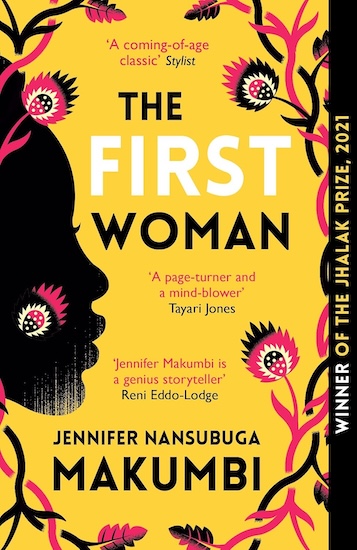
The First Woman
Set in Uganda in the 1970s, during the dictatorship of Idi Amin, The First Woman follows Kirabo, a curious and strong-willed twelve-year-old girl growing up in the rural village of Nattetta. Raised by her grandparents and surrounded by a large extended family, Kirabo enjoys a relatively comfortable childhood, yet she is troubled by one unanswered question: who is her mother, and why did she leave? As she enters adolescence, she also begins to sense a rebellious side of herself that conflicts with the obedient girl her family expects her to be.
Determined to uncover the truth about her origins, Kirabo seeks the help of Nsuuta, an older woman regarded by the village as a witch. Through their conversations, Nsuuta introduces her to Baganda folklore and the legend of the “first woman”—an original, independent female spirit that exists before society imposes its restrictions on women. These stories challenge Kirabo’s understanding of femininity and encourage her to question the traditions that govern her life.
Blending Ugandan mythology, family secrets, and the realities of life under political dictatorship, Makumbi explores motherhood, female sexuality, cultural identity, and the expectations imposed on women across generations. Kirabo’s journey becomes a powerful coming-of-age story about discovering who she is beyond the roles assigned to her. The novel celebrates women’s resilience, ancestral knowledge, and the possibility of redefining traditions to create a more liberated future.
Uganda
2020
4
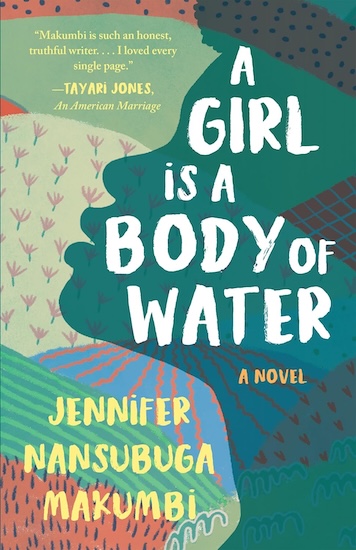
A Girl Is a Body of Water
Set in Uganda during the 1970s, under the rule of Idi Amin, A Girl Is a Body of Water follows Kirabo, a curious and independent twelve-year-old girl growing up in the rural village of Nattetta. Raised by her grandparents and surrounded by a large extended family, she has a comfortable childhood, yet one question haunts her: who is her mother? Although her father occasionally visits from Kampala, nobody in the family is willing to speak openly about the woman who gave birth to her.
Determined to uncover the truth, Kirabo turns to Nsuuta, an older woman whom the village regards as a witch. Through their conversations, Nsuuta introduces her to the stories and spiritual traditions of the Baganda people, helping her understand her own rebellious nature. She teaches Kirabo about the idea of the “first woman”—a powerful, independent female state that existed before society imposed restrictions on women’s freedom. As Kirabo grows older, she must reconcile this sense of inner strength with the expectations placed on girls by family, tradition, and community.
Blending Ugandan folklore, mythology, and the experiences of women across generations, Makumbi explores motherhood, female identity, and the ways patriarchal traditions shape women’s lives. Against the backdrop of a country experiencing political turmoil, Kirabo’s personal journey becomes a broader exploration of how women preserve their voices and independence in a society that often seeks to silence them. The novel celebrates the power of storytelling, ancestral knowledge, and female solidarity in shaping a different future.
Uganda
2020
5
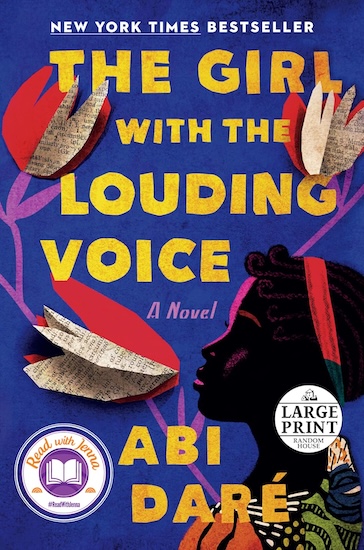
The Girl with the Louding Voice
Fourteen-year-old Adunni dreams of receiving an education, becoming a teacher, and giving her family a better life. Growing up in a poor rural village in Nigeria, she believes that education will give her the power to speak for herself and choose her own future. Her mother calls this her louding voice—the ability to make herself heard in a world that expects girls to remain silent.
When Adunni’s father marries her off to a much older man in exchange for a bride price, her dreams of going to school are shattered. After a devastating tragedy, she escapes to Lagos, hoping to find freedom and a new beginning. Instead, she becomes a domestic servant in the household of a wealthy, controlling woman known as Big Madam. There, Adunni encounters exploitation, abuse, and the harsh realities faced by girls whose poverty leaves them vulnerable to others’ power.
Despite repeated setbacks, Adunni refuses to abandon her ambition. As she uncovers the truth about another young domestic worker who disappeared before her arrival, she begins to understand that finding her voice means more than fighting for herself—it also means speaking up for girls whose suffering has been ignored.
Told in Adunni’s distinctive, expressive voice, the novel combines humour, heartbreak, and hope to examine child marriage, gender inequality, poverty, and the transformative power of education. It is a moving story about a young woman’s determination to reclaim her future and challenge the social structures that seek to silence her.
Nigeria
2020
6
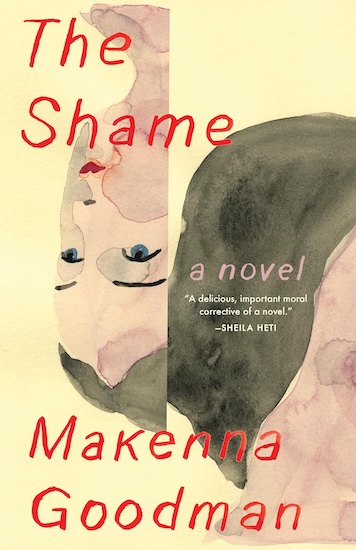
The Shame
Alma lives on a rural Vermont homestead, raising her children, tending animals, and managing a household while her husband teaches at a nearby college. But beneath the rhythms of domestic life, she feels increasingly isolated from the creative ambitions and independent identity she has sacrificed. Her fascination with Celeste, a confident ceramicist whose life seems to embody everything Alma lacks, grows into an unsettling obsession. One night, Alma drives away from home, and her memories reveal the tensions that have brought her to this breaking point. Surreal, darkly funny, and psychologically incisive, The Shame explores motherhood, envy, artistic longing, and the quiet desperation of a life that no longer feels like one’s own.
United States
2020
7
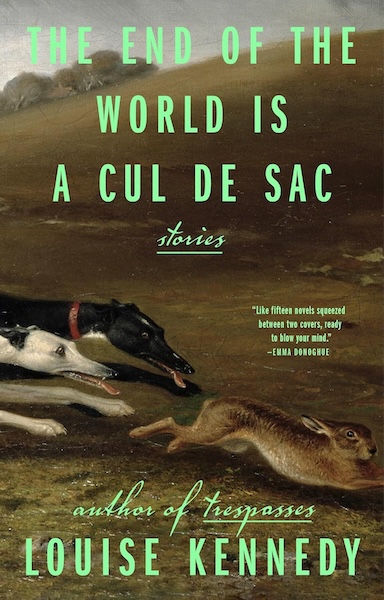
The End of the World Is a Cul de Sac
In this striking collection of fifteen short stories, ordinary lives unravel in unexpected ways. A newly married woman finds herself abandoned in a half-finished housing estate; a mother grows increasingly suspicious of her husband’s relationship with a teenage girl; a woman struggles with guilt after an abortion threatens her marriage. Across these stories, Louise Kennedy’s characters confront betrayal, poverty, violence, loneliness, and the quiet desperation of lives that have not turned out as planned.
Set against the landscapes and social realities of Ireland, the collection reveals how private struggles are shaped by wider forces, from the legacy of the Troubles to restrictive expectations placed on women. Kennedy balances bleak humour with moments of tenderness and beauty, finding humanity in characters who are often flawed, trapped, or complicit in their own unhappiness. The End of the World Is a Cul de Sac is an unflinching portrait of people at breaking points, exploring how cruelty and vulnerability coexist—and how unexpected glimpses of hope can emerge from the most difficult circumstances.
United Kingdom
2021
8
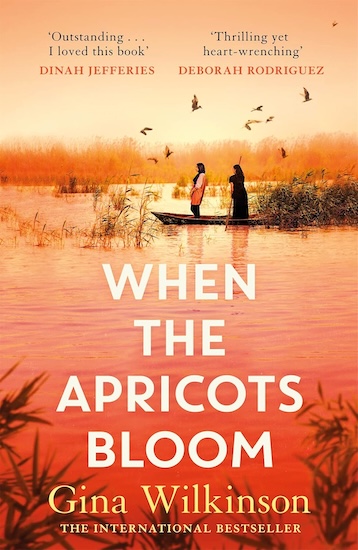
When the Apricots Bloom
Baghdad, 2002. Under Saddam Hussein’s dictatorship, three women find their lives entangled in a dangerous web of secrets, surveillance, and betrayal. Huda, a secretary at the Australian embassy, is ordered by Iraq’s secret police to befriend and spy on Ally Wilson, the wife of a Western diplomat. Refusing could endanger her teenage son, who faces the threat of forced recruitment into a brutal militia. Meanwhile, Rania, Huda’s estranged childhood friend and the daughter of a once-wealthy sheikh, struggles to protect her own daughter as her family’s fortunes collapse.
Ally, too, carries secrets connected to her mother’s past in Iraq, and as the women’s lives intersect, they discover that trust can be both dangerous and necessary. Forced to navigate a society where even friendships can become instruments of control, they must decide how much they are willing to risk to protect their children and reclaim their freedom. Inspired by the author’s experiences reporting from Iraq, When the Apricots Bloom is a suspenseful novel about female friendship, motherhood, survival, and the impossible choices people face under an oppressive regime.
Iraq
2021
9
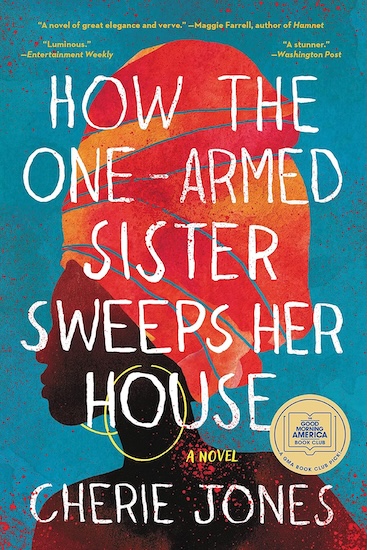
How the One-Armed Sister Sweeps Her House
On the sun-drenched shores of Baxter’s Beach, Barbados, paradise hides a darker reality of poverty, domestic violence, and generational trauma. Lala, a young woman raised on her grandmother’s cautionary tales, finds herself trapped in an abusive marriage to Adan, a charming but violent petty criminal. When a botched burglary leads to a shocking act of violence, Lala’s life becomes entangled with that of Mira Whalen, a wealthy visitor whose husband is murdered during the same fateful night. As their stories converge, the lives of several characters reveal the devastating consequences of choices made under desperation, fear, and social inequality. Through the intersecting experiences of women struggling to survive in a society shaped by class divisions and patriarchal power, Cherie Jones examines the cycles of violence passed from one generation to the next. Haunting and unflinching, the novel challenges the idyllic image of Caribbean paradise, exposing the lives and sacrifices hidden beneath its beautiful surface.
Barbados
2021
10
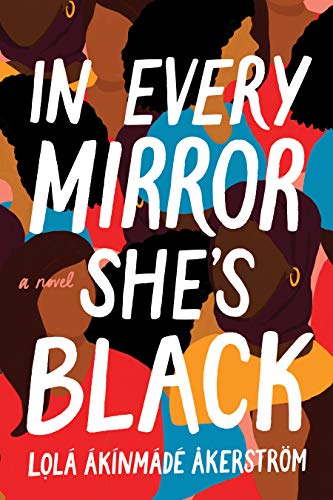
In Every Mirror She's Black
Three Black women arrive in Stockholm, each hoping to build a better life, only to discover that the city’s reputation for equality conceals complicated realities of racism, privilege, and belonging.
Kemi Adeyemi is a successful Nigerian American marketing executive recruited to help repair the reputation of a powerful Swedish company. Brittany-Rae Johnson, a Jamaican American former model turned flight attendant, finds herself drawn into a glamorous but unsettling relationship with the company’s wealthy CEO. Meanwhile, Muna Saheed, a Somali refugee who has lost her family, works as a cleaner while searching for security, connection, and a place to call home.
Although their backgrounds and ambitions differ, their lives become intertwined through the same influential man. As each woman navigates the contradictions of Swedish society, she must confront the expectations imposed on her because of her race, gender, and social position. Through their intersecting stories, Åkerström explores the complexities of Black womanhood, the fetishization of Black women, workplace discrimination, and the difference between being welcomed into a society and truly belonging.
Sweden
2021
11
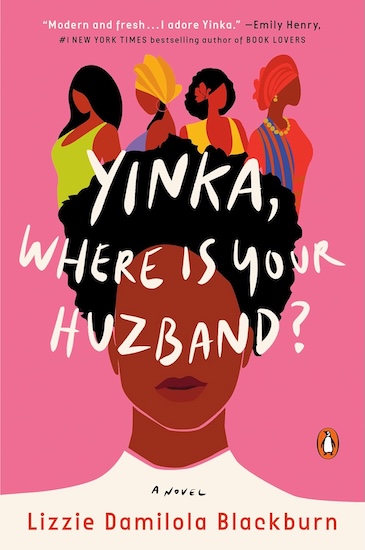
Yinka, Where Is Your Huzband?
Yinka Oladeji is a thirty-one-year-old, Oxford-educated British Nigerian woman with a good job, close friends, and a loving—but rather intrusive—family. There is just one thing everyone seems to think is missing from her life: a husband. Her Nigerian mother and aunties constantly question her relationship status, while her friends believe she needs to move on from her ex and reconsider her traditional views on love.
Although Yinka has always believed that love will arrive when the time is right, her cousin Rachel’s engagement prompts her to take matters into her own hands. Determined to find a date for Rachel’s wedding, she launches Operation Find a Date, complete with spreadsheets, carefully calculated strategies, and the help of her best friend. But as she navigates the dating scene, Yinka begins to question whether changing herself to meet other people’s expectations will really bring her happiness.
Through Yinka’s romantic misadventures, Blackburn explores the pressures placed on unmarried women, the complexities of navigating British and Nigerian cultural expectations, and the influence of colourism on self-esteem and relationships. With humour and warmth, the novel examines the tension between family loyalty and personal independence, ultimately asking whether finding love begins with finding someone else—or learning to accept yourself.
Nigeria
2022
12
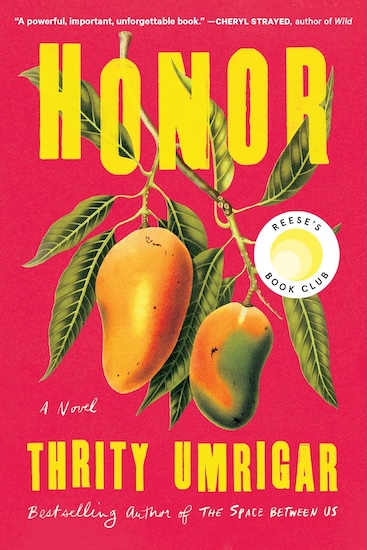
Honor
Indian American journalist Smita returns to India to report on a disturbing case involving Meena, a Hindu woman who has been brutally attacked by her own family for marrying Abdul, a Muslim man. As Smita investigates the violence committed in the name of family honour, she encounters a society where religious divisions, patriarchal traditions, and social expectations can override individual freedom. While trying to help Meena, Smita also confronts painful memories of her own past and develops an unexpected connection with Mohan, an Indian man whose presence challenges her carefully constructed emotional distance. Through the intersecting lives of these women, Thrity Umrigar explores the cost of defying tradition, the meaning of belonging, and the courage required to live according to one’s convictions. Honor is a moving novel about love, religious intolerance, and the struggle for women’s autonomy in a deeply divided society.
India
2022
About this theme
- Books
- 50
- Countries
- 23
Countries with this theme
Afghanistan
Asia
Bangladesh
Asia
Barbados
North America
China
Asia
Egypt
Africa
El Salvador
North America
India
Asia
Iraq
Asia
Ireland
Europe
Jordan
Asia
Lebanon
Asia
Nigeria
Africa
Pakistan
Asia
Palestine
Asia
Saudi Arabia
Asia
Singapore
Asia
Sweden
Europe
Tanzania
Africa
Türkiye
Asia
Uganda
Africa
United Arab Emirates
Asia
United Kingdom
Europe
United States
North America