Immigration
All countries
Algeria
Australia
Burkina Faso
Chile
Côte d’Ivoire (Ivory Coast)
Cyprus
Dominican Republic
Egypt
El Salvador
France
Germany
India
Iran
Italy
Lebanon
Libya
Moldova
Nigeria
Palestine
Spain
Sri Lanka
Taiwan
Türkiye
Uganda
United Arab Emirates
United Kingdom
United States
Vietnam
Zambia
1
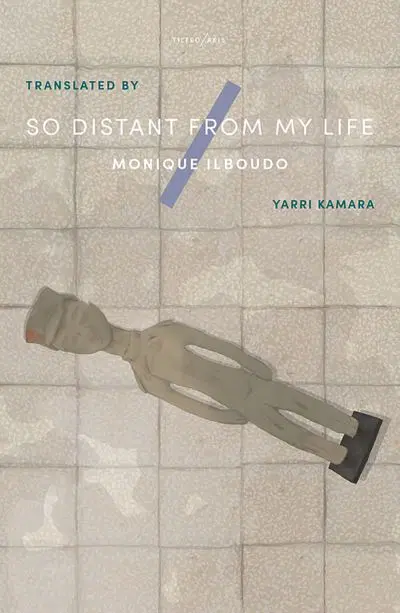
So Distant From My Life
Jeanphi is a young man from the fictional West African city of Ouabany who dreams of escaping poverty and building a new life in Europe. Determined to shape his own destiny, he abandons the path his family has chosen for him and embarks on a dangerous migration journey across the Sahara. After being exploited by smugglers and deported from Morocco, he returns home disillusioned but unwilling to surrender his ambitions. His life takes an unexpected turn when he meets Elgep, an affluent French widower hoping to establish a vocational training centre for disadvantaged young people. Their encounter offers Jeanphi a possible route toward a different future, but it also forces him to confront questions about sexuality, identity, dependency, and the unequal relationships between Africa and Europe. In this thought-provoking novel, Monique Ilboudo examines the desperation that drives migration, the contradictions of humanitarian aid, and the social pressures that shape people’s decisions about where they belong.
Burkina Faso
2018
2
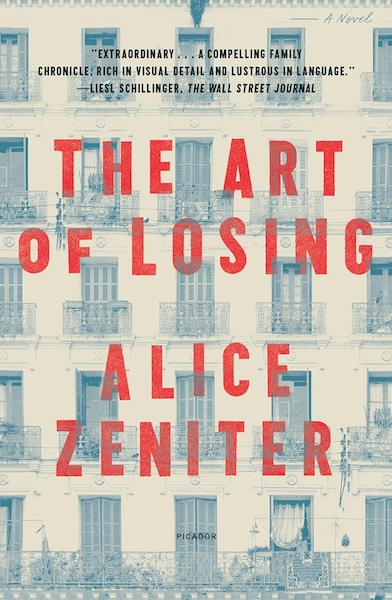
Art of Losing
Some families inherit houses, photographs, and heirlooms. Others inherit silences.
When Naïma, a young French woman of Algerian descent, begins exploring her family history, she discovers how little she knows about the country her grandparents left behind. Her grandfather, Ali, once owned land in Algeria but fled to France after the Algerian War of Independence. Her father, Hamid, grew up determined to become French, leaving painful memories and unanswered questions buried in the past.
Spanning three generations and seven decades, The Art of Losing follows a family shaped by colonialism, displacement, and the struggle to belong. As Naïma begins uncovering the truth about her ancestors, she must confront a history that is both deeply personal and politically complicated. What does it mean to inherit a past you never experienced? And can you claim an identity when the stories that might explain it have been lost?
Moving between Algeria and France, Alice Zeniter explores the invisible burdens passed from parents to children: the languages forgotten, the memories suppressed, and the connections that survive despite distance. Winner of the 2022 International Dublin Literary Award, this sweeping family saga is a powerful meditation on exile, belonging, and the stories we need to understand ourselves.
Algeria
France
2017
3
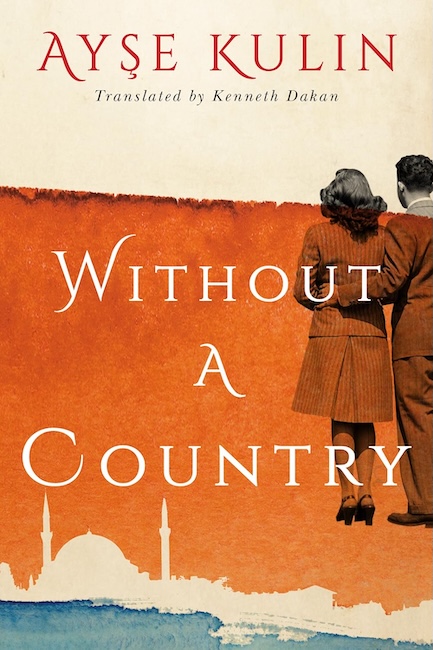
Without a Country
As Hitler’s persecution of Jews intensifies in 1930s Germany, medical professor Gerhard Schliemann and his wife, Elsa, face an impossible choice: remain in the country they call home or flee to protect their family. Their escape leads them to Turkey, where German Jewish academics are offered positions at universities and hospitals as the young republic works to modernise its institutions.
Although the Schliemanns find refuge and the opportunity to rebuild their lives, safety does not guarantee belonging. Across four generations, their descendants navigate political upheaval, military coups, interfaith relationships, and renewed antisemitism. As Turkey itself changes, the family must confront difficult questions about identity, loyalty, and what it means to belong to a country that may never fully accept them.
Spanning nearly a century, Without a Country is a multigenerational saga inspired by the real history of German-speaking Jewish academics who found refuge in Turkey during the Nazi era. Ayşe Kulin explores the complicated relationship between displacement and belonging, showing how the search for a safe home can shape a family’s destiny long after the original refugees are gone.
Türkiye
Germany
2016
4
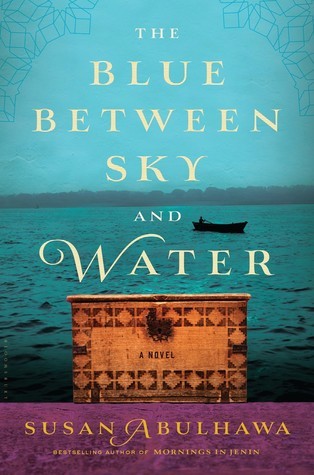
The Blue Between Sky and Water
In 1947, the Baraka family lives in Beit Daras, a Palestinian village surrounded by olive groves and fertile farmland. When their home is destroyed and the family is forced to flee during the Nakba, siblings Nazmiyeh and Mamdouh embark on separate journeys that will shape the lives of generations to come. In Gaza, Nazmiyeh struggles to rebuild her life in a refugee community, preserving her family’s traditions and nurturing the people around her despite repeated hardships. Meanwhile, Mamdouh eventually settles in the United States, where his granddaughter Nur grows up far from her ancestral homeland, struggling with loneliness and a fractured sense of belonging. Decades later, Nur travels to Gaza, where she encounters Alwan and her son Khaled, whose mysterious condition connects their families in unexpected ways. Blending Palestinian history, magical realism, and the intimate stories of several generations, Susan Abulhawa’s novel explores displacement, inherited trauma, family bonds, and the enduring longing for home.
Palestine
2015
5
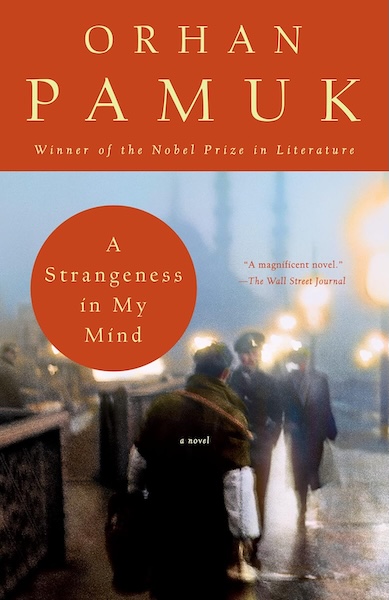
A Strangeness in My Mind
In 1969, twelve-year-old Mevlut leaves his village in central Anatolia and arrives in Istanbul, a city expanding so rapidly that familiar streets and entire neighbourhoods seem to disappear almost overnight. Hoping to build a better life, he works alongside his father selling boza, a traditional fermented drink, on the city’s streets. Over the years, he takes on different jobs, falls in love, marries, and raises a family while watching Istanbul transform around him.
Mevlut is neither a great success nor a complete failure. While others grow wealthy from the city’s rapid development, he remains an outsider in a place he has called home for decades. Even as his life changes, he continues to wonder about the peculiar feeling inside him—a sense that the world he inhabits never quite matches the world he imagines.
Spanning more than forty years, A Strangeness in My Mind is a sweeping portrait of urban migration, ordinary working lives, and the transformation of modern Istanbul. Through Mevlut’s quiet resilience, Pamuk explores love, social mobility, and the search for belonging in a city that is always becoming something new.
Türkiye
2014
6
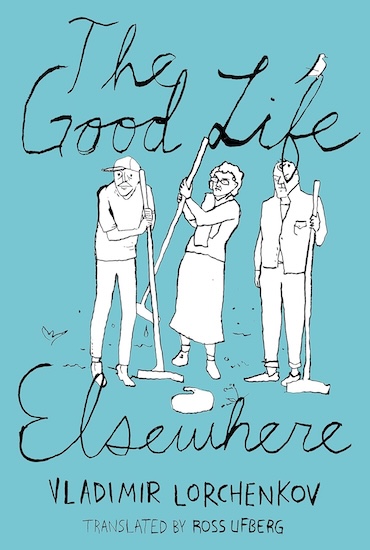
The Good Life Elsewhere
Set in the Moldovan village of Larga in the years following the collapse of the Soviet Union, The Good Life Elsewhere follows a community of villagers desperate to escape poverty and build better lives in Italy. Convinced that prosperity awaits them in Western Europe, the villagers devise increasingly absurd and improbable schemes to cross the border, despite repeated obstacles and the near impossibility of obtaining visas.
Among them are an Orthodox priest whose wife has emigrated to Italy, a resourceful mechanic who dreams of transforming his tractor into a vehicle capable of travelling by air and sea, and villagers who embark on an enormous, misguided crusade towards their imagined promised land. Even local politicians become entangled in the collective obsession with escape, revealing a society where hope and desperation often override common sense.
Blending absurdist humour, political satire, and tragedy, Lorchenkov portrays a country caught between its Soviet past and an uncertain future. Italy becomes more than a destination: it represents the promise of dignity, opportunity, and freedom from a life that seems impossible to change. Yet the villagers’ increasingly desperate attempts expose the harsh realities of migration, economic inequality, corruption, and the idealisation of life abroad. Beneath its comic extravagance, the novel offers a poignant portrait of people searching for a better future when home no longer seems to offer one.
Moldova
2008
7
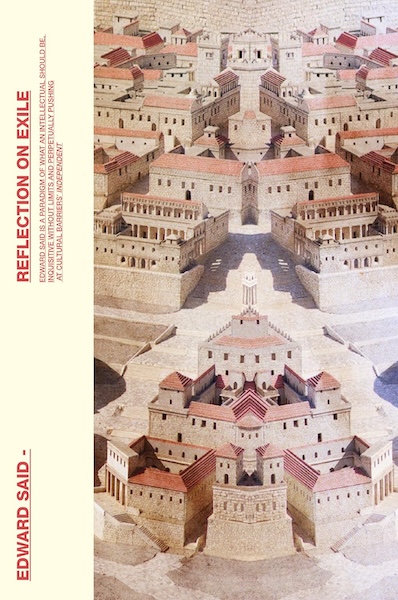
Reflections On Exile: And Other Literary And Cultural Essays
What does it mean to live between worlds—to belong to a place through memory while remaining separated from it by distance, politics, or history?
In Reflections on Exile, Edward W. Said brings together essays written over more than three decades, exploring literature, culture, politics, and the experience of displacement. The collection reflects his lifelong engagement with Palestinian identity and his own experience of exile, while examining how writers and artists respond to the societies that shape them.
Said moves between close readings of literary works and broader reflections on imperialism, cultural identity, and intellectual responsibility. He considers figures such as Joseph Conrad, George Orwell, and Naguib Mahfouz, revealing how art can illuminate the tensions between personal experience and historical forces.
At the heart of the collection is the idea that exile is more than physical separation: it can transform how people see home, belonging, and themselves. Both intellectually searching and deeply personal, the book explores the creative possibilities and emotional costs of living between cultures.
Palestine
United States
2000
About this theme
- Books
- 31
- Countries
- 29
Countries with this theme
Algeria
Africa
Australia
Oceania
Burkina Faso
Africa
Chile
South America
Côte d’Ivoire (Ivory Coast)
Africa
Cyprus
Asia
Dominican Republic
North America
Egypt
Africa
El Salvador
North America
France
Europe
Germany
Europe
India
Asia
Iran
Asia
Italy
Europe
Lebanon
Asia
Libya
Africa
Moldova
Europe
Nigeria
Africa
Palestine
Asia
Spain
Europe
Sri Lanka
Asia
Taiwan
Asia
Türkiye
Asia
Uganda
Africa
United Arab Emirates
Asia
United Kingdom
Europe
United States
North America
Vietnam
Asia
Zambia
Africa