Immigration
All countries
Algeria
Australia
Burkina Faso
Chile
Côte d’Ivoire (Ivory Coast)
Cyprus
Dominican Republic
Egypt
El Salvador
France
Germany
India
Iran
Italy
Lebanon
Libya
Moldova
Nigeria
Palestine
Spain
Sri Lanka
Taiwan
Türkiye
Uganda
United Arab Emirates
United Kingdom
United States
Vietnam
Zambia
1
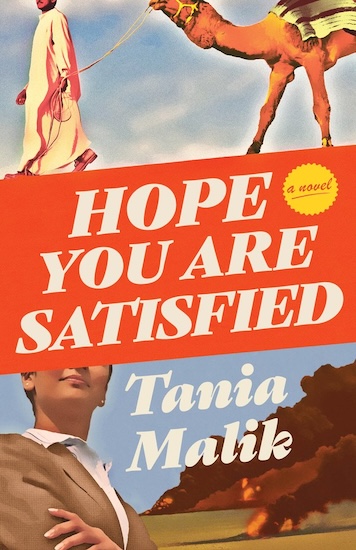
Hope You Are Satisfied
Set in Dubai in 1990, on the eve of the first Gulf War, Hope You Are Satisfied follows Riya, a 25-year-old Indian woman working for a small tour company in a city that has yet to become the glittering global metropolis it is today. Living far from her family, Riya sends money home to support her mother and younger sister, while dreaming of a future that offers more than endless work and financial obligations.
Her life takes an unexpected turn when a seemingly ordinary workplace mishap involving a powerful sheikh threatens her position. As she attempts to repair the damage, Riya becomes entangled with Dubai’s shadowy network of fixers, arms dealers, foreign soldiers, intelligence operatives, and corrupt businessmen. Meanwhile, the looming threat of war transforms the city’s atmosphere, exposing the precariousness of life for the migrant workers who keep its tourism industry running.
With sharp humour and a lively cast of expatriates, Malik explores the contradictions of a city built on ambition, wealth, and the labour of people who often remain invisible. Through Riya’s experiences, the novel examines migration, class inequality, cultural displacement, and the tension between family duty and personal freedom. Blending espionage, social satire, and historical fiction, it offers a glimpse of Dubai before its transformation into a global destination.
United Arab Emirates
2023
2
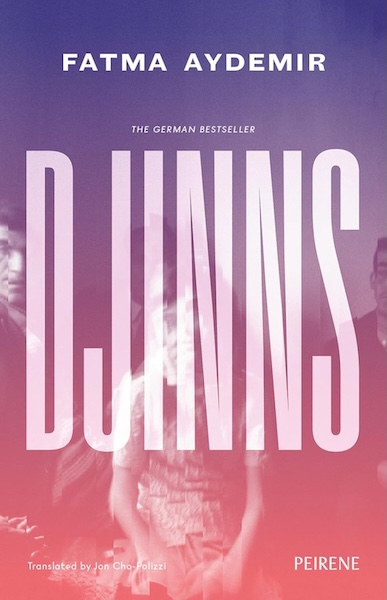
Djinns
Every family has its secrets. Some are buried so deeply that they shape generations before anyone dares to speak them aloud.
After working in Germany for thirty years, Hüseyin Yılmaz finally fulfils his dream of buying an apartment in Istanbul, hoping to spend his retirement in his homeland. But on the very day he moves in, he dies of a heart attack. His wife, Emine, and their four children travel from Germany to Turkey for his funeral, bringing with them years of resentment, unspoken grief, and unresolved questions.
As the story unfolds through the perspectives of each family member, a complicated portrait emerges of a Turkish-Kurdish family navigating life between cultures. A son struggles to understand his sexuality, a daughter wrestles with conflicting identities, and a mother carries painful memories she has never shared. Beneath their everyday conflicts lie deeper wounds shaped by migration, racism, and the expectations of family.
With psychological depth and haunting symbolism, Fatma Aydemir explores the invisible forces that haunt us: inherited trauma, buried memories, and the secrets that pass from one generation to the next. Djinns is a powerful family saga about the longing to be understood—and the ghosts we must confront to find freedom.
Türkiye
Germany
2022
3
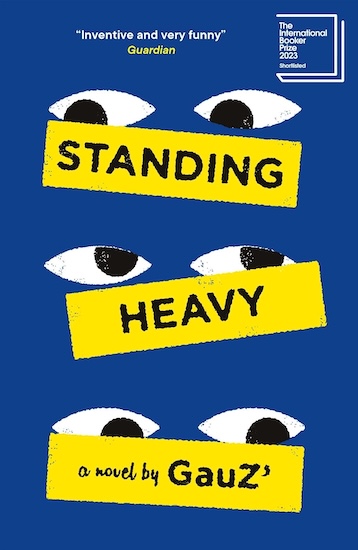
Standing Heavy
Set in Paris, Standing Heavy is a witty, politically charged novel about African immigrants working as security guards in a society that often overlooks their presence. Through the interconnected experiences of Ferdinand, Ossiri, and Kassoum, three men from Côte d’Ivoire navigating life in France across different decades, Gauz’ explores the realities of undocumented work, racial discrimination, and the enduring consequences of colonialism.
Drawing on the security guards’ observations of shoppers, wealthy passers-by, and everyday consumer habits, the novel exposes the contradictions of a society where the people responsible for protecting luxury stores remain largely invisible themselves. Its narrative moves between the 1960s, 1990s, and 2010s, connecting individual lives to France’s changing immigration policies and its complicated relationship with Africa.
Combining sharp humour, social observation, and historical reflection, Gauz’ challenges conventional ideas about belonging, labour, and power. The novel offers a distinctive perspective on the immigrant experience, showing how those positioned at the margins of society can see its inequalities more clearly than those at its centre. It was shortlisted for the 2023 International Booker Prize.
Côte d’Ivoire (Ivory Coast)
France
2022
4
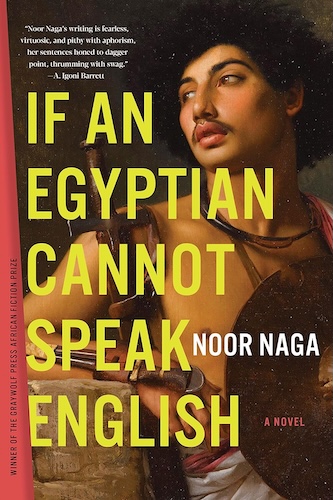
If an Egyptian Cannot Speak English
In the aftermath of Egypt’s Arab Spring, two strangers meet in a Cairo café: an Egyptian photographer haunted by the revolution and an Egyptian American woman searching for a connection to a homeland she has never truly known. Their attraction grows into an intense relationship shaped by desire, cultural misunderstanding, and unequal power. As each tries to remake themselves through the other, the boundaries between intimacy and exploitation begin to blur. Told through an experimental, fragmented narrative, Noor Naga’s unsettling novel challenges conventional ideas about identity, belonging, and who has the right to claim a place. Both a provocative love story and a sharp examination of postcolonial power, If an Egyptian Cannot Speak English asks whether returning to one’s roots is ever as simple as coming home.
Egypt
2022
5
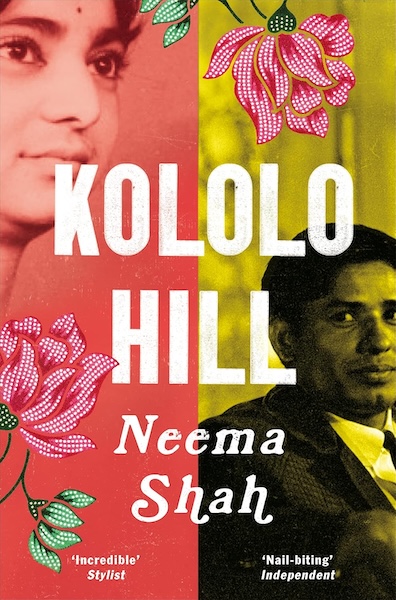
Kololo Hill
In 1972, Ugandan Asians are given just ninety days to leave the country under President Idi Amin’s expulsion order. For Asha and Pran, newly married and working to secure their future, the decree means abandoning the family business and the life they have built. Pran’s mother, Jaya, must also leave the home she has known for decades. As violence escalates in Kampala and people begin disappearing, the family faces an uncertain journey to Britain, where refuge does not necessarily mean belonging.
Arriving in a country that feels unfamiliar, they must rebuild their lives while carrying the emotional weight of everything they have lost. But their struggle is complicated by a devastating secret surrounding their expulsion—one that threatens to fracture the family just when they need one another most.
Moving between the green hills of Kampala and the terraced streets of London, Kololo Hill explores displacement, family loyalty, and the meaning of home. Inspired by the history of Uganda’s Asian community and the author’s own family heritage, this moving novel reveals how political upheaval can reshape lives across generations.
Uganda
United Kingdom
2021
6
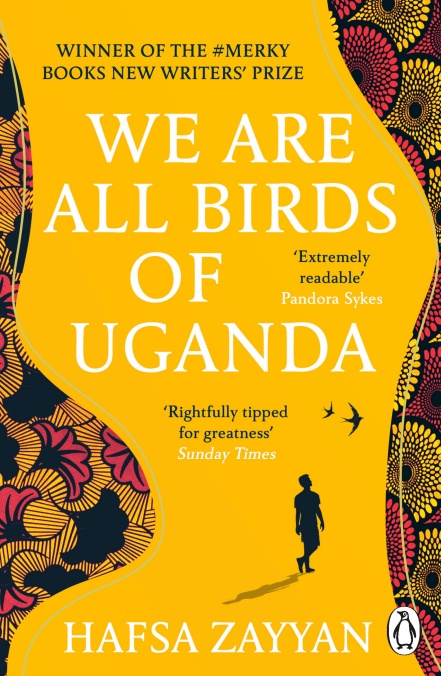
We Are All Birds Of Uganda
In 1960s Uganda, Hasan is struggling to rebuild his life after the death of his wife. Just as he begins to find his footing, political upheaval and rising racial prejudice threaten everything he has worked for. As a member of Uganda’s South Asian community, Hasan faces an uncertain future in a country his family has long called home. The political climate deteriorates further under Idi Amin’s regime, which ultimately forces many South Asians to leave Uganda.
Decades later, in London, Sameer appears to have everything: a successful career as a lawyer and the future he once dreamed of. Yet beneath his achievements lies a persistent sense of emptiness. An unexpected family tragedy draws him back into his family’s history, revealing the sacrifices, losses, and unanswered questions that shaped his identity.
Moving between generations and continents, We Are All Birds of Uganda explores displacement, racial prejudice, inherited trauma, and the complicated meaning of belonging. Through Hasan and Sameer’s intertwined stories, Hafsa Zayyan examines how migration reshapes families and how the past continues to influence those who inherit its consequences.
Uganda
United Kingdom
2021
7
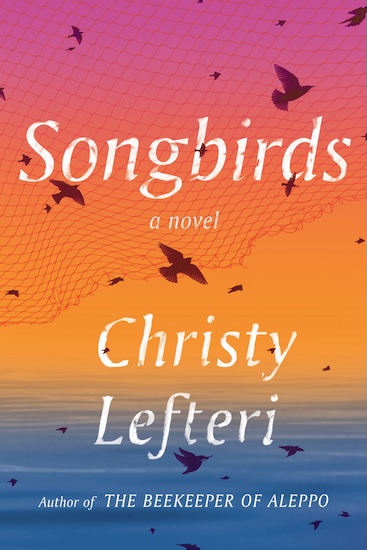
Songbirds
Set in Nicosia, Cyprus, Songbirds explores the lives of migrant domestic workers whose sacrifices and struggles often remain invisible to the society they serve.
Nisha, a young woman from Sri Lanka, has left her little daughter behind with relatives so she can work abroad and send money home. Employed as a nanny and housekeeper by Petra, a wealthy widow, Nisha has become an indispensable part of the household, forming a close bond with Petra’s young daughter, Aliki. Yet while she cares for someone else’s child, she is separated from her own, communicating with her daughter through video calls whenever she can.
Nisha’s secret relationship with Yiannis, a man who makes his living poaching protected songbirds, offers the possibility of a different future. He dreams of marrying her and leaving his dangerous work behind. But when Nisha mysteriously disappears one evening, both Yiannis and Petra are left searching for answers. When the police show little interest in investigating the disappearance of a migrant worker, Petra takes matters into her own hands, gradually uncovering the precarious realities of Nisha’s life and the exploitation faced by other migrant women.
Inspired by the real-life disappearances of migrant women in Cyprus, Lefteri’s novel draws parallels between the songbirds trapped along migration routes and people who leave their homelands in search of a better life, only to find themselves vulnerable to exploitation. Through the intertwined stories of Nisha, Petra, and Yiannis, the novel examines motherhood, social inequality, belonging, and the human cost of migration.
Cyprus
2021
8
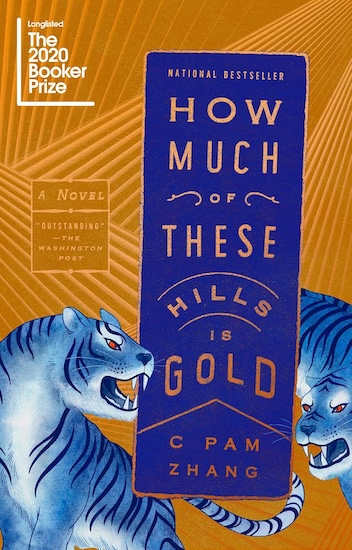
How Much of These Hills Is Gold
In the final days of the Gold Rush, two Chinese American siblings, Lucy and Sam, find themselves orphaned in a hostile landscape where their very existence challenges the myth of the American West. Carrying their father’s body across a vast, unforgiving terrain, they search for a place to bury him and confront the secrets of their family’s past. Through memories of hunger, displacement, and their parents’ desperate pursuit of belonging, the siblings must decide what it means to inherit a country that refuses to claim them. Lyrical and haunting, C Pam Zhang’s debut reimagines the Western frontier through the eyes of those written out of its history, exploring race, family, survival, and the price of the American dream.
United States
2020
9
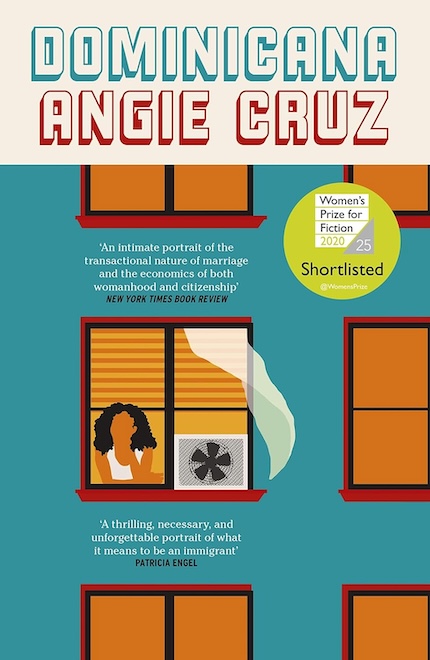
Dominicana
Fifteen-year-old Ana Canción has never dreamed of leaving the Dominican countryside, but when Juan Ruiz, a man twice her age, offers to marry her and take her to New York City, her family sees an opportunity for a better future. On New Year’s Day in 1965, Ana leaves behind everything she knows and arrives in Washington Heights, where she finds herself trapped in an unhappy marriage with a controlling and unfaithful husband. Lonely and struggling to adapt to life in a new country, she begins to imagine a future beyond the narrow role expected of her.
When Juan returns to the Dominican Republic amid growing political turmoil, Ana discovers new freedoms through English lessons, friendships, and an unexpected romantic connection with his younger brother, César. But her growing independence clashes with her family’s hopes and the sacrifices expected of her. Set against the backdrop of the Dominican Civil War and the Dominican immigrant community in New York, Dominicana is a moving coming-of-age story about migration, womanhood, and the courage to claim a life of one’s own.
Dominican Republic
United States
2019
10
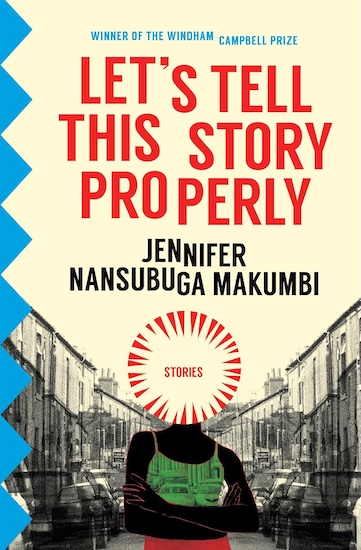
Let's Tell This Story Properly
In Let’s Tell This Story Properly, Jennifer Nansubuga Makumbi explores the experiences of Ugandans living in Britain, examining how migration reshapes identity, family relationships, and the meaning of home. Across a collection of interconnected stories, her characters navigate the challenges of building lives in a country where they may be highly visible as workers and neighbours yet remain socially marginalised. From airport security staff to healthcare workers and families divided between continents, the stories reveal the everyday realities of belonging to more than one place.
The title story follows Nnam, a Ugandan woman living in Manchester, who returns to Uganda with her husband’s body for his funeral rites. There, she discovers that the life she thought she understood concealed painful secrets. Other stories explore the difficult adjustment of immigrants, generational tensions within diaspora families, and the ways cultural expectations persist across distance. Characters often find themselves caught between the home they left and the new home they are trying to make, never feeling entirely at ease in either.
With emotional depth, sharp observation, and occasional dark humour, Makumbi portrays migration as more than a geographical journey. It is also a process of renegotiating family loyalties, cultural identity, and personal history. The collection asks how far people must travel to find belonging—and what happens when the meaning of home changes while they are away.
Uganda
United Kingdom
2019
11
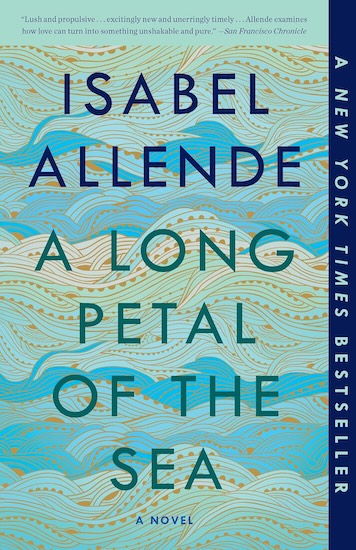
A Long Petal of the Sea
Beginning during the Spanish Civil War, A Long Petal of the Sea follows two people whose lives are transformed by war and exile. Victor Dalmau, a young doctor, becomes caught in the conflict when Franco’s forces defeat the Republican side. Alongside Roser Bruguera, a pregnant widow and gifted pianist, he is forced to flee Spain. To survive, they enter into a marriage neither originally desired and join thousands of Spanish refugees seeking safety abroad.
Their journey takes them aboard the SS Winnipeg, a ship chartered by Chilean poet Pablo Neruda to transport refugees to South America. In Chile, Victor and Roser build a new life while navigating political tensions, cultural differences, and the challenges of starting over in an unfamiliar country. As decades pass, their adopted homeland experiences its own political upheavals, forcing them to confront once again the relationship between belonging, exile, and home.
Spanning generations and continents, Allende’s novel explores how displacement reshapes identity, family, and personal loyalties. Through Victor and Roser’s experiences, she examines the courage required to rebuild a life after losing everything and the enduring hope that one day it may be possible to return home.
Spain
Chile
2019
12
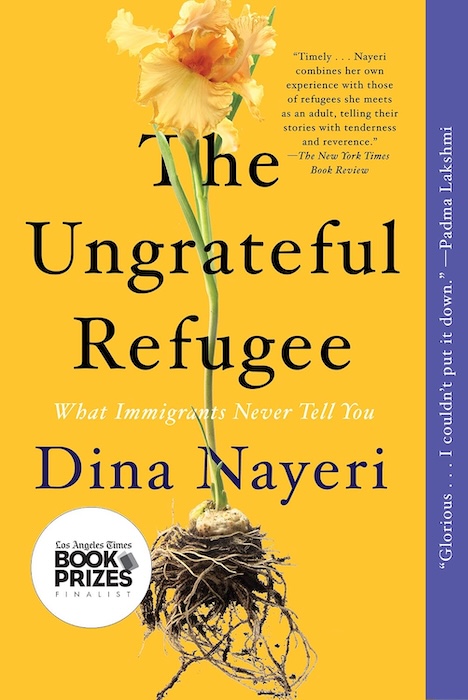
The Ungrateful Refugee
In The Ungrateful Refugee, Iranian-born writer Dina Nayeri combines her own story of displacement with the experiences of refugees and asylum seekers navigating unfamiliar countries and complicated immigration systems. At the age of eight, Nayeri fled Iran with her mother and brother after her mother converted to Christianity and faced persecution. The family spent time in a refugee camp in Italy before eventually receiving asylum in the United States.
Drawing on these experiences, Nayeri examines the emotional and psychological costs of leaving one’s homeland, rebuilding a life, and trying to belong in a new society. She also shares the stories of other displaced people, revealing the difficult choices they face when seeking protection and the pressure to prove that their suffering is genuine.
At the heart of the book is a challenge to the expectation that refugees must demonstrate constant gratitude to the countries that accept them. Nayeri questions the idea of the “good refugee” who assimilates without complaint, arguing that displaced people should not have to erase their identities or experiences to deserve safety and dignity.
Iran
2019
About this theme
- Books
- 31
- Countries
- 29
Countries with this theme
Algeria
Africa
Australia
Oceania
Burkina Faso
Africa
Chile
South America
Côte d’Ivoire (Ivory Coast)
Africa
Cyprus
Asia
Dominican Republic
North America
Egypt
Africa
El Salvador
North America
France
Europe
Germany
Europe
India
Asia
Iran
Asia
Italy
Europe
Lebanon
Asia
Libya
Africa
Moldova
Europe
Nigeria
Africa
Palestine
Asia
Spain
Europe
Sri Lanka
Asia
Taiwan
Asia
Türkiye
Asia
Uganda
Africa
United Arab Emirates
Asia
United Kingdom
Europe
United States
North America
Vietnam
Asia
Zambia
Africa