Thriller
All countries
Afghanistan
Argentina
China
Croatia
Ecuador
France
Germany
Ghana
Greece
India
Japan
Luxembourg
Nigeria
Pakistan
Poland
Russia
South Korea
Spain
Sudan
United Arab Emirates
United Kingdom
United States
1
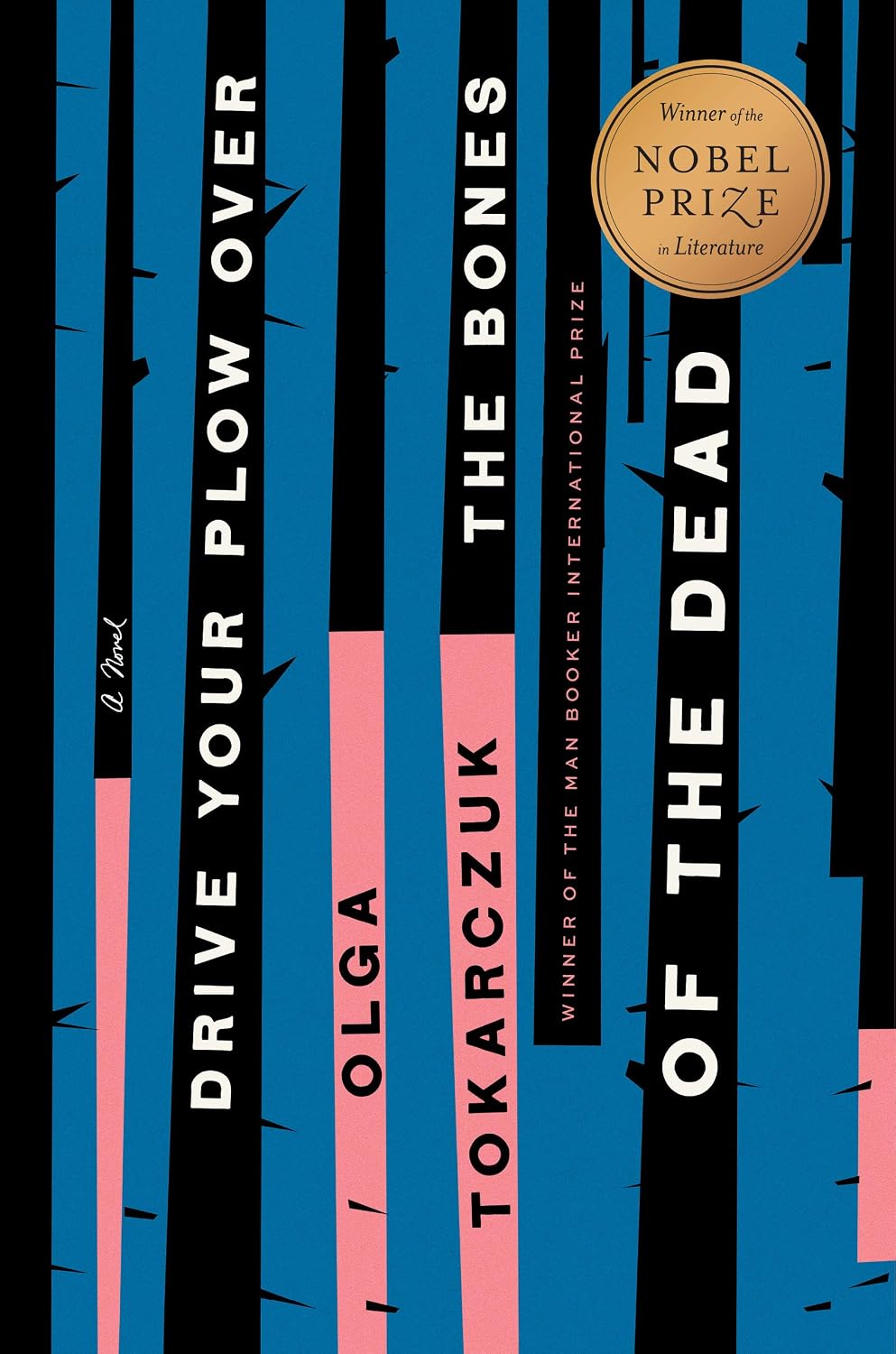
Drive Your Plow Over The Bones Of The Dead
Set in a remote Polish village near the Czech border, Drive Your Plow Over the Bones of the Dead follows Janina Duszejko, an eccentric older woman who lives in isolation, cares for summer houses, studies astrology, and feels a deep connection with animals and the natural world. When several men in the surrounding community die under mysterious circumstances, Janina develops her own theory about the killings, believing that the animals are taking revenge on those who have harmed them. However, the local authorities dismiss her ideas, partly because of her gender, age, and unconventional beliefs. As the investigation unfolds, the novel combines the structure of a murder mystery with philosophical reflections on justice, morality, and humanity’s relationship with other living creatures. Through dark humour and an unsettling narrative, Tokarczuk challenges assumptions about who deserves sympathy and whose suffering matters. The novel questions human dominance over nature and explores the blurred boundaries between justice, vengeance, and madness.
Poland
2020
2
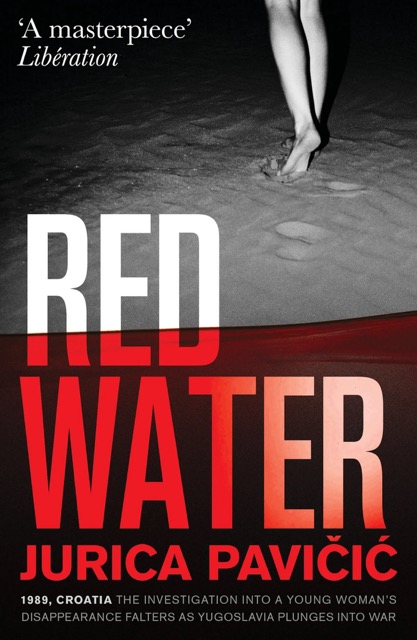
Red Water
One summer evening in 1989, seventeen-year-old Silva Vela disappears from a small coastal village in Dalmatia. At first, the police suspect she has run away, but as Yugoslavia begins to unravel, her disappearance becomes a mystery that will haunt two families for decades. Silva’s brother, Mate, refuses to give up searching for her, while the investigation exposes buried secrets, fractured loyalties, and the quiet transformations of a society caught between socialism, war, and capitalism. Spanning thirty years, Red Water is more than a gripping crime novel: it is a portrait of a community slowly changing beyond recognition. Against the backdrop of Croatia’s turbulent recent history, Pavičić explores how a single disappearance can reshape lives, reveal uncomfortable truths, and leave a wound that never quite heals.
Croatia
2017
3
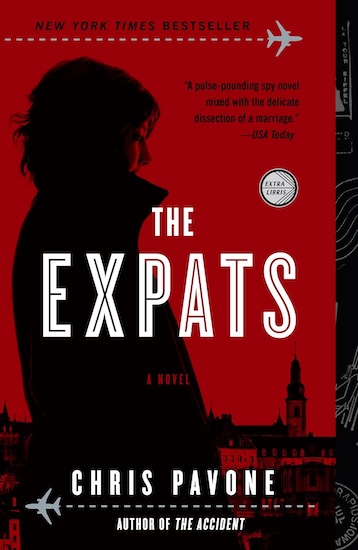
The Expats
Kate Moore appears to have built a comfortable new life in Luxembourg. After her husband accepts a lucrative job abroad, she leaves Washington, D.C., behind and settles into the routines of expatriate life: school drop-offs, coffee mornings, and weekend trips around Europe. But Kate is hiding a dangerous secret about her past, and the ordinary life she has constructed is becoming increasingly difficult to maintain.
When Kate begins to suspect that another American couple in Luxembourg are not who they claim to be, her suspicions grow. Her husband is also behaving strangely, and his work for an undisclosed banking client raises questions she cannot ignore. As she investigates the people around her, Kate discovers that the lives of the expatriates in her seemingly peaceful community are far more complicated than they appear.
Moving between the polished world of international professionals and the shadowy realm of espionage, Pavone builds a suspenseful story of deception, double-crossing, and hidden identities. The novel explores how people reinvent themselves when they move abroad, whether it is possible to escape one’s past, and how secrets can undermine even the closest relationships. The Expats won both the Edgar Award and the Anthony Award for Best First Novel in 2013.
Luxembourg
United States
2013
4
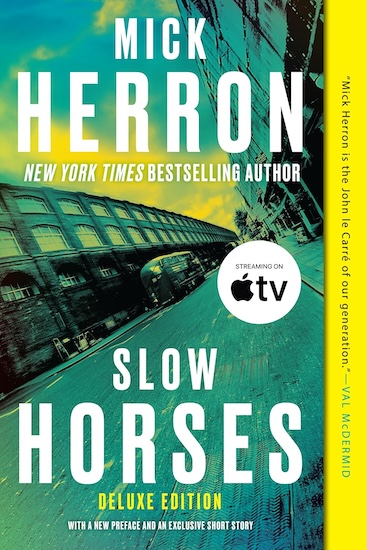
Slow Horses
At the edge of London’s intelligence world lies Slough House, a drab office where MI5 sends agents who have made career-ending mistakes. Known as the “slow horses,” these disgraced spies spend their days drowning in paperwork, enduring humiliating assignments, and dreaming of returning to serious intelligence work. Their miserable existence is overseen by Jackson Lamb, a brilliant but abrasive veteran whose apparent laziness conceals a formidable understanding of the spying business.
River Cartwright, a promising young agent whose career collapses after a disastrous training exercise, finds himself among them. When a young man is kidnapped and his captors threaten to broadcast his execution online, the slow horses see an opportunity to prove their worth. But as they investigate, they begin to suspect that the kidnapping may be part of a much larger game—and that powerful people within the intelligence establishment have their own reasons for wanting the truth to remain hidden.
Combining tense espionage with dark humour and political satire, Slow Horses offers a refreshingly unglamorous portrait of intelligence work. Mick Herron explores ambition, professional failure, and institutional corruption, revealing how the people dismissed as useless can sometimes see what the powerful refuse to acknowledge.
United Kingdom
2010
5
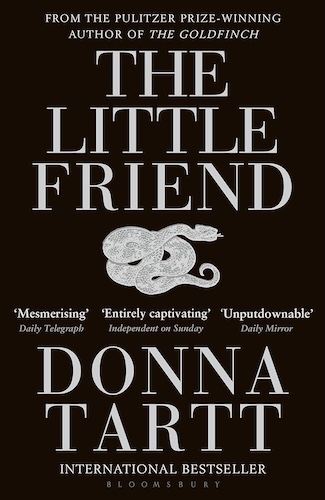
The Little Friend
In the sweltering American South, twelve-year-old Harriet Dufresnes becomes determined to solve the mysterious murder of her older brother, Robin, who was killed when she was still a baby. Driven by grief, imagination, and a fierce sense of justice, she ventures into a world of family secrets, dangerous people, and unsettling discoveries. A dark Southern Gothic novel about childhood, vengeance, and the stories we tell ourselves to make sense of loss.
United States
2002
6
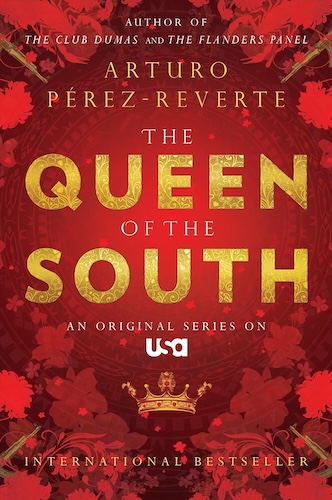
Queen of the South
When the phone rings, Teresa Mendoza knows her life is about to change forever. Her boyfriend, a pilot who smuggles drugs for the Mexican cartels, has warned her that if she ever receives that call, she must run for her life. When he is murdered, Teresa flees Mexico, leaving behind everything she knows and entering an unfamiliar world where survival depends on intelligence, courage, and the ability to trust no one.
Her journey takes her from Mexico to Spain, where she becomes involved in the dangerous business of smuggling hashish across the Strait of Gibraltar. Initially an outsider in a ruthless, male-dominated criminal world, Teresa gradually discovers her talent for negotiation, strategy, and business. As she builds her own network and accumulates wealth and influence, she transforms herself from a frightened young woman into a formidable criminal leader.
Spanning continents and more than a decade, Pérez-Reverte’s novel combines crime thriller, political intrigue, and a powerful portrait of female ambition. Inspired in part by real-world drug-trafficking networks, the story explores loyalty, betrayal, identity, and the price of power. Teresa’s rise challenges conventional ideas about femininity and authority, while revealing the brutal realities of a world where survival often demands becoming the very person one once feared.
Spain
2002
7
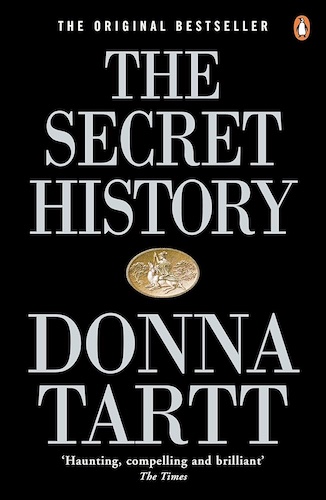
The Secret History
At an elite Vermont college, a tight-knit group of classics students becomes consumed by beauty, intellectual obsession, and the darker side of ancient philosophy. When their pursuit of an extraordinary experience leads to murder, their carefully constructed world begins to unravel. An atmospheric psychological novel about guilt, privilege, and the dangerous allure of belonging.
United States
1992
8
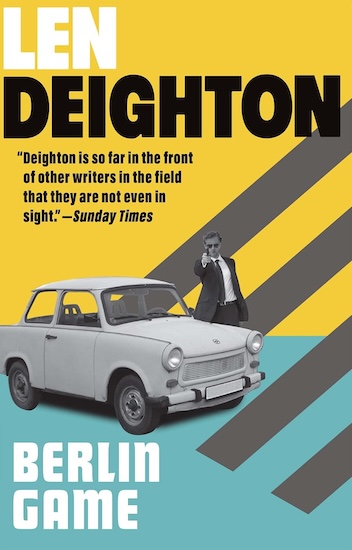
Berlin Game
During the Cold War, British intelligence officer Bernard Samson is accustomed to being overlooked. Now working behind a desk in London after years in the field, he is unexpectedly called back into action when one of Britain’s most valuable agents in East Berlin requests urgent extraction. Known by the codename “Brahms Four,” the agent believes a Soviet mole has infiltrated the highest levels of British intelligence—and that his own life is in immediate danger.
Sent to Berlin, Samson must navigate a labyrinth of double agents, conflicting loyalties, and carefully concealed secrets. His mission is complicated by the suspicion that the betrayal may come from someone within his own professional circle. Meanwhile, his relationship with his ambitious wife, Fiona, who is rising through the intelligence service while his own career stagnates, adds another layer of uncertainty to his already precarious position.
The first novel in Len Deighton’s acclaimed Game, Set and Match trilogy, Berlin Game combines intricate espionage plotting with a sharp portrait of the people behind intelligence operations. Set in a divided Europe where trust is a dangerous luxury, it explores betrayal, professional rivalry, and the personal costs of a life built around secrets.
Germany
United Kingdom
1983
9
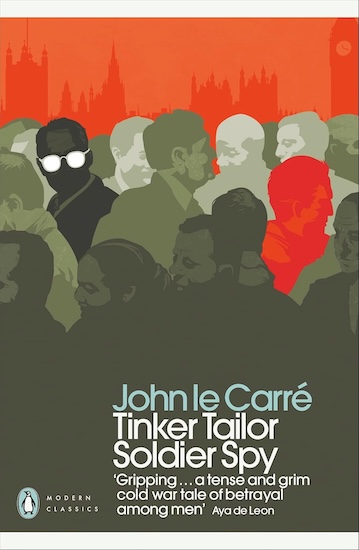
Tinker, Tailor, Soldier, Spy
At the height of the Cold War, British intelligence is facing a devastating crisis. A covert operation in Czechoslovakia has gone disastrously wrong, forcing the head of the Secret Intelligence Service, known as Control, into retirement. But before his departure, Control becomes convinced that a Soviet mole has infiltrated the highest levels of British intelligence, secretly feeding classified information to Moscow.
George Smiley, Control’s quiet, methodical former deputy, is brought back from retirement to investigate. Working in secret, he begins examining the service’s senior officers, each of whom has a codename from a childhood rhyme: Tinker, Tailor, Soldier, and others. As Smiley reconstructs past operations and follows a trail of carefully concealed evidence, he must determine which of his former colleagues has betrayed the organisation from within.
Set in the shadowy world of Cold War London, Tinker, Tailor, Soldier, Spy is a masterful espionage novel about deception, institutional loyalty, and the corrosive effects of suspicion. Rather than relying on spectacular action, John le Carré builds tension through quiet conversations, fragmented memories, and psychological insight, revealing a world where the greatest threat may be the person sitting beside you.
Russia
United Kingdom
1974
10
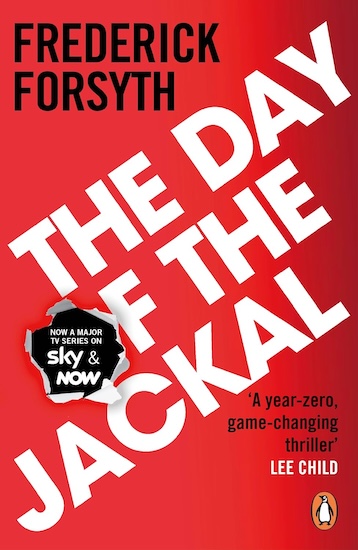
The Day of the Jackal
France, 1963. Following repeated attempts to assassinate President Charles de Gaulle, a militant organisation determined to overthrow him hires a professional killer known only by his codename: the Jackal. Brilliant, meticulous, and almost impossible to identify, the assassin begins preparing an elaborate plan to kill the French president. He obtains false identities, arranges specialised equipment, and carefully studies the security measures surrounding his target.
When French intelligence discovers the conspiracy, the authorities launch a desperate hunt for the unknown assassin. Commissaire Claude Lebel, a methodical detective with an exceptional ability to follow small clues, is assigned to lead the investigation. As the Jackal moves closer to his target, Lebel must navigate political pressure, bureaucratic obstacles, and a trail of deception stretching across Europe.
Combining painstaking procedural detail with relentless suspense, The Day of the Jackal explores the deadly intersection of political extremism, state security, and individual ambition. Frederick Forsyth transforms a fictional assassination plot into a gripping contest between two professionals, each determined to outwit the other before time runs out.
France
United Kingdom
1971
11
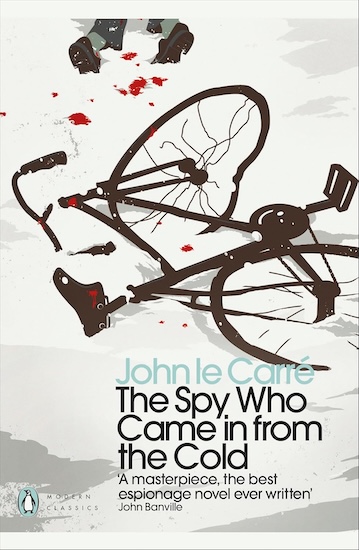
The Spy Who Came in from the Cold
Alec Leamas is a weary British intelligence officer stationed in Berlin during the Cold War. After watching his network of agents collapse, he is ready to leave the dangerous world of espionage behind. But his superior, known as Control, offers him one final assignment: pretend to defect to East Germany and help destroy a powerful figure within the East German intelligence service. To make the deception convincing, Leamas must appear disillusioned, financially desperate, and willing to betray his country.
As he becomes entangled in a carefully constructed web of lies, Leamas discovers that the boundaries between truth and deception are far less clear than he imagined. His growing relationship with Liz Gold, a young British communist, complicates his mission and forces him to confront the human cost of a world in which people are treated as expendable pieces in a political game.
Set against the bleak backdrop of divided Berlin, The Spy Who Came in from the Cold strips espionage of its glamour, revealing a world shaped by moral compromise, manipulation, and betrayal. John le Carré’s landmark novel challenges the idea that intelligence work serves an uncomplicated good, asking what remains of personal conscience when loyalty to the state demands sacrificing everything else.
Germany
United Kingdom
1963