Science Fiction
All countries
Argentina
Australia
Austria
Belgium
Denmark
Japan
Jordan
Kuwait
Kyrgyzstan
Nigeria
Switzerland
United Kingdom
United States
1
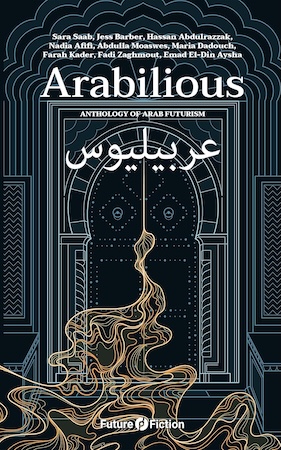
Arabilious: Anthology of Arab Futurism
Arabilious: Anthology of Arab Futurism brings together nine science-fiction stories imagining alternative futures shaped by the cultures, histories, and social realities of the Arab world. Featuring writers from Bahrain, Egypt, Iraq, Jordan, Lebanon, Palestine, and Syria, the collection challenges the dominance of Western perspectives in speculative fiction and presents visions of the future rooted in Arab experiences.
The stories explore the consequences of emerging technologies, environmental crises, political conflict, and social inequality. Rather than imagining progress as a simple escape from the past, the contributors examine how traditions, collective identities, and historical memories continue to shape societies undergoing rapid change. The anthology includes Fadi Zaghmout’s A Jaha in the Metaverse, which reimagines the traditional Jordanian marriage-custom ceremony within a virtual world, using satire to question the persistence of patriarchal practices in an increasingly technological society.
Together, these stories expand the possibilities of Arab science fiction, offering imaginative alternatives to the present while questioning who gets to envision the future. The collection combines speculative experimentation with cultural specificity, social criticism, and reflections on the legacy of colonialism.
Jordan
2024
2
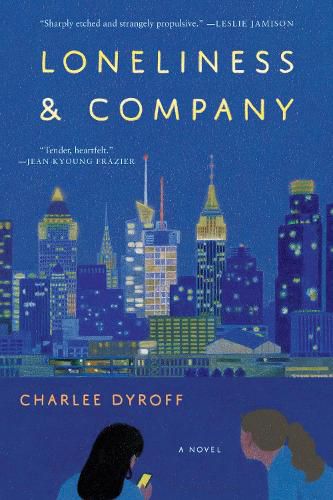
Loneliness & Company
In a near-future America where loneliness has supposedly been eliminated from society’s vocabulary, Lee expects her academic success to secure her a prestigious job at a leading technology corporation. Instead, she finds herself in a struggling, half-abandoned New York City, working for an obscure company with an unusual mission: training an artificial intelligence named Vicky to understand friendship. Initially, Lee approaches the task as a research problem, studying human interactions and observing the lively social life of her roommate, Veronika. But when she discovers that her employer is part of a secret government project designed to combat a mysterious resurgence of loneliness, her ambition takes over. Determined to produce results, Lee begins pursuing increasingly risky experiences to teach the algorithm what genuine human connection looks like. As her research becomes entangled with her own emotional life, she must confront the limits of technology and her understanding of intimacy. With wit and unsettling imagination, Dyroff explores isolation, ambition and the human need to belong in an increasingly technology-driven world.
United States
2024
3
On the Calculation of Volume (Book I)
Tara Selter, the heroine of On the Calculation of Volume, has involuntarily stepped off the train of in her world, November eighteenth repeats itself endlessly. We meet Tara on her 122nd November 18 she no longer experiences the changes of days, weeks, months, or seasons. She finds herself in a lonely new reality without being able to explain how is it that she wakes every morning into the same day, knowing to the exact second when the blackbird will burst into song and when the rain will begin? Will she ever be able to share her new life with her beloved and now chronically befuddled husband? And on top of her profound isolation and confusion, Tara takes in with pain how slight a difference she makes in the world. (As she puts “That’s how little the activities of one person matter on the eighteenth of November.”)
Balle is hypnotic and masterful in her remixing of the endless recursive day, creating curious little folds of time and her flashbacks light up inside the text like old flash bulbs.
The first volume’s gravitational pull—a force inverse to its constriction—has the effect of a strong tranquilizer, but a drug under which your powers of observation only grow sharper and more acute. Give in to the book's logic (its minute movements, its thrilling shifts, its slant wit, its slowing of time) and its spell is utterly intoxicating.
Solvej Balle’s seven-volume novel wrings enthralling and magical new dimensions from time and its hapless, mortal subjects.
Denmark
2024
4
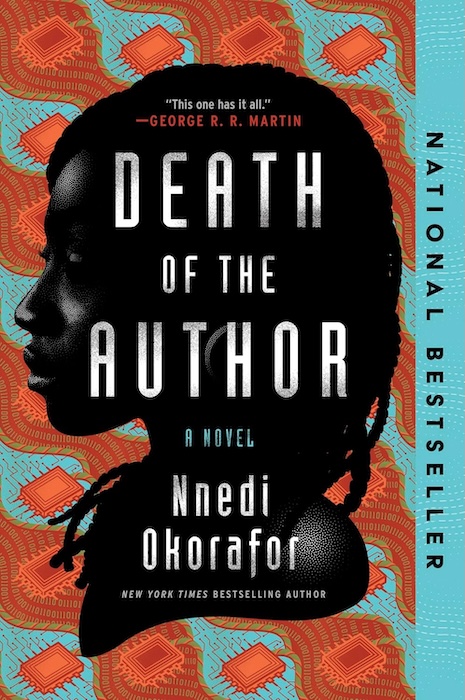
Death of the Author
Death of the Author follows Zelu, a Nigerian American writer who faces professional setbacks and personal challenges after losing her academic job. Unable to find success with the literary fiction she has been writing, she turns to science fiction and creates Rustic, a novel set in a distant future where robots struggle to understand humanity after a global catastrophe. The book unexpectedly becomes a bestseller, transforming Zelu’s life while raising difficult questions about authorship, recognition, and the relationship between a writer and her work.
As Zelu navigates newfound fame, family tensions, and questions about her physical disability, her fictional world unfolds alongside her own story. The novel moves between these narratives, exploring how stories shape our understanding of humanity and whose voices are permitted to imagine the future.
Blending speculative fiction, literary metafiction, and social commentary, Okorafor examines disability, technology, race, creativity, and the meaning of storytelling. The novel challenges conventional ideas about literary value and asks who has the authority to tell stories—and what happens when those stories take on a life of their own.
Nigeria
2025
5
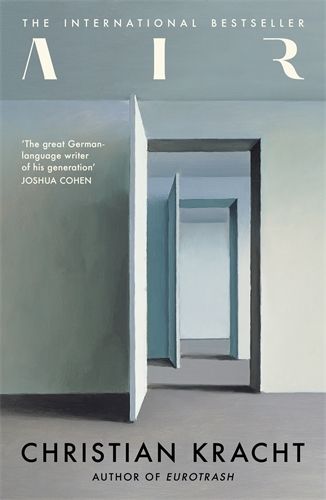
Air
In a remote Scottish town on the Orkney Islands, Paul, a Swiss interior designer, lives a quiet, carefully ordered life devoted to aesthetics and precision. His routine is disrupted when he receives an unusual commission from a prestigious design magazine: he must travel to Norway to paint a vast data centre in the perfect shade of white. But the journey takes an unexpected turn, and Paul mysteriously disappears from his familiar reality. Elsewhere, in a strange, myth-haunted world, a young girl named Ildr discovers an injured stranger whom she initially mistakes for an animal. As she helps him recover, the two embark on a dangerous journey through an unfamiliar landscape, pursued by the soldiers of a ruthless duke. Blurring the boundaries between fantasy, reality, and dreams, Christian Kracht’s enigmatic novel explores the fragility of modern civilisation and the possibility of escaping its constraints. With precise, atmospheric prose, Air invites readers into a world where time, identity, and existence itself become uncertain.
Switzerland
2026
6

The End of Romance
Set in a dystopian future devastated by environmental collapse, The End of Romance follows a mother and her son as they struggle to survive in a world where nature has become hostile and human society is crumbling. Thorn-bearing plants dominate the landscape, toxic fogs make life increasingly dangerous, and communities face relentless hardship. While some people attempt to survive independently, others remain trapped within increasingly authoritarian systems.
The woman’s son attends a military school, like all boys his age. When he reaches sixteen, he will be sent to a distant planet known as the Promised Land to fight in a colonising war presented as humanity’s only hope for survival. Determined to protect her child, his mother begins questioning the world she has accepted. Her encounter with a mysterious young man who has somehow escaped conscription offers a possible route to sanctuary.
Combining dystopian fiction with unsettling social commentary, Takolander explores motherhood, sacrifice, environmental destruction, and the myths societies create to justify violence. The novel asks what it means to remain human when survival demands extraordinary moral compromises.
Australia
2026
7
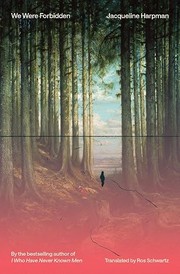
We Were Forbidden
We Were Forbidden is a collection of three previously untranslated stories exploring defiance, oppression, and the struggle for personal freedom. In The Ardennes Forest, a woman and her fellow survivors wander through a mysterious woodland after an unexplained war, forbidden from leaving its boundaries or stopping their endless march. In The Outcast, a teenage girl attending a French school in 1940s Casablanca is punished for questioning the beliefs and political ideas she is expected to accept. In The Broom Cupboard, a young woman trapped in a loveless marriage begins to question the expectations governing her intimate life and imagine alternatives to her circumstances.
Although the stories unfold in very different settings, each portrays a woman confronting rules imposed by external authorities or social conventions. Through unsettling scenarios, psychological insight, and understated prose, Harpman examines how obedience becomes ingrained and how individuals begin to resist it. The collection explores the tension between conformity and independence, revealing the quiet but powerful ways people challenge the boundaries placed around their lives.
Belgium
2026
8
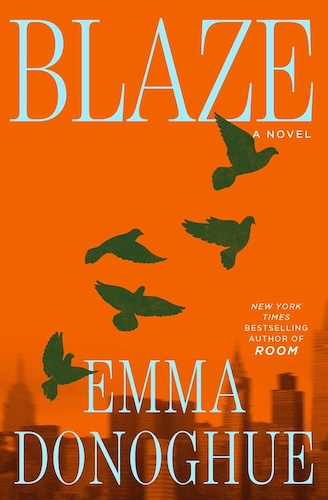
Blaze
New York, 2040. In a half-flooded city devastated by environmental and social collapse, a young pigeon named Blaze survives with her tightly bonded flock in an abandoned tower. Life is dangerous, but her community has rules that keep them alive—until Blaze rescues a solitary stranger whose memories of the world before the catastrophe challenge everything she believes. As she navigates the complexities of loyalty, love, and motherhood, Blaze must decide whether to follow the traditions of her flock or dare to imagine a different future. An inventive, moving tale of survival, belonging, and the courage to change.
United States
2027