Philosophy
1
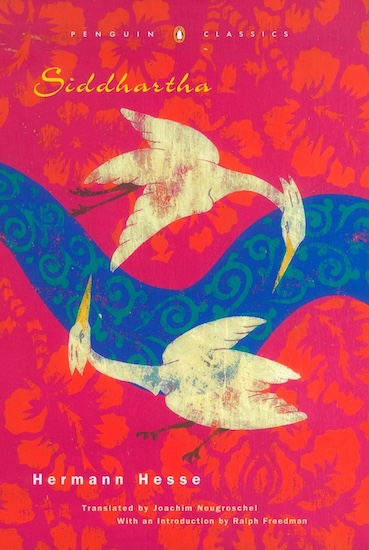
Siddhartha
Siddhartha follows a young man in ancient India who leaves his privileged life in search of spiritual understanding. Dissatisfied with the religious teachings and ascetic practices available to him, Siddhartha travels with his friend Govinda and eventually encounters the Buddha. Although he respects the Buddha’s wisdom, Siddhartha believes that enlightenment cannot simply be learned from another person. He therefore pursues his own experiences, exploring sensual pleasure, wealth, love, and the suffering that accompanies attachment. After years of disillusionment, he finds guidance in the quiet presence of a ferryman and begins to understand the interconnectedness of existence. Hesse draws on Indian religious and philosophical traditions to explore self-discovery, desire, and the limitations of intellectual knowledge. The novel suggests that wisdom emerges not through rigid doctrine but through attentive experience, acceptance, and an understanding of life’s constantly changing nature.
Germany
1922
2

The Metamorphosis
The Metamorphosis follows Gregor Samsa, a travelling salesman who wakes one morning to discover that he has transformed into a gigantic insect. Unable to continue working or communicate normally with his family, Gregor becomes increasingly isolated inside his bedroom. Initially, his family attempts to accommodate his strange condition, but their sympathy gradually gives way to fear, resentment, and exhaustion. As Gregor loses his ability to participate in ordinary life, the family must confront the financial and emotional consequences of his transformation. Kafka combines the fantastic with the mundane to examine alienation, family obligation, and the relationship between personal worth and economic productivity. Gregor’s physical transformation exposes the conditional nature of familial affection and the cruelty of a society that values people primarily for their usefulness. The novella explores the fragility of identity and the devastating consequences of being treated as an outsider.
Czech Republic
1915
3

Notes from Underground
Notes from Underground is a psychological novella narrated by a bitter, isolated former civil servant living in St. Petersburg. Known only as the Underground Man, he addresses the reader directly, reflecting on his resentment toward society, his own contradictions, and his inability to form meaningful relationships. In the first part, he challenges the belief that human behaviour can be explained entirely through reason and self-interest, arguing that people may deliberately act against their own interests simply to assert their freedom.
The second part recounts episodes from his earlier life, including a humiliating encounter with former schoolmates and a disturbing relationship with Liza, a young woman working in a brothel. Although he briefly experiences the possibility of genuine human connection, his pride and fear of vulnerability lead him to reject it.
Through its unreliable narrator and intense introspection, Dostoevsky explores alienation, free will, self-sabotage, and the conflict between the desire for connection and the impulse to withdraw from the world.
Russia
1864