Philosophy
1
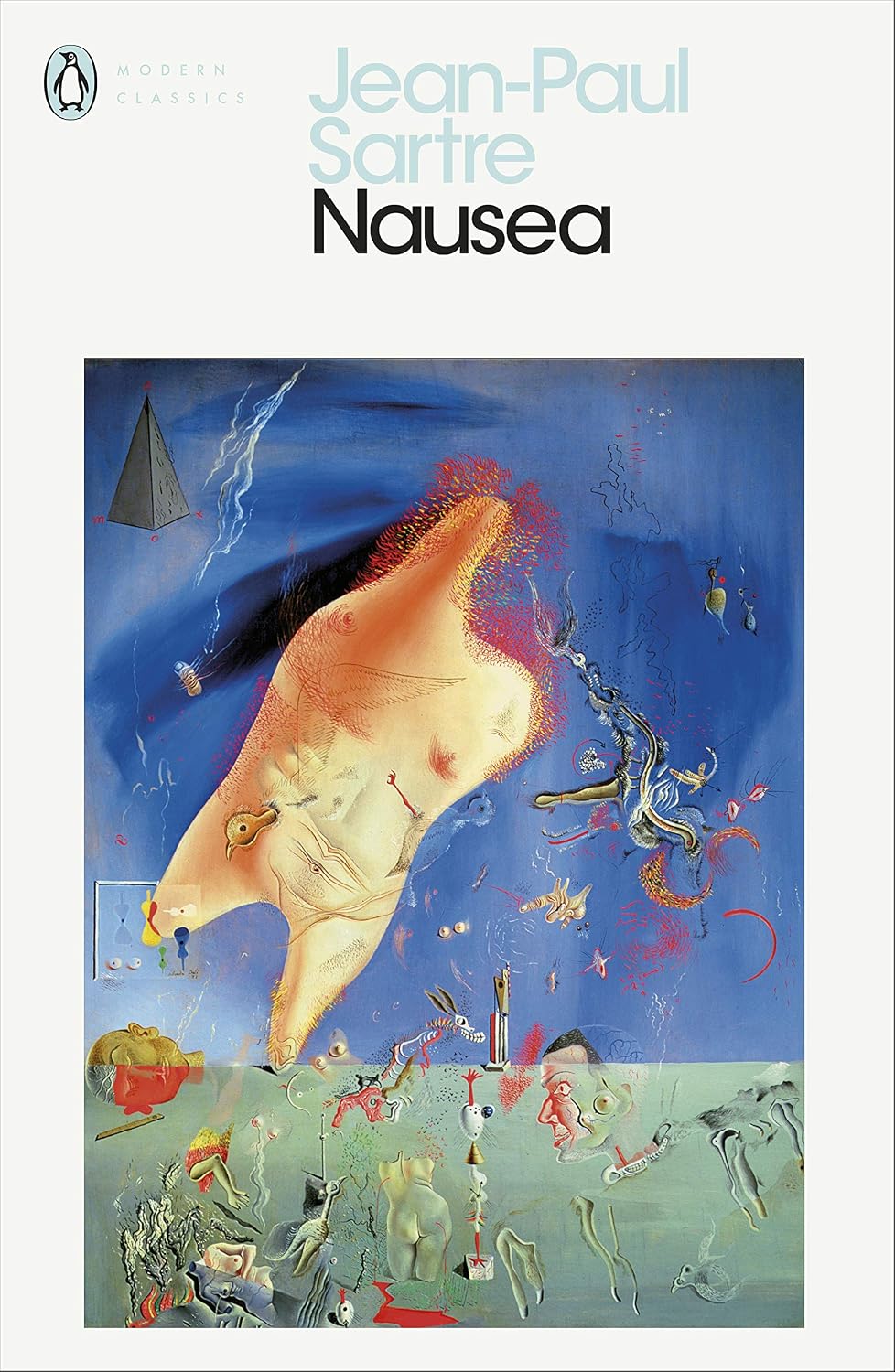
Nausea
A fascinating existentialist novel, written in the form of a journal, about a historian who moves to a small port in northern France to research a biography he is intending to write. Whilst there his senses become dulled and he becomes increasingly disgusted by his own existence, finding no solace with friends or a woman he begins an affair with.
France
1938
2
The Plague
The Plague takes place in the Algerian city of Oran, where an outbreak of bubonic plague gradually isolates the population from the outside world. Dr Bernard Rieux and other residents struggle to respond to the epidemic as deaths increase and everyday life becomes dominated by fear, separation, and uncertainty. As the city is placed under quarantine, its inhabitants react in different ways: some retreat into denial, others seek personal comfort, and many discover unexpected courage through acts of solidarity. Camus uses the epidemic to examine the human response to suffering and the moral responsibilities people have towards one another. Written in the aftermath of the Second World War, the novel is also widely read as an allegory of fascism and resistance. It explores collective responsibility, resilience, and the importance of fighting injustice even when victory remains uncertain.
France
1947
3
The Fall
In a dim Amsterdam bar, Jean-Baptiste Clamence, a former Parisian lawyer, begins an extraordinary confession to a stranger. Once admired for his charm, generosity, and defence of the innocent, he enjoyed a life built on the conviction that he was a good man. But one night, while crossing a Parisian bridge, he hears a woman fall into the river—and does nothing to save her. The memory follows him, gradually dismantling his carefully constructed image of himself.
Now living in Amsterdam, Clamence calls himself a judge-penitent: a man who confesses his own sins while exposing the hypocrisy of others. Through his unsettling monologue, Camus examines guilt, moral responsibility, vanity, and humanity’s need to feel innocent. As Clamence reveals more about himself, readers are drawn into an uncomfortable question: are we truly capable of judging others without confronting our own failures?
Darkly ironic and psychologically penetrating, The Fall is a philosophical exploration of the distance between who we believe ourselves to be and who we really are. Camus transforms one man’s confession into a searching indictment of modern society, challenging readers to examine their own motives, silences, and moral compromises.
France
1956
4
Medusa's Laugh
What if women could reclaim their freedom simply by telling their own stories? First published in 1975, Hélène Cixous’s Medusa’s Laugh is a landmark of feminist thought that challenges the patriarchal traditions shaping literature, language, and society. Drawing on the myth of Medusa, a woman transformed into a monster by the stories told about her, Cixous invites women to reject the identities imposed on them and rediscover their own voices. She introduces the concept of écriture féminine—a form of writing that breaks away from conventional, male-dominated structures and embraces the complexity of women’s bodies, desires, and experiences. Passionate, poetic, and deliberately provocative, this essay is both a literary manifesto and a call to action: women must write themselves into history rather than allow others to define them. Its central message remains powerful: self-expression can be an act of liberation.
France
2026