Mystery
All countries
Afghanistan
Argentina
Canada
China
Croatia
Egypt
Fiji
France
Germany
Ghana
Greece
India
Iraq
Italy
Jamaica
Japan
Libya
Luxembourg
Nigeria
Pakistan
Poland
Romania
Russia
South Korea
Spain
Sudan
Türkiye
Ukraine
United Kingdom
United States
1
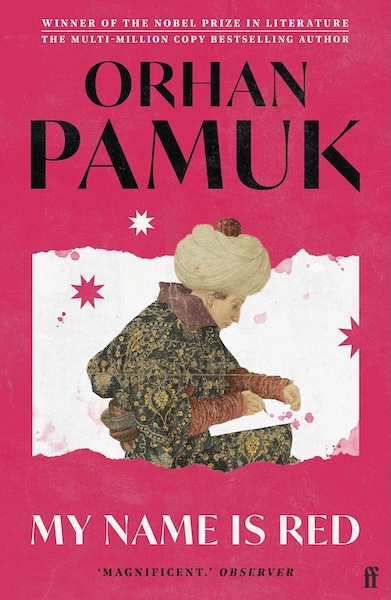
My Name Is Red
Set in sixteenth-century Istanbul during the Ottoman Empire, My Name Is Red follows a group of miniature painters commissioned to create an illustrated book for the sultan. Their work becomes controversial because it incorporates European artistic techniques that challenge traditional Islamic approaches to representation. When one of the artists is murdered, the investigation exposes rivalries, jealousy, and competing ideas about art, religion, and cultural identity. The story unfolds through multiple narrators, including artists, objects, and even a corpse, creating a complex picture of a society caught between established traditions and new influences. Pamuk explores the relationship between artistic expression and political authority, asking whether adopting foreign ideas represents progress or the loss of cultural heritage. The novel combines a murder mystery with a philosophical examination of how people understand themselves through art and tradition.
Türkiye
2002
2
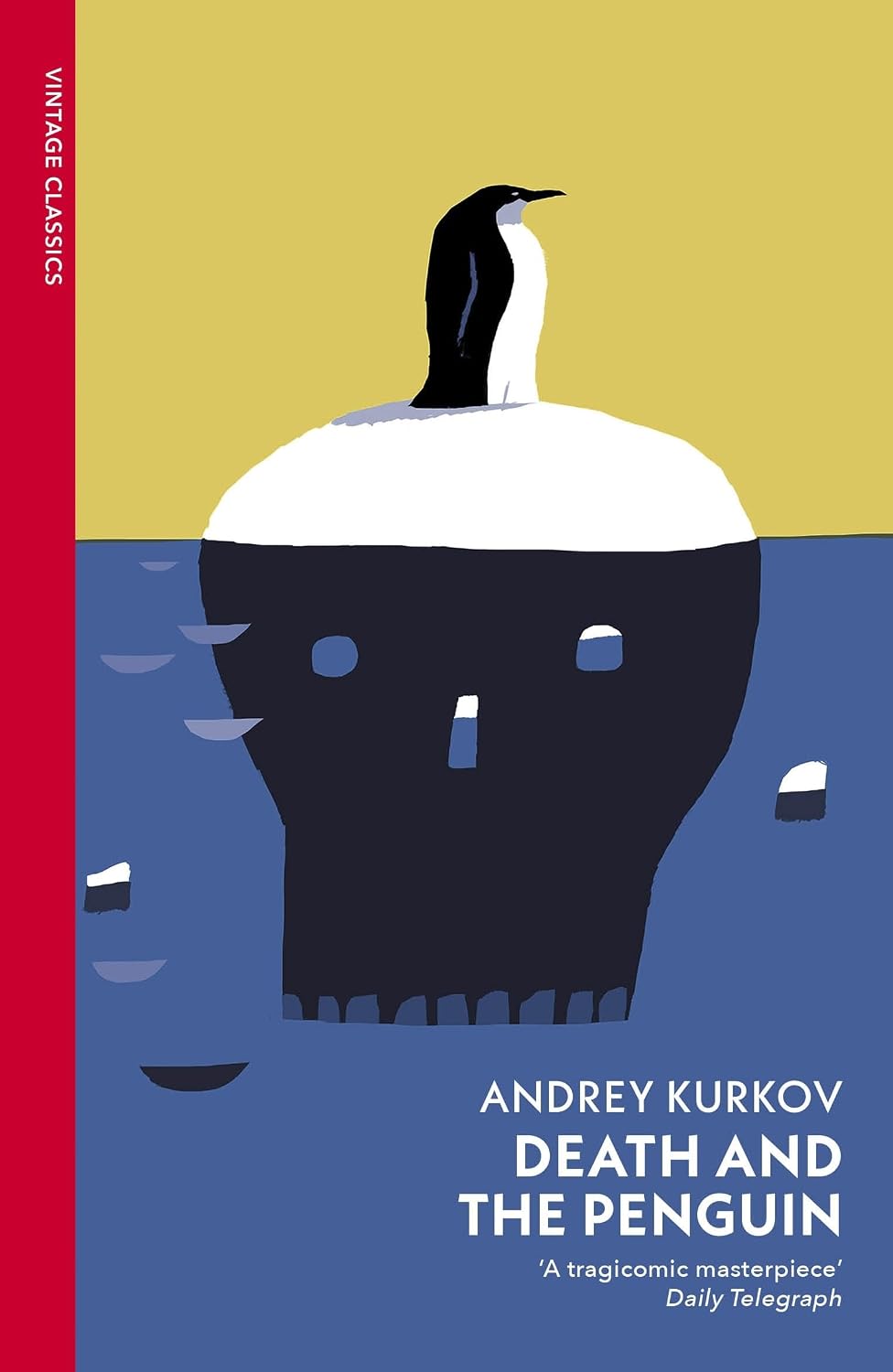
Death and the Penguin
In post-Soviet Kyiv, struggling writer Viktor Alekseyevich Zolotaryov lives a quiet, lonely existence with his unusual companion, Misha, a king penguin rescued from a zoo that can no longer afford to feed its animals. When Viktor secures a job writing obituaries for a local newspaper, he believes his fortunes may finally be changing. His editor, however, has an unsettling request: the obituaries must be written for prominent people who are still alive.
Soon, the subjects of Viktor’s obituaries begin dying under mysterious circumstances, drawing him into a dangerous world of political corruption and organised crime. As he tries to understand his role in these events, his apartment becomes a refuge for a young girl and her nanny, bringing unexpected responsibilities into his isolated life.
Blending dark humour, absurdism, and political satire, Death and the Penguin offers a haunting portrait of a society struggling to find its footing after the collapse of the Soviet Union. Through Viktor’s unlikely bond with Misha, Kurkov explores loneliness, moral compromise, and the quiet struggle to remain human in a world where violence has become ordinary.
Ukraine
2001
3
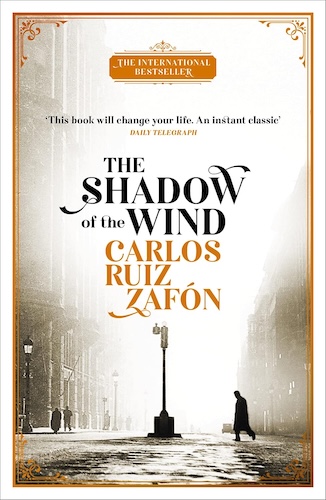
The Shadow of the Wind
Set in post-war Barcelona, The Shadow of the Wind begins when a young boy named Daniel Sempere discovers a forgotten novel by an obscure author, Julián Carax. Fascinated by the book, Daniel sets out to learn more about its creator, only to discover that someone has been systematically destroying every copy of Carax’s work. His investigation leads him into a web of hidden identities, tragic romances, family secrets, and the lingering wounds of Spain’s turbulent past. As Daniel grows older, the mystery becomes increasingly connected to his own life. Blending Gothic atmosphere, historical fiction, and suspense, Zafón celebrates the power of books while exploring how stories can preserve forgotten lives and reveal truths that others desperately want to conceal.
Spain
2001
4
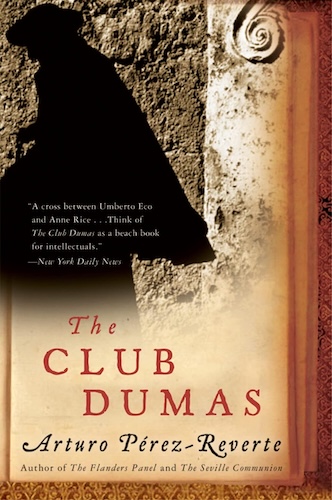
The Club Dumas
Lucas Corso is a cynical, resourceful book detective who makes his living tracking down rare editions for wealthy collectors. When he is hired to authenticate a manuscript believed to be a chapter from Alexandre Dumas’s The Three Musketeers, he finds himself drawn into a mystery involving a suspicious death, literary forgery, and a secret society of Dumas enthusiasts. But another assignment soon takes him into even darker territory: a wealthy collector wants him to verify a rare book entitled The Nine Doors of the Kingdom of Shadows, a mysterious volume said to contain instructions for summoning the Devil.
As Corso travels between Madrid, Toledo, and Paris, he encounters obsessive bibliophiles, enigmatic women, and individuals whose fascination with forbidden knowledge borders on madness. The two investigations begin to intertwine, blurring the boundaries between literary scholarship and the occult. With every clue, Corso becomes less certain about whom he can trust—or whether the dangers surrounding him are entirely human.
Combining intellectual mystery, Gothic suspense, and a playful exploration of literary history, Pérez-Reverte creates a thrilling tribute to the power of books and the obsessions they inspire. The Club Dumas asks whether rare books are merely objects to possess or gateways to worlds that might be better left unexplored.
Spain
1996
5
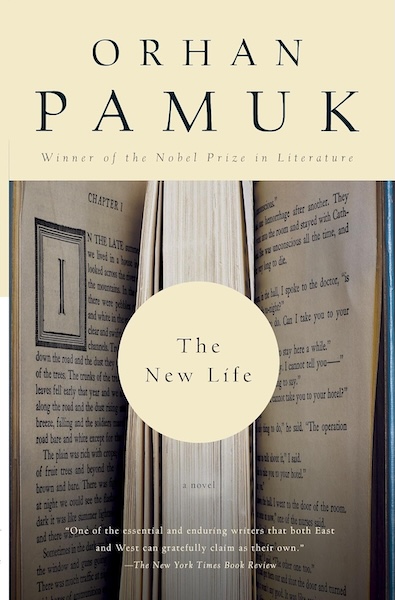
The New Life
“One day I read a book, and my whole life changed.”
With this extraordinary declaration, university student Osman begins a journey that will pull him away from everything familiar. After reading a mysterious book, he becomes convinced that its pages contain the promise of another existence—a hidden world waiting just beyond the boundaries of ordinary life. Captivated by its message, Osman abandons his studies and sets out to discover the transformation it promises.
He is joined in his search by Canan, a fellow student who has also been profoundly affected by the book. Their journey takes them across Turkey on endless bus rides through provincial towns and anonymous highways, where strange encounters and sudden accidents blur the line between reality and illusion. As Osman searches for the book’s secrets, his quest becomes increasingly entangled with love, obsession, and the possibility that his old identity is disappearing.
Part philosophical mystery and part surreal road novel, The New Life explores the power of literature to transform—and sometimes consume—the lives of its readers. Pamuk questions whether we can truly escape our former selves or whether the search for a new life is itself another form of illusion.
Türkiye
1994
6
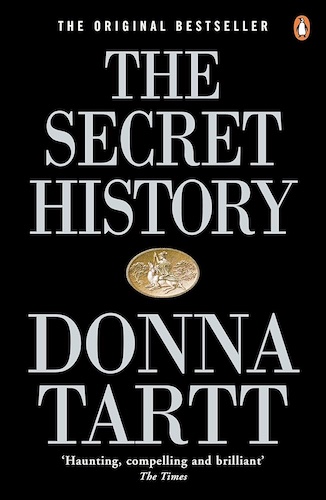
The Secret History
At an elite Vermont college, a tight-knit group of classics students becomes consumed by beauty, intellectual obsession, and the darker side of ancient philosophy. When their pursuit of an extraordinary experience leads to murder, their carefully constructed world begins to unravel. An atmospheric psychological novel about guilt, privilege, and the dangerous allure of belonging.
United States
1992
7
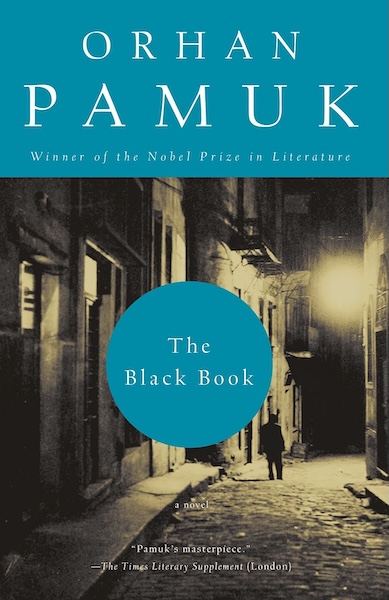
The Black Book
On a snowy day in Istanbul, lawyer Galip discovers that his wife, Rüya, has disappeared. Unable to understand why she has left, he begins searching the city’s crowded streets, old neighbourhoods, and hidden corners for clues. His investigation becomes even more mysterious when he discovers that Rüya’s half-brother, Celâl, a famous newspaper columnist, has vanished too.
As Galip follows the traces they have left behind, he becomes immersed in Celâl’s newspaper columns, which explore Istanbul’s history, its forgotten stories, and the secrets concealed beneath everyday life. The search gradually transforms into something more profound: a journey through the city’s collective memory and Galip’s own uncertain identity.
Blending mystery, philosophical reflection, and a vivid portrait of Istanbul, The Black Book explores the desire to become someone else and the difficulty of knowing who we really are. Pamuk transforms the city into a labyrinth of stories in which the search for a missing person becomes a search for the self.
Türkiye
1990
8
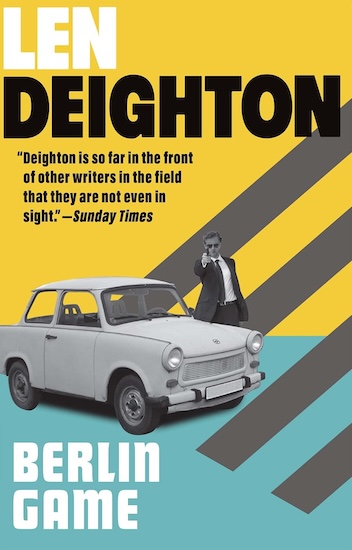
Berlin Game
During the Cold War, British intelligence officer Bernard Samson is accustomed to being overlooked. Now working behind a desk in London after years in the field, he is unexpectedly called back into action when one of Britain’s most valuable agents in East Berlin requests urgent extraction. Known by the codename “Brahms Four,” the agent believes a Soviet mole has infiltrated the highest levels of British intelligence—and that his own life is in immediate danger.
Sent to Berlin, Samson must navigate a labyrinth of double agents, conflicting loyalties, and carefully concealed secrets. His mission is complicated by the suspicion that the betrayal may come from someone within his own professional circle. Meanwhile, his relationship with his ambitious wife, Fiona, who is rising through the intelligence service while his own career stagnates, adds another layer of uncertainty to his already precarious position.
The first novel in Len Deighton’s acclaimed Game, Set and Match trilogy, Berlin Game combines intricate espionage plotting with a sharp portrait of the people behind intelligence operations. Set in a divided Europe where trust is a dangerous luxury, it explores betrayal, professional rivalry, and the personal costs of a life built around secrets.
Germany
United Kingdom
1983
9
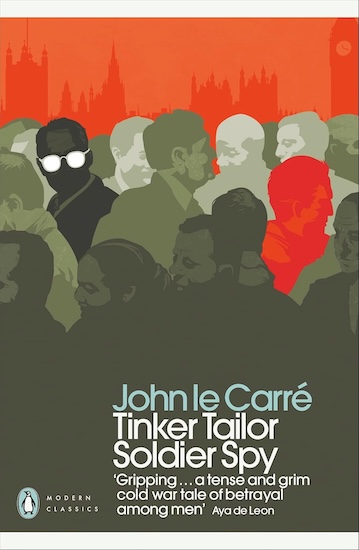
Tinker, Tailor, Soldier, Spy
At the height of the Cold War, British intelligence is facing a devastating crisis. A covert operation in Czechoslovakia has gone disastrously wrong, forcing the head of the Secret Intelligence Service, known as Control, into retirement. But before his departure, Control becomes convinced that a Soviet mole has infiltrated the highest levels of British intelligence, secretly feeding classified information to Moscow.
George Smiley, Control’s quiet, methodical former deputy, is brought back from retirement to investigate. Working in secret, he begins examining the service’s senior officers, each of whom has a codename from a childhood rhyme: Tinker, Tailor, Soldier, and others. As Smiley reconstructs past operations and follows a trail of carefully concealed evidence, he must determine which of his former colleagues has betrayed the organisation from within.
Set in the shadowy world of Cold War London, Tinker, Tailor, Soldier, Spy is a masterful espionage novel about deception, institutional loyalty, and the corrosive effects of suspicion. Rather than relying on spectacular action, John le Carré builds tension through quiet conversations, fragmented memories, and psychological insight, revealing a world where the greatest threat may be the person sitting beside you.
Russia
United Kingdom
1974
10
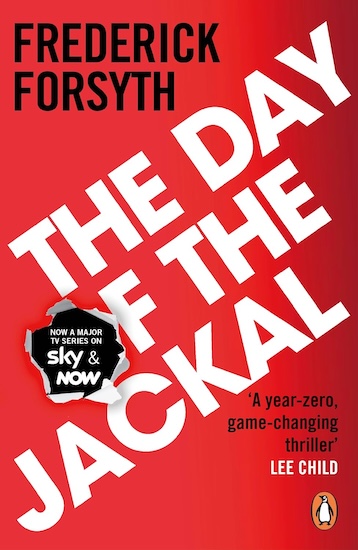
The Day of the Jackal
France, 1963. Following repeated attempts to assassinate President Charles de Gaulle, a militant organisation determined to overthrow him hires a professional killer known only by his codename: the Jackal. Brilliant, meticulous, and almost impossible to identify, the assassin begins preparing an elaborate plan to kill the French president. He obtains false identities, arranges specialised equipment, and carefully studies the security measures surrounding his target.
When French intelligence discovers the conspiracy, the authorities launch a desperate hunt for the unknown assassin. Commissaire Claude Lebel, a methodical detective with an exceptional ability to follow small clues, is assigned to lead the investigation. As the Jackal moves closer to his target, Lebel must navigate political pressure, bureaucratic obstacles, and a trail of deception stretching across Europe.
Combining painstaking procedural detail with relentless suspense, The Day of the Jackal explores the deadly intersection of political extremism, state security, and individual ambition. Frederick Forsyth transforms a fictional assassination plot into a gripping contest between two professionals, each determined to outwit the other before time runs out.
France
United Kingdom
1971
11
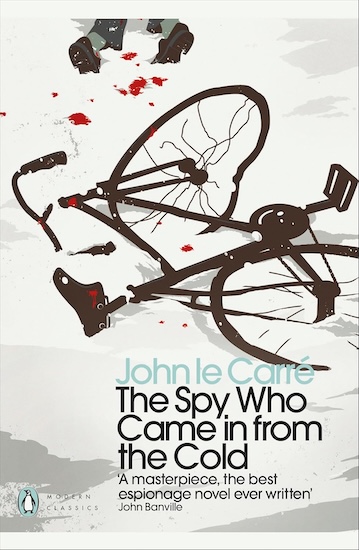
The Spy Who Came in from the Cold
Alec Leamas is a weary British intelligence officer stationed in Berlin during the Cold War. After watching his network of agents collapse, he is ready to leave the dangerous world of espionage behind. But his superior, known as Control, offers him one final assignment: pretend to defect to East Germany and help destroy a powerful figure within the East German intelligence service. To make the deception convincing, Leamas must appear disillusioned, financially desperate, and willing to betray his country.
As he becomes entangled in a carefully constructed web of lies, Leamas discovers that the boundaries between truth and deception are far less clear than he imagined. His growing relationship with Liz Gold, a young British communist, complicates his mission and forces him to confront the human cost of a world in which people are treated as expendable pieces in a political game.
Set against the bleak backdrop of divided Berlin, The Spy Who Came in from the Cold strips espionage of its glamour, revealing a world shaped by moral compromise, manipulation, and betrayal. John le Carré’s landmark novel challenges the idea that intelligence work serves an uncomplicated good, asking what remains of personal conscience when loyalty to the state demands sacrificing everything else.
Germany
United Kingdom
1963
12
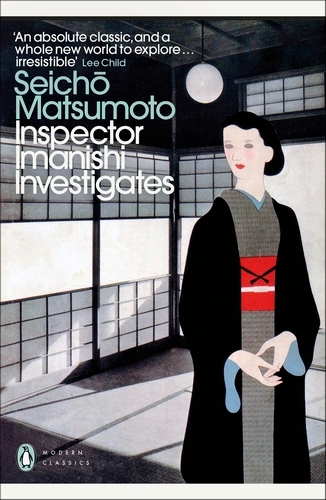
Inspector Imanishi Investigates
First published in 1961, Inspector Imanishi Investigates is a classic Japanese crime novel that follows Inspector Eitaro Imanishi as he investigates the mysterious murder of a man found dead beneath a train in Tokyo. What initially appears to be a straightforward case gradually unfolds into a complex investigation involving false identities, concealed pasts, and the social prejudices of postwar Japan. As Imanishi follows a trail of clues across the country, he encounters people whose lives have been shaped by ambition, discrimination, and the desire to escape their origins. Seichō Matsumoto combines the careful logic of a police procedural with a thoughtful examination of Japanese society, creating a mystery in which understanding human motivations is just as important as uncovering physical evidence.
Japan
1961