History
All countries
Algeria
Belarus
Cambodia
China
Cuba
Cyprus
Egypt
France
India
Iran
Ireland
Malta
Pakistan
Palestine
Russia
Taiwan
Turkmenistan
United Kingdom
United States
Yemen
1
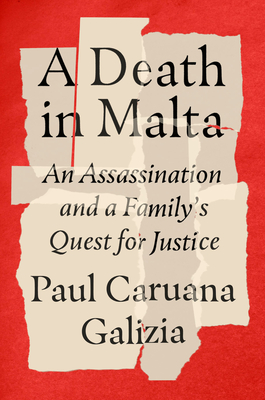
A Death in Malta: An Assassination and a Family's Quest for Justice
In this powerful memoir and work of investigative journalism, Paul Caruana Galizia recounts the assassination of his mother, Daphne Caruana Galizia, a Maltese investigative journalist known for exposing corruption and misconduct among the country’s powerful figures. On 16 October 2017, Daphne was killed by a car bomb near her home, following years of intimidation linked to her work.
Her death transformed her family’s lives. Paul and his brothers, together with their father, embarked on a determined search for the truth, seeking to uncover who was responsible for the murder and who had benefited from silencing their mother. Their pursuit of justice reveals the complex relationships between political power, financial interests, and corruption in Malta.
Combining personal grief with investigative reporting, the book is both a tribute to a courageous journalist and an examination of the challenges facing democracy and press freedom. It explores the cost of speaking truth to power and the determination required to hold powerful institutions accountable.
Malta
2023
2
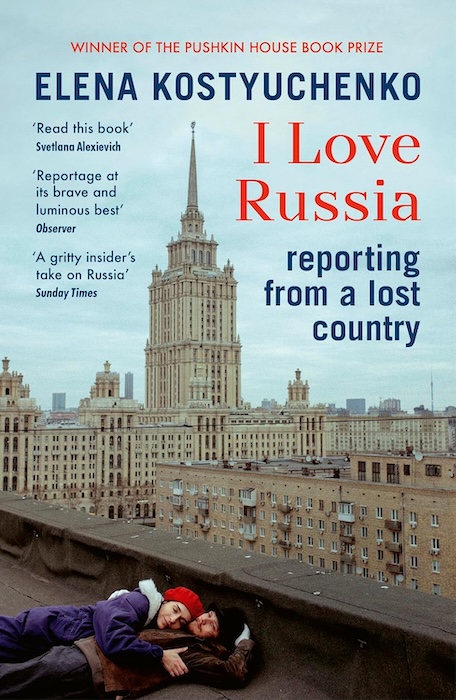
I Love Russia
I Love Russia brings together investigative reporting and personal essays to portray a country through the lives of people often excluded from its official narrative. Journalist Elena Kostyuchenko writes about sex workers, LGBTQ+ people, residents of neglected institutions, and communities affected by violence and political repression. Her reporting also follows the consequences of Russia’s invasion of Ukraine, examining the human realities behind state propaganda and military aggression. Rather than presenting Russia as a single, uniform society, Kostyuchenko reveals its contradictions through the experiences of individuals whose stories challenge dominant political narratives. The book explores the complicated relationship between love for one’s country and the responsibility to criticise its government, presenting journalism as an act of witnessing, resistance, and moral commitment.
Russia
2023
3
What Have You Left Behind?
What Have You Left Behind? documents the experiences of ordinary Yemenis whose lives have been devastated by the country’s civil war. Writer and journalist Bushra al-Maqtari travelled across Yemen to collect testimonies from civilians affected by violence, displacement, and the destruction of their communities. Rather than focusing on political leaders or military strategy, the book gives space to individuals who have lost family members, homes, livelihoods, and any sense of security. Their accounts reveal the intimate consequences of a conflict often reduced to statistics and geopolitical analysis. By bringing together voices from different parts of the war’s divided landscape, al-Maqtari exposes the human suffering behind competing political narratives. The book explores grief, survival, and the struggle to preserve dignity amid devastation, serving as a powerful record of civilian experiences and a challenge to the international indifference that allows such suffering to continue.
Yemen
2023
4
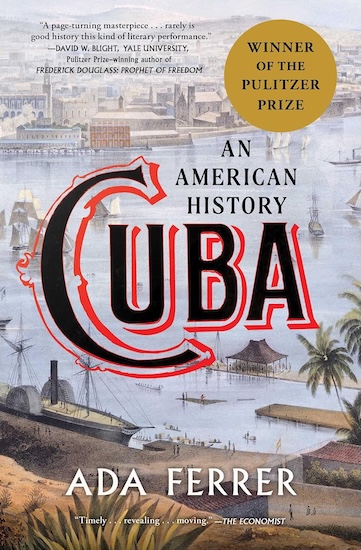
Cuba: An American History
Cuba’s history is inseparable from that of the United States, yet the island’s story is often told through the ambitions of its powerful neighbour. Spanning more than five centuries, Ada Ferrer’s Pulitzer Prize-winning history traces Cuba from Indigenous societies and Spanish colonisation through slavery, independence struggles, revolution, and the Cold War. Bringing together the lives of enslaved people, revolutionaries, ordinary citizens, and political leaders, Ferrer reveals how Cuba shaped American politics just as American intervention transformed Cuba. Richly researched and deeply human, this sweeping account challenges familiar narratives of empire and nationhood, illuminating the complex relationship between two countries whose histories remain profoundly intertwined.
Cuba
2022
5
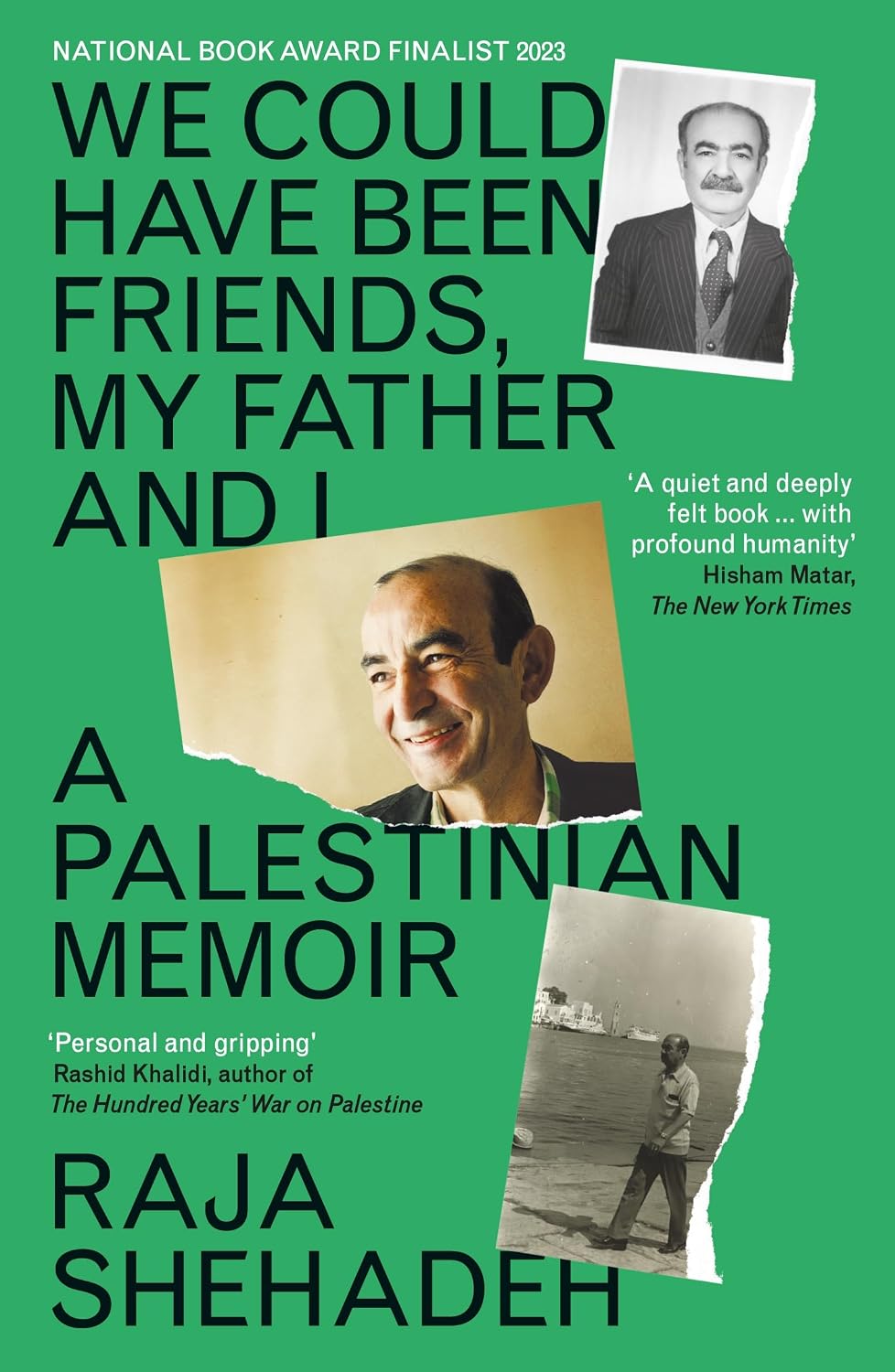
We Could Have Been Friends, My Father and I
In We Could Have Been Friends, My Father and I, Palestinian writer and human rights lawyer Raja Shehadeh reflects on his complex relationship with his father, Aziz Shehadeh, a prominent lawyer and advocate for Palestinian rights. Through personal memories, family history, and historical research, Raja reconstructs his father’s life and examines the political convictions that shaped their relationship. Aziz believed in pursuing justice through legal means and sought peaceful solutions to the Palestinian struggle, while his son developed his own understanding of resistance, identity, and belonging. Their differences often created emotional distance, leaving unspoken feelings and misunderstandings between them. Against the backdrop of British rule, the creation of Israel, and the continuing transformation of Palestinian society, Shehadeh explores how political conflict enters even the most intimate family relationships. The memoir is both a tribute to his father and an attempt to understand him more fully, asking whether shared experiences and renewed understanding can bridge the distance between generations. It offers a deeply personal meditation on family, history, reconciliation, and the possibility of connection despite profound differences.
Palestine
2022
6
Wayward Lives, Beautiful Experiments
At the dawn of the twentieth century, black women in the US were carving out new ways of living. The first generations born after emancipation, their struggle was to live as if they really were free.
These women refused to labour like slaves. Wrestling with the question of freedom, they invented forms of love and solidarity outside convention and law. These were the pioneers of free love, common-law and transient marriages, queer identities, and single motherhood - all deemed scandalous, even pathological, at the dawn of the twentieth century, though they set the pattern for the world to come.
In Wayward Lives, Beautiful Experiments, Saidiya Hartman deploys both radical scholarship and profound literary intelligence to examine the transformation of intimate life that they instigated. With visionary intensity, she conjures their worlds, their dilemmas, their defiant brilliance.
United States
2020
7
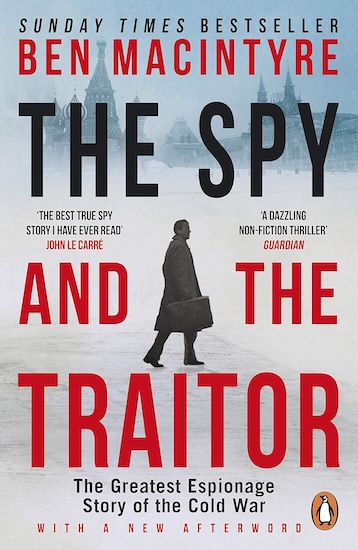
The Spy and the Traitor
In 1985, a seemingly ordinary man walks through the streets of Moscow carrying a plastic shopping bag. Hidden in plain sight, he is Oleg Gordievsky, a senior KGB officer who has secretly been working for British intelligence for more than a decade. As one of Britain’s most valuable spies inside the Soviet Union, he has passed on critical information about Soviet intelligence operations, helping the West understand the Kremlin’s intentions during the final years of the Cold War.
But Gordievsky’s double life becomes increasingly dangerous. While MI6 struggles to protect its most important source, the CIA grows suspicious and launches its own investigation to identify the mysterious British informant. Unknown to Gordievsky, the hunt for him leads to Aldrich Ames, a CIA officer secretly betraying American intelligence to the Soviets. When Gordievsky is recalled to Moscow, he faces interrogation, surveillance, and the possibility of execution. His only hope lies in an extraordinary escape plan that must unfold under the watchful eyes of the KGB.
Drawing on extensive research and previously undisclosed details, Ben Macintyre reconstructs one of the Cold War’s most remarkable espionage stories. The Spy and the Traitor explores loyalty, ideological conviction, betrayal, and the extraordinary courage required to risk everything for one’s beliefs.
Russia
United Kingdom
2018
8
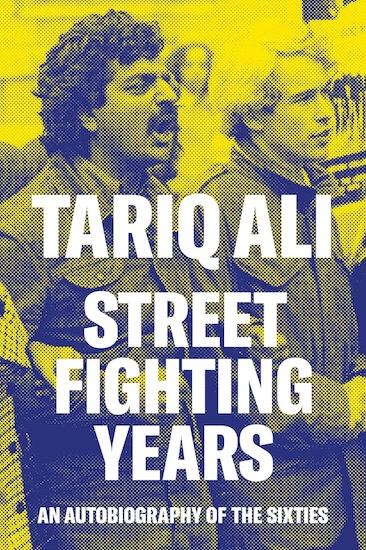
Street Fighting Years
In Street Fighting Years, Tariq Ali recounts his transformation from a young Pakistani student into one of the most prominent radical activists of the 1960s. Moving between London, Paris, Prague, Hanoi, and other centres of political upheaval, Ali offers a personal account of a decade defined by student revolts, anti-war demonstrations, revolutionary movements, and challenges to established political authority.
Through his encounters with figures such as Malcolm X, Bertrand Russell, Che Guevara, and Mick Jagger, Ali captures the energy and contradictions of a generation determined to reshape society. He reflects on the Vietnam War, the suppression of the Prague Spring, the rise of the international protest movement, and the growing opposition to Western imperialism. Blending autobiography with political history, the book explores the hopes, disagreements, and disappointments of activists who believed that collective action could transform the world. It is both a portrait of a turbulent era and a reflection on the personal costs of political commitment.
Pakistan
United Kingdom
2018
9
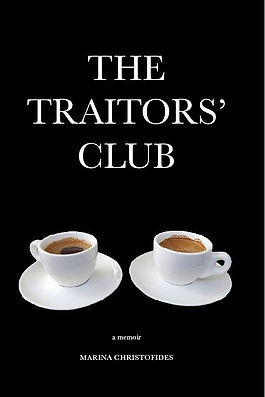
The Traitors' Club
In Cyprus, even ordering a coffee can become a political statement. In The Traitors’ Club, Marina Christofides recounts the experiences of a group of friends from both sides of the island’s division who refuse to define themselves solely as Greek Cypriots or Turkish Cypriots. Instead, they choose to identify as Cypriots, united by their belief that people from both communities can live together in peace.
Gathering over coffee in an Ottoman courtyard in divided Nicosia, the friends share stories that are often funny, sometimes harrowing, and always deeply personal. Their conversations reveal the lasting effects of British colonial rule, intercommunal violence, the 1974 Turkish invasion, and the partition of Cyprus. Through their memories, the political history of the island becomes an intimate story of families, friendships, displacement, and the struggle to coexist.
The group calls itself the Traitors’ Club because, in a society shaped by competing national loyalties, friendship across the divide can be viewed as an act of betrayal. Yet their willingness to listen to one another challenges the divisions that politicians and historical conflicts have reinforced.
Moving between memories of an idyllic childhood, the trauma of fleeing during wartime, and the everyday realities of living in a divided country, Christofides offers a personal perspective on the Cyprus conflict. The memoir celebrates the courage of ordinary people who refuse to let political boundaries determine whom they can love, trust, or call their own.
Cyprus
2017
10
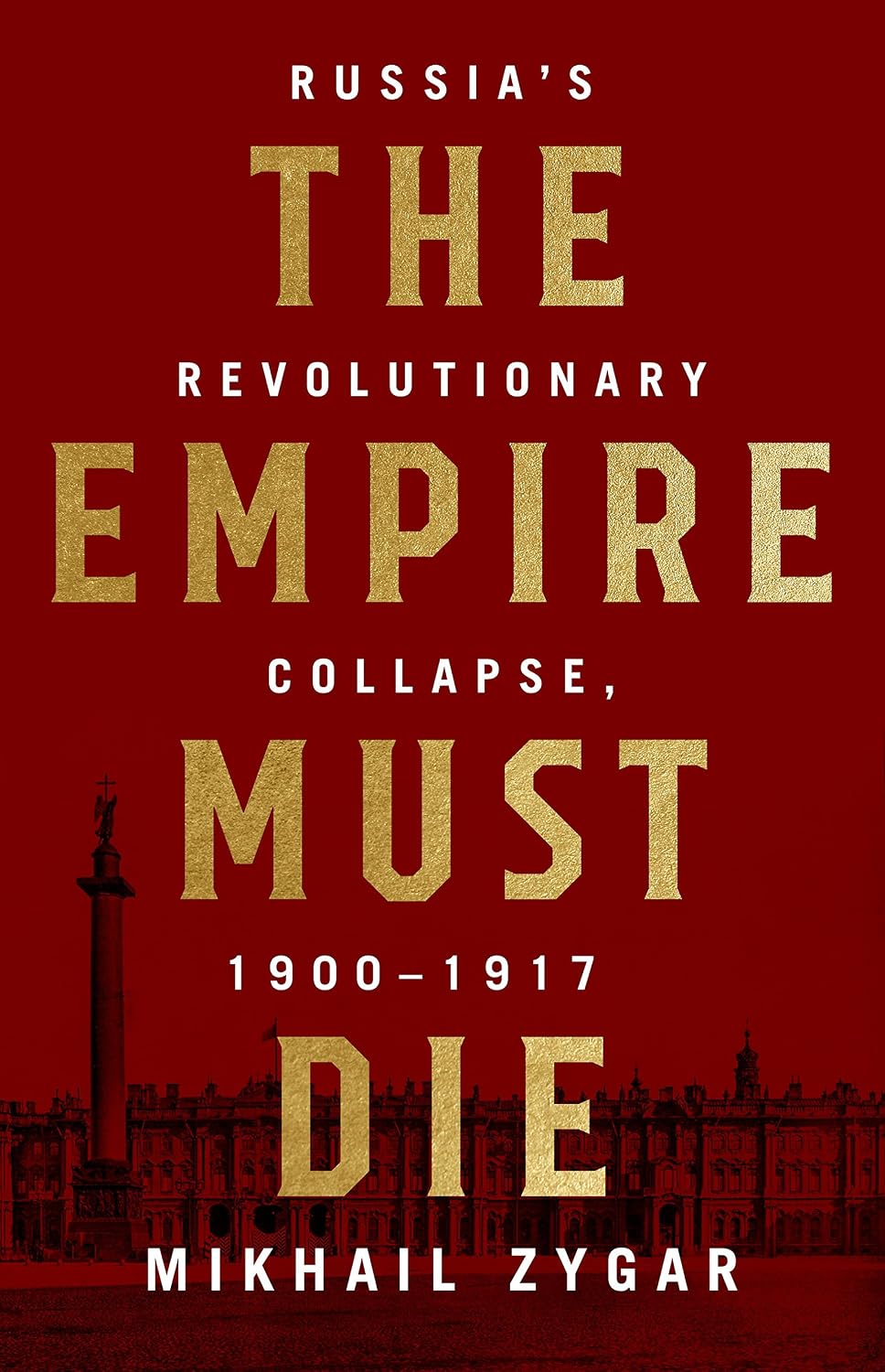
The Empire Must Die
The Empire Must Die: Russia’s Revolutionary Collapse, 1900–1917 reconstructs the political and cultural upheavals that preceded the fall of the Russian Empire. Through the lives of writers, artists, politicians, revolutionaries, and members of the imperial family, Mikhail Zygar traces a society caught between the possibility of reform and the persistence of authoritarian power. The book explores Russia’s brief flourishing of liberal ideas, the growing dissatisfaction with the monarchy, and the pressures of the First World War that helped bring the old order to collapse. Drawing on historical research and vivid character portraits, Zygar presents the revolution not as an inevitable event but as the outcome of decisions, rivalries, and missed opportunities that transformed the country’s future.
Russia
2017
11
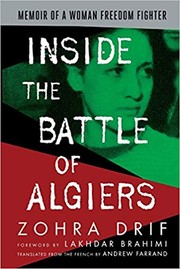
Inside the Battle of Algiers
In this memoir, Algerian revolutionary Zohra Drif recounts her experiences during Algeria’s struggle for independence from French colonial rule in the 1950s and early 1960s. A young woman studying law in Algiers, Drif joins the National Liberation Front (FLN) and becomes involved in its armed resistance alongside other women who challenge both colonial authority and traditional expectations of women’s roles in society.
Through personal recollections, she describes the political tensions, underground operations, arrests, and difficult choices that shaped the independence movement. Her account also explores the place of women in revolutionary struggle and the moral complexities of political violence. Offering a firsthand perspective on one of the defining conflicts of modern Algerian history, the memoir examines the sacrifices, convictions, and contradictions involved in fighting for national liberation.
Algeria
2017
12
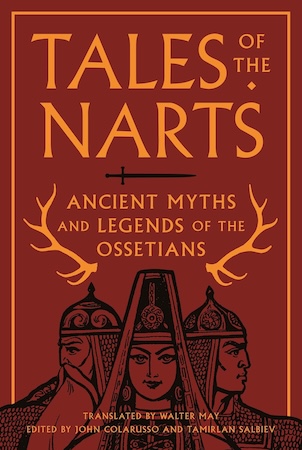
Tales of the Narts: Ancient Myths and Legends of the Ossetians
The Nart sagas are among the great mythological traditions of the Caucasus, preserving the stories, beliefs, and cultural memory of the Ossetian people. In Tales of the Narts, scholars John Colarusso and Tamirlan Salbiev bring together a rich collection of legends featuring the Narts, a mythical race of formidable warriors whose world is filled with heroic feats, supernatural encounters, fierce rivalries, and complicated family relationships.
These stories introduce memorable heroes and heroines, powerful adversaries, giants, monsters, and ancient gods. Although the Narts are celebrated for their courage and strength, they are also capable of jealousy, cruelty, and destructive ambition. Their adventures explore honor, fate, loyalty, conflict, and the consequences of human choices. Rooted in centuries of oral storytelling, the collection offers a window into the cultural heritage of the North Caucasus while revealing intriguing parallels with Greek, Norse, and other ancient mythologies. It is an important introduction to a distinctive literary tradition that has shaped the region’s collective imagination.
Russia
2016