Family Saga
All countries
Algeria
Australia
Bangladesh
Barbados
Belarus
Bosnia and Herzegovina
Brazil
Canada
Chile
China
Congo, Democratic Republic
Costa Rica
Cuba
Ethiopia
France
Germany
Ghana
India
Ireland
Italy
Latvia
Madagascar
Nigeria
North Macedonia
Norway
Oman
Palestine
Puerto Rico
Saint Kitts and Nevis
Singapore
South Korea
Spain
Sri Lanka
Taiwan
Türkiye
Uganda
United Kingdom
United States
Vietnam
1
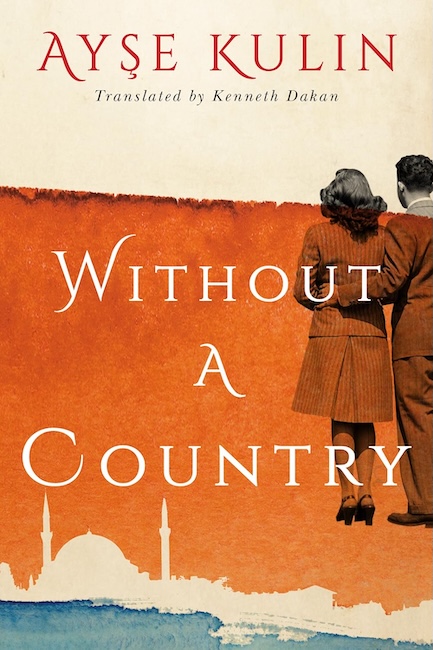
Without a Country
As Hitler’s persecution of Jews intensifies in 1930s Germany, medical professor Gerhard Schliemann and his wife, Elsa, face an impossible choice: remain in the country they call home or flee to protect their family. Their escape leads them to Turkey, where German Jewish academics are offered positions at universities and hospitals as the young republic works to modernise its institutions.
Although the Schliemanns find refuge and the opportunity to rebuild their lives, safety does not guarantee belonging. Across four generations, their descendants navigate political upheaval, military coups, interfaith relationships, and renewed antisemitism. As Turkey itself changes, the family must confront difficult questions about identity, loyalty, and what it means to belong to a country that may never fully accept them.
Spanning nearly a century, Without a Country is a multigenerational saga inspired by the real history of German-speaking Jewish academics who found refuge in Turkey during the Nazi era. Ayşe Kulin explores the complicated relationship between displacement and belonging, showing how the search for a safe home can shape a family’s destiny long after the original refugees are gone.
Türkiye
Germany
2016
2

Love in Exile
In 1920s Turkey, Sabahat is a bright, determined young Muslim woman who dreams of an education and a life beyond the traditional expectations placed on women. Persuading her family to let her pursue her studies, she begins to imagine a future shaped by her own ambitions rather than an arranged marriage. But her plans take an unexpected turn when she falls in love with Aram, an Armenian Christian student.
Their feelings deepen despite the religious and cultural divisions separating their families. In a society where interfaith relationships challenge deeply rooted traditions, their love becomes a source of both hope and conflict. As family loyalties and social pressures threaten to tear them apart, Sabahat and Aram must decide how much they are willing to sacrifice to remain together.
Inspired by Ayşe Kulin’s own family history, Love in Exile is a sweeping romance set during a period of profound transformation in Turkish society. It explores forbidden love, women’s independence, religious difference, and the painful choices people face when personal happiness conflicts with family expectations.
Türkiye
2016
3
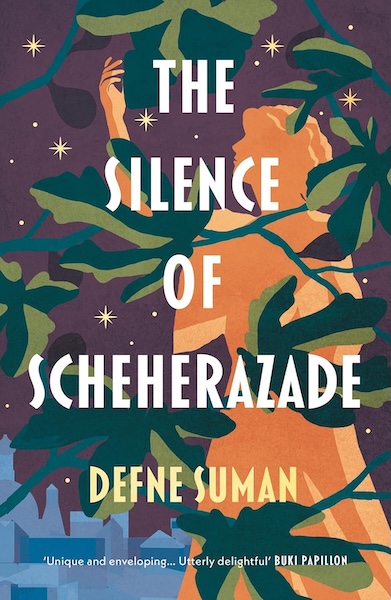
The Silence of Scheherazade
In September 1905, in the cosmopolitan Ottoman port city of Smyrna, a girl named Scheherazade is born as an Indian spy arrives with a secret mission for the British Empire. Their stories unfold alongside those of four families—a Levantine, a Greek, a Turkish, and an Armenian—whose lives are bound together by love, ambition, and the city’s extraordinary cultural diversity.
Over the following seventeen years, the families navigate political upheaval, shifting loyalties, forbidden relationships, and the growing tensions surrounding the decline of the Ottoman Empire. As war transforms the region, the world they know begins to crumble, culminating in the devastating fire that engulfs Smyrna in 1922.
Rich in historical detail and intimate human drama, The Silence of Scheherazade resurrects a lost multicultural world and gives voice to the people caught between competing nationalisms. It is a story of love, displacement, and the silences that history leaves behind.
Türkiye
2016
4
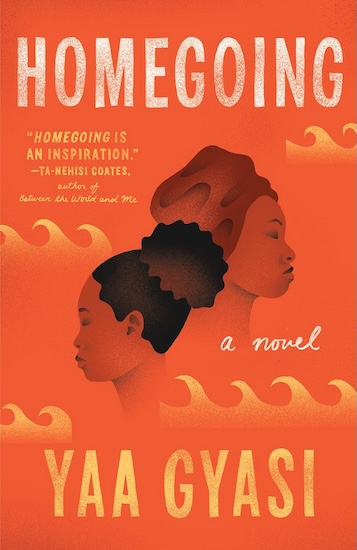
Homegoing
Two half-sisters, Effia and Esi, are born in eighteenth-century Ghana, their lives divided by the forces of slavery and colonialism. Effia marries a British slave trader and lives in comfort above the dungeons of Cape Coast Castle, unaware that her sister Esi is imprisoned below before being sold into slavery in America. From the villages of Ghana to the plantations of the American South and the streets of modern Harlem, their descendants inherit the consequences of choices, violence, and histories they never experienced themselves. Spanning eight generations and three centuries, Homegoing is a powerful exploration of how slavery reshapes families, how trauma travels across generations, and how the past continues to influence the present.
Ghana
2016
5
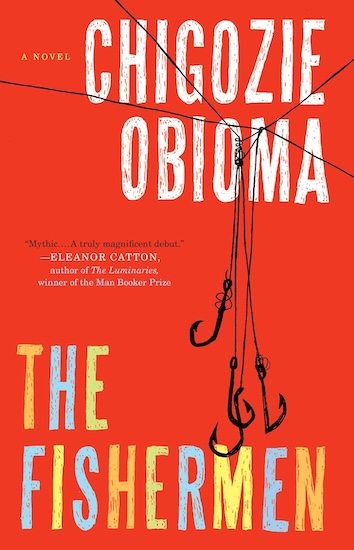
The Fishermen
In 1990s Nigeria, four brothers— Ikenna, Boja, Obembe, and Benjamin—enjoy a close bond until their father leaves their hometown of Akure for work. Taking advantage of his absence, the boys skip school to fish at a forbidden river. There, they encounter Abulu, a local man believed to be mad, who delivers a terrifying prophecy: the eldest brother, Ikenna, will be killed by one of his own siblings.
The prediction plants a seed of suspicion that gradually poisons the brothers’ relationship. As Ikenna becomes increasingly consumed by fear and paranoia, the family struggles to understand the forces tearing them apart. Narrated by nine-year-old Benjamin, the novel follows the devastating consequences of a single prophecy, exploring how belief, fear, and resentment can transform love into violence.
Blending Nigerian folklore, biblical allusions, and the structure of Greek tragedy, The Fishermen is both an intimate portrait of a family in crisis and a broader meditation on fate, brotherhood, and the fragility of human relationships.
Nigeria
2015
6
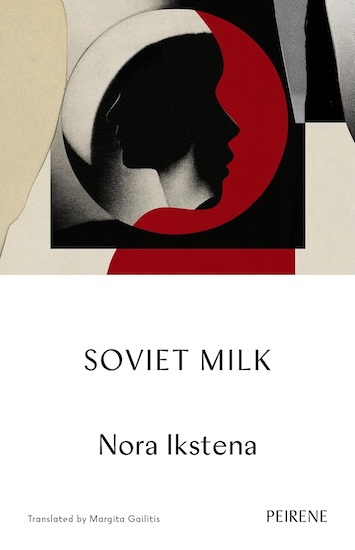
Soviet Milk
Set in Soviet-occupied Latvia between 1969 and 1989, Soviet Milk tells the story of three generations of women whose lives are shaped by political oppression, emotional isolation, and the struggle for personal freedom. At its centre is a talented young gynaecologist who refuses to accept the restrictions imposed by the Soviet system. After a professional conflict with the authorities, she loses the career she has worked towards and is sent to practise medicine in the Latvian countryside. Increasingly withdrawn and unable to find meaning in her life, she struggles to connect with her daughter, who grows up feeling the weight of her mother’s unhappiness.
The story alternates between the voices of the mother and daughter, revealing how political repression reaches into the most intimate corners of family life. While the mother retreats into despair, the daughter searches for understanding, belonging, and hope, finding emotional stability in the care of her grandmother. As Latvia approaches the restoration of its independence, the women’s personal struggles become intertwined with their country’s desire for liberation.
Through its portrayal of a fractured mother-daughter relationship, Ikstena explores how authoritarian systems can damage individual lives across generations. Yet the novel also celebrates the resilience of women, the sustaining power of familial love, and the possibility of breaking free from inherited suffering.
Latvia
2015
7
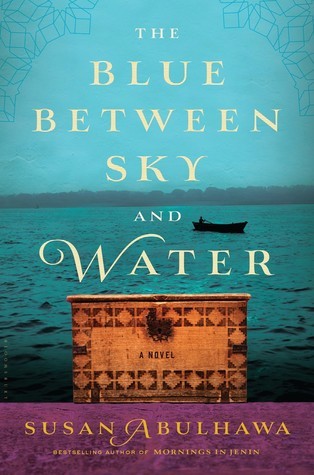
The Blue Between Sky and Water
In 1947, the Baraka family lives in Beit Daras, a Palestinian village surrounded by olive groves and fertile farmland. When their home is destroyed and the family is forced to flee during the Nakba, siblings Nazmiyeh and Mamdouh embark on separate journeys that will shape the lives of generations to come. In Gaza, Nazmiyeh struggles to rebuild her life in a refugee community, preserving her family’s traditions and nurturing the people around her despite repeated hardships. Meanwhile, Mamdouh eventually settles in the United States, where his granddaughter Nur grows up far from her ancestral homeland, struggling with loneliness and a fractured sense of belonging. Decades later, Nur travels to Gaza, where she encounters Alwan and her son Khaled, whose mysterious condition connects their families in unexpected ways. Blending Palestinian history, magical realism, and the intimate stories of several generations, Susan Abulhawa’s novel explores displacement, inherited trauma, family bonds, and the enduring longing for home.
Palestine
2015
8
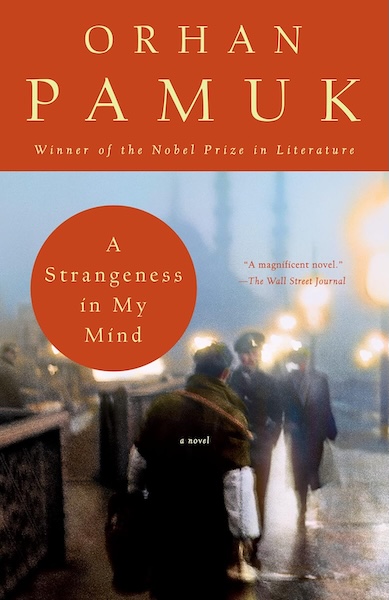
A Strangeness in My Mind
In 1969, twelve-year-old Mevlut leaves his village in central Anatolia and arrives in Istanbul, a city expanding so rapidly that familiar streets and entire neighbourhoods seem to disappear almost overnight. Hoping to build a better life, he works alongside his father selling boza, a traditional fermented drink, on the city’s streets. Over the years, he takes on different jobs, falls in love, marries, and raises a family while watching Istanbul transform around him.
Mevlut is neither a great success nor a complete failure. While others grow wealthy from the city’s rapid development, he remains an outsider in a place he has called home for decades. Even as his life changes, he continues to wonder about the peculiar feeling inside him—a sense that the world he inhabits never quite matches the world he imagines.
Spanning more than forty years, A Strangeness in My Mind is a sweeping portrait of urban migration, ordinary working lives, and the transformation of modern Istanbul. Through Mevlut’s quiet resilience, Pamuk explores love, social mobility, and the search for belonging in a city that is always becoming something new.
Türkiye
2014
9
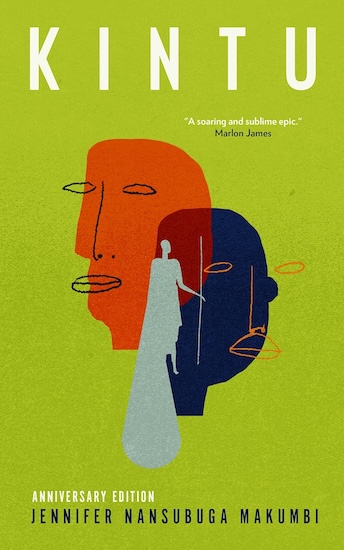
Kintu
Set across several centuries of Ugandan history, Kintu is an ambitious family saga that reimagines the history, mythology, and cultural traditions of the Buganda kingdom. The story begins in 1750, when Kintu Kidda, a powerful provincial governor, travels to the capital to pledge allegiance to the new king. During the journey, a tragic incident sets a curse in motion, bringing suffering to his descendants for generations.
Centuries later, members of the Kintu family struggle with personal tragedies, fractured relationships, and unexplained misfortunes. As they confront their shared history, they must decide whether their suffering stems from an ancestral curse, historical circumstances, or the unresolved conflicts passed down through generations.
Blending Ugandan oral traditions, mythology, spirituality, and historical storytelling, Makumbi challenges conventional approaches to African history. The novel places indigenous Ugandan perspectives at its centre, exploring how colonialism, religious change, and modernisation have transformed cultural identity. It is both a multigenerational family epic and a powerful exploration of the relationship between personal memory and national history.
Uganda
2014
10
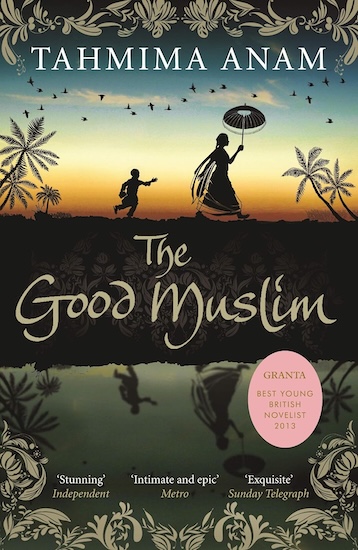
The Good Muslim
Nearly a decade after Bangladesh’s war of independence, Maya Haque returns to Dhaka to reconnect with her family and discovers that the world she left behind has changed profoundly. Her beloved brother, Sohail, once a revolutionary and committed secularist, has embraced religious conservatism and become a charismatic religious leader. As Maya continues to pursue her medical career and fight for women’s rights, the siblings find themselves on opposing sides of an increasingly bitter ideological divide. Their conflict deepens when Sohail makes a decision about his young son, Zaid, that threatens to tear the family apart. Set against the political and social upheavals of post-independence Bangladesh, The Good Muslim explores how war leaves lasting psychological scars, how faith can reshape identity, and how families struggle to reconcile love with deeply held convictions.
Bangladesh
2011
11
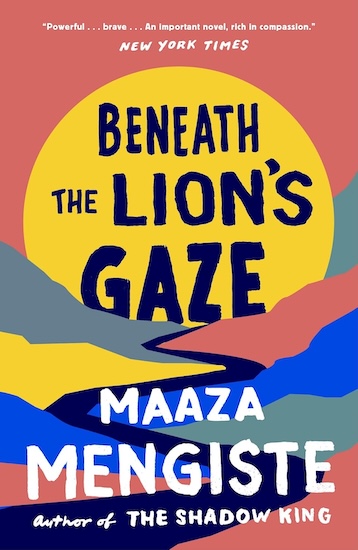
Beneath the Lion's Gaze
Addis Ababa, 1974. As protests sweep Ethiopia and Emperor Haile Selassie’s reign approaches its end, the Hailu family finds itself caught in a revolution that will transform the country—and destroy the fragile security of their lives. Hailu, a respected doctor, faces an impossible moral choice after helping a young woman who has been tortured by the authorities. His decision brings him into the machinery of state repression, while his sons take increasingly different paths: Yonas seeks refuge in faith and family, whereas Dawit joins the underground resistance, risking everything to fight for freedom.
As the monarchy falls and a brutal military regime takes power, the family’s loyalties, convictions, and relationships are tested by violence and fear. Moving between the intimate struggles of a household and the upheaval of a nation, Maaza Mengiste’s debut novel explores the human cost of revolution and the difficult choices people face under authoritarian rule. It is a powerful portrait of a country at a turning point, where the hope of liberation threatens to give way to another cycle of oppression.
Ethiopia
2010
12
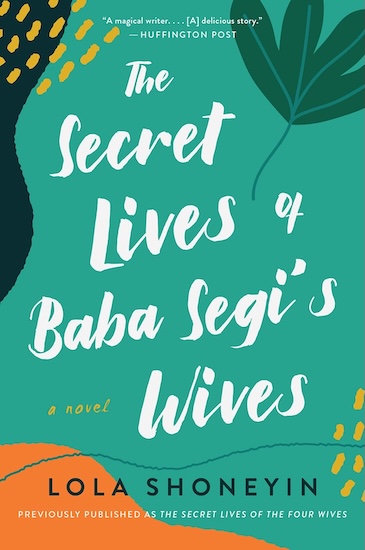
The Secret Lives of Baba Segi's Wives
Set in contemporary Ibadan, Nigeria, The Secret Lives of Baba Segi’s Wives explores the complicated dynamics of a polygamous household where jealousy, ambition, and long-buried secrets threaten to destroy the family’s carefully maintained balance.
Bolanle, a young university graduate, becomes the fourth wife of Baba Segi, a wealthy businessman whose large family is a source of pride and proof of his masculinity. Hoping to find security and acceptance, she enters a household already governed by three wives, each with her own personality, ambitions, and strategies for survival. However, Bolanle’s education and independence make her a source of suspicion and resentment, particularly when she offers to teach the other wives to read.
When Bolanle struggles to conceive, Baba Segi takes her to the hospital to discover the reason for her childlessness. The investigation threatens to expose a secret that the other wives have carefully protected for years. As the truth begins to emerge, the family must confront the consequences of deception and the fragile foundations upon which their relationships have been built.
Told through the perspectives of Baba Segi and his wives, Shoneyin’s novel combines dark humour with an incisive examination of marriage, motherhood, female rivalry, and patriarchal expectations. Beneath its entertaining portrayal of domestic life lies a deeper exploration of the ways women navigate restrictive social structures, compete for security, and find agency within a system that often measures their worth by their ability to bear children.
Nigeria
2010