Family Saga
All countries
Algeria
Australia
Bangladesh
Barbados
Belarus
Bosnia and Herzegovina
Brazil
Canada
Chile
China
Congo, Democratic Republic
Costa Rica
Cuba
Ethiopia
France
Germany
Ghana
India
Ireland
Italy
Latvia
Madagascar
Nigeria
North Macedonia
Norway
Oman
Palestine
Puerto Rico
Saint Kitts and Nevis
Singapore
South Korea
Spain
Sri Lanka
Taiwan
Türkiye
Uganda
United Kingdom
United States
Vietnam
1
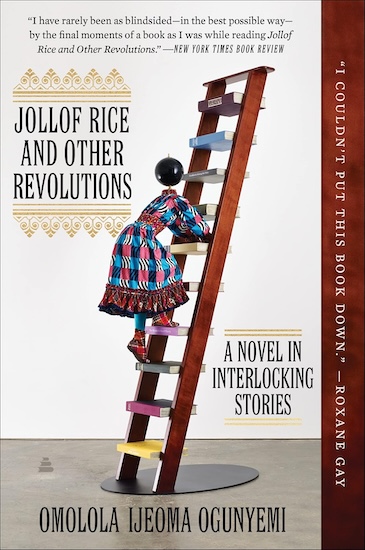
Jollof Rice and Other Revolutions
Spanning more than 150 years, from 1897 to an imagined 2050, Jollof Rice and Other Revolutions follows generations of Nigerian women as they navigate friendship, family, ambition, and the struggle to determine their own futures. Moving between Nigeria and the United States, the interconnected stories explore how personal choices and historical events shape women’s lives across generations.
At the heart of the collection are Nonso, Remi, Aisha, and Solape, four girls who form a powerful bond while attending an all-girls boarding school in Nigeria during the 1980s. Their friendship is tested when they participate in a rebellion against their school’s principal, an event whose consequences continue to affect them long after they leave adolescence behind.
As the women grow older, their lives take different directions. Nonso moves to the United States and falls in love with an African American man, discovering new possibilities alongside the challenges of building a life between cultures. Remi confronts painful family experiences while navigating love and relationships, while Aisha struggles with guilt over the events of their schooldays. Their stories extend into the lives of their relatives and descendants, revealing how the past continues to shape the present.
Through its shifting perspectives and leaps across time, Ogunyemi’s debut explores the complicated relationships between women, the consequences of silence, and the meaning of belonging. It offers a nuanced portrait of Nigerian women’s experiences, examining how friendship, family loyalty, and the pursuit of independence can become sources of both strength and conflict.
Nigeria
2022
2
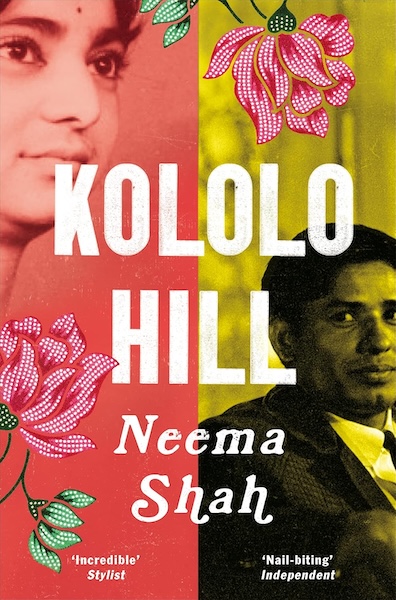
Kololo Hill
In 1972, Ugandan Asians are given just ninety days to leave the country under President Idi Amin’s expulsion order. For Asha and Pran, newly married and working to secure their future, the decree means abandoning the family business and the life they have built. Pran’s mother, Jaya, must also leave the home she has known for decades. As violence escalates in Kampala and people begin disappearing, the family faces an uncertain journey to Britain, where refuge does not necessarily mean belonging.
Arriving in a country that feels unfamiliar, they must rebuild their lives while carrying the emotional weight of everything they have lost. But their struggle is complicated by a devastating secret surrounding their expulsion—one that threatens to fracture the family just when they need one another most.
Moving between the green hills of Kampala and the terraced streets of London, Kololo Hill explores displacement, family loyalty, and the meaning of home. Inspired by the history of Uganda’s Asian community and the author’s own family heritage, this moving novel reveals how political upheaval can reshape lives across generations.
Uganda
United Kingdom
2021
3
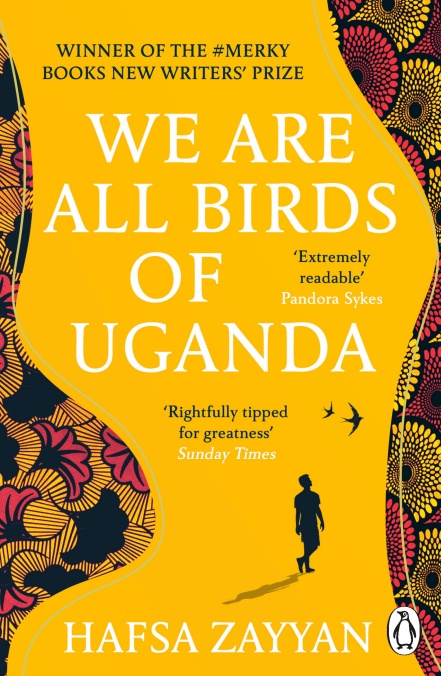
We Are All Birds Of Uganda
In 1960s Uganda, Hasan is struggling to rebuild his life after the death of his wife. Just as he begins to find his footing, political upheaval and rising racial prejudice threaten everything he has worked for. As a member of Uganda’s South Asian community, Hasan faces an uncertain future in a country his family has long called home. The political climate deteriorates further under Idi Amin’s regime, which ultimately forces many South Asians to leave Uganda.
Decades later, in London, Sameer appears to have everything: a successful career as a lawyer and the future he once dreamed of. Yet beneath his achievements lies a persistent sense of emptiness. An unexpected family tragedy draws him back into his family’s history, revealing the sacrifices, losses, and unanswered questions that shaped his identity.
Moving between generations and continents, We Are All Birds of Uganda explores displacement, racial prejudice, inherited trauma, and the complicated meaning of belonging. Through Hasan and Sameer’s intertwined stories, Hafsa Zayyan examines how migration reshapes families and how the past continues to influence those who inherit its consequences.
Uganda
United Kingdom
2021
4
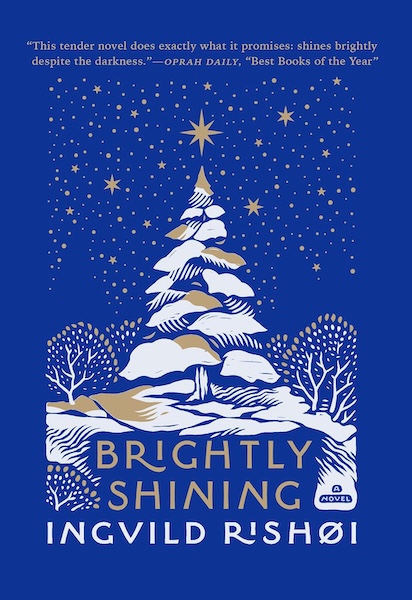
Brightly Shining
In the working-class Oslo neighbourhood of Tøyen, ten-year-old Ronja and her older sister Melissa are trying to hold their family together. Their father, who struggles with alcoholism and cannot keep a job, briefly finds work selling Christmas trees. But when he returns to his old habits, Melissa must take his place at the stall, working long hours before and after school. Ronja joins her, charming customers and selling Christmas wreaths to help keep food on the table.
Told through Ronja’s observant, hopeful eyes, Brightly Shining captures the strange mixture of childhood innocence and adult responsibility. As Christmas approaches, the sisters dream of a warmer, kinder world, finding occasional help from strangers while concealing the reality of their home life. Their love for their father remains tangled with the knowledge that they cannot rely on him.
With tenderness, quiet humour, and touches of magical realism, Ingvild H. Rishøi explores poverty, addiction, sisterhood, and the fragile hope that kindness can offer even in the darkest circumstances.
Norway
2021
5
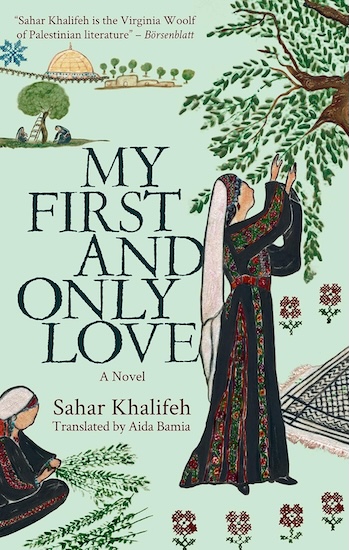
My First and Only Love
After decades of exile, Nidal returns to her family’s ancestral home in Nablus, hoping to restore the crumbling house and reconnect with the land she left behind. As she revisits the memories of her childhood, she recalls falling in love with Rabie, a young freedom fighter whose ideals embodied her hopes for Palestine’s future. Their love unfolds against the final years of the British Mandate, when political upheaval, resistance, and the struggle for national independence transform ordinary lives. Years later, when Nidal and Rabie meet again, he encourages her to read the memoirs of her uncle Amin, revealing long-buried family secrets and the hidden history of her absent mother. Through intertwined stories of love, loss, and resistance, Sahar Khalifeh explores how political conflict fractures families, separates lovers, and reshapes personal destinies. This sweeping novel is both an intimate portrait of a woman confronting her past and a meditation on the enduring connection between love, memory, and homeland.
Palestine
2021
6
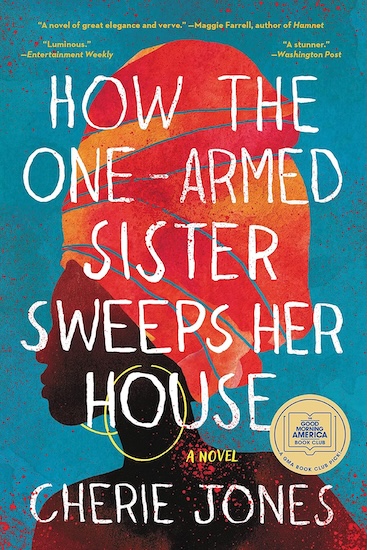
How the One-Armed Sister Sweeps Her House
On the sun-drenched shores of Baxter’s Beach, Barbados, paradise hides a darker reality of poverty, domestic violence, and generational trauma. Lala, a young woman raised on her grandmother’s cautionary tales, finds herself trapped in an abusive marriage to Adan, a charming but violent petty criminal. When a botched burglary leads to a shocking act of violence, Lala’s life becomes entangled with that of Mira Whalen, a wealthy visitor whose husband is murdered during the same fateful night. As their stories converge, the lives of several characters reveal the devastating consequences of choices made under desperation, fear, and social inequality. Through the intersecting experiences of women struggling to survive in a society shaped by class divisions and patriarchal power, Cherie Jones examines the cycles of violence passed from one generation to the next. Haunting and unflinching, the novel challenges the idyllic image of Caribbean paradise, exposing the lives and sacrifices hidden beneath its beautiful surface.
Barbados
2021
7
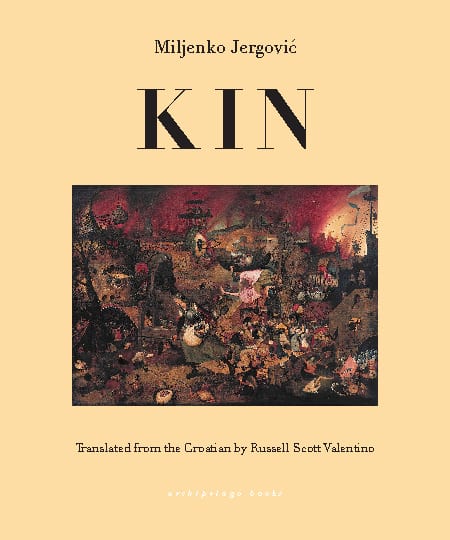
Kin
Spanning the twentieth century, Kin is an expansive family saga that traces generations of one family through the turbulent history of the Balkans. Beginning with forgotten relatives and seemingly insignificant objects—a grandfather’s beekeeping journals, a rusty lighter, an old military raincoat—Miljenko Jergović reconstructs a world shaped by personal memories, family secrets, and historical upheaval. From the assassination of Archduke Franz Ferdinand and the two World Wars to the Cold War and the Bosnian War of the 1990s, the novel follows the transformations of Sarajevo and the changing identities of the people who call it home. Blending memoir, fiction, and historical reflection, Jergović explores how political violence and shifting borders reverberate through ordinary lives. At its heart, Kin is a meditation on belonging, memory, and the fragile connections between generations—a tribute to a multicultural world threatened by nationalism, intolerance, and forgetting.
Bosnia and Herzegovina
2021
8

Red Crosses
Red Crosses tells the story of two people whose lives are shaped by tragedy, memory, and the lasting consequences of political repression. Alexander, a young man devastated by personal loss, moves to Minsk hoping to withdraw from the world. His plans change when he meets his elderly neighbour, Tatiana Alexeyevna, a woman in her nineties whose memory is gradually disappearing because of Alzheimer’s disease. To help herself navigate their apartment building, she marks doors with red crosses.
Despite her fading memory, Tatiana vividly recalls the horrors of twentieth-century Soviet history. She tells Alexander about her work during the Second World War, her husband’s capture by enemy forces, and her subsequent arrest and imprisonment in a labour camp under Stalin’s regime. As her story unfolds, Alexander becomes increasingly invested in preserving her memories before they disappear.
Through their unlikely friendship, Filipenko explores the relationship between personal grief and collective history. The novel examines political persecution, historical amnesia, and the importance of bearing witness to the past, suggesting that remembering those who suffered is an essential act of resistance.
Belarus
2021
9
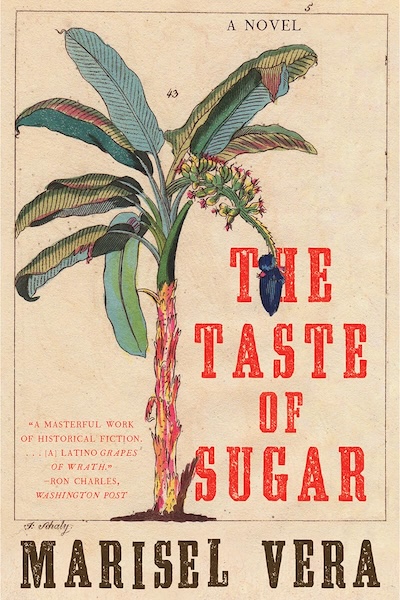
The Taste of Sugar
In late nineteenth-century Puerto Rico, seventeen-year-old Valentina Sánchez dreams of romance and a life beyond the expectations of her family. She marries Vicente Vega, a coffee farmer from the mountainous region of Utuado, hoping their love will bring happiness. But married life proves far more difficult than she imagined. Poverty, family tensions, and the struggle to keep their farm afloat threaten their future, while political upheaval transforms the island around them.
Following the Spanish-American War and the devastating San Ciriaco hurricane of 1899, Puerto Rico comes under American rule, and the Vegas lose their livelihood. Promised prosperity, Vicente and Valentina join thousands of Puerto Ricans who migrate to Hawaii to work on sugar plantations. Instead of the fresh start they hoped for, they encounter harsh working conditions, exploitation, and broken promises. Spanning generations and continents, The Taste of Sugar traces one family’s struggle to survive amid colonial domination and economic injustice. Marisel Vera brings a neglected chapter of Puerto Rican history to life, exploring how love, family, and resilience endure when the promise of a better future comes at an extraordinary cost.
United States
Puerto Rico
2020
10
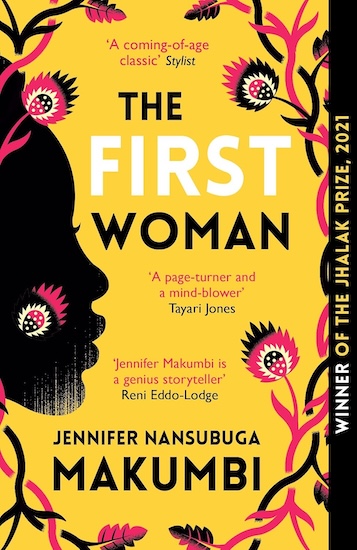
The First Woman
Set in Uganda in the 1970s, during the dictatorship of Idi Amin, The First Woman follows Kirabo, a curious and strong-willed twelve-year-old girl growing up in the rural village of Nattetta. Raised by her grandparents and surrounded by a large extended family, Kirabo enjoys a relatively comfortable childhood, yet she is troubled by one unanswered question: who is her mother, and why did she leave? As she enters adolescence, she also begins to sense a rebellious side of herself that conflicts with the obedient girl her family expects her to be.
Determined to uncover the truth about her origins, Kirabo seeks the help of Nsuuta, an older woman regarded by the village as a witch. Through their conversations, Nsuuta introduces her to Baganda folklore and the legend of the “first woman”—an original, independent female spirit that exists before society imposes its restrictions on women. These stories challenge Kirabo’s understanding of femininity and encourage her to question the traditions that govern her life.
Blending Ugandan mythology, family secrets, and the realities of life under political dictatorship, Makumbi explores motherhood, female sexuality, cultural identity, and the expectations imposed on women across generations. Kirabo’s journey becomes a powerful coming-of-age story about discovering who she is beyond the roles assigned to her. The novel celebrates women’s resilience, ancestral knowledge, and the possibility of redefining traditions to create a more liberated future.
Uganda
2020
11
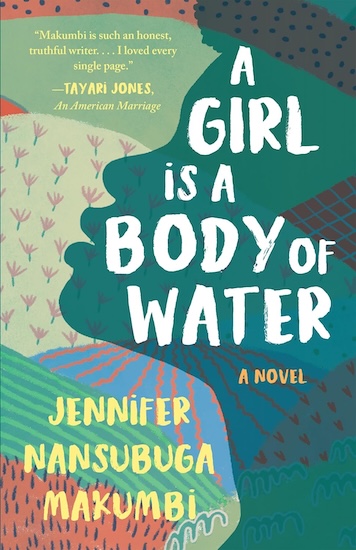
A Girl Is a Body of Water
Set in Uganda during the 1970s, under the rule of Idi Amin, A Girl Is a Body of Water follows Kirabo, a curious and independent twelve-year-old girl growing up in the rural village of Nattetta. Raised by her grandparents and surrounded by a large extended family, she has a comfortable childhood, yet one question haunts her: who is her mother? Although her father occasionally visits from Kampala, nobody in the family is willing to speak openly about the woman who gave birth to her.
Determined to uncover the truth, Kirabo turns to Nsuuta, an older woman whom the village regards as a witch. Through their conversations, Nsuuta introduces her to the stories and spiritual traditions of the Baganda people, helping her understand her own rebellious nature. She teaches Kirabo about the idea of the “first woman”—a powerful, independent female state that existed before society imposed restrictions on women’s freedom. As Kirabo grows older, she must reconcile this sense of inner strength with the expectations placed on girls by family, tradition, and community.
Blending Ugandan folklore, mythology, and the experiences of women across generations, Makumbi explores motherhood, female identity, and the ways patriarchal traditions shape women’s lives. Against the backdrop of a country experiencing political turmoil, Kirabo’s personal journey becomes a broader exploration of how women preserve their voices and independence in a society that often seeks to silence them. The novel celebrates the power of storytelling, ancestral knowledge, and female solidarity in shaping a different future.
Uganda
2020
12
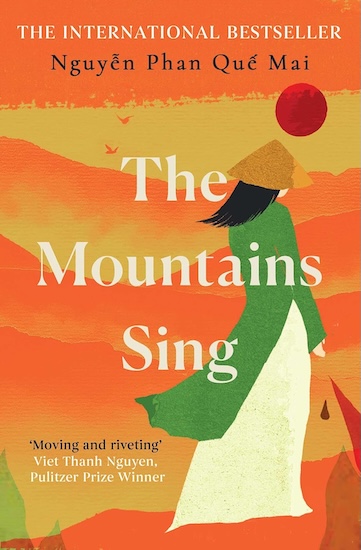
The Mountains Sing
Spanning several decades of Vietnamese history, The Mountains Sing follows the Trần family through famine, political upheaval, land reform, and the Vietnam War. The story centres on grandmother Trần Diệu Lan, who is forced to flee her family farm with her six children during the land reforms of the 1950s. Years later, her young granddaughter Hương grows up in Hanoi as the war tears her family apart and sends her parents and uncles into battle.
Through alternating perspectives, the novel reveals the extraordinary hardships endured by successive generations. While Hương tries to understand the world around her, Diệu Lan shares memories of loss, survival, and the choices she made to protect her children. Their relationship becomes a source of strength in a country where families have been divided by political loyalties, violence, and competing visions of the future.
Drawing on Vietnamese history, folklore, poetry, and cultural traditions, Nguyễn Phan Quế Mai presents a deeply personal perspective on a conflict often portrayed internationally through foreign experiences. The novel explores the lasting consequences of war while celebrating the resilience of ordinary people, the bonds between generations, and the possibility of healing through remembrance and compassion.
Vietnam
2020