Monaco
Europe
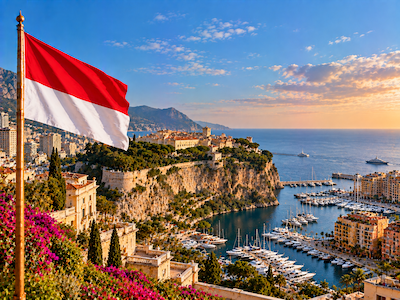
Monaco is a tiny Mediterranean principality on the French Riviera, built along steep coastal cliffs between France and the sea. Its landscape is dominated by the Mediterranean coastline, dramatic hills, dense urban development, and elegant harbors filled with yachts. Monte Carlo is internationally known for its architecture, gardens, cultural institutions, and cosmopolitan atmosphere. Monaco’s identity reflects a mixture of Monegasque, French, Italian, and broader Mediterranean influences.
Monaco has a relatively small but distinctive literary tradition, shaped by its position between French and Italian cultural worlds. The Monegasque language, a traditional Ligurian variety, has been preserved through songs, poetry, folklore, and local storytelling, while French has become the principal language of modern written literature. Important cultural figures include Louis Notari, often considered a founding figure of modern Monegasque literature, whose work helped establish and preserve the Monegasque language. Louis Frolla also played an important role in documenting and promoting Monegasque linguistic and cultural heritage. Contemporary writing connected with Monaco often explores Mediterranean identity, memory, local traditions, cosmopolitan life, the sea, and the relationship between a small historic community and a rapidly changing international city-state.