Vanuatu
Oceania
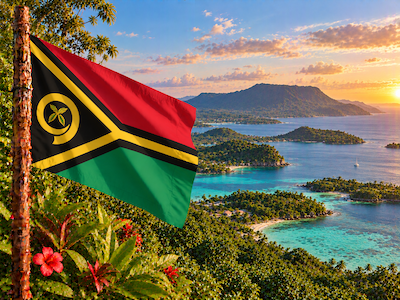
Vanuatu is an archipelago in the South Pacific, made up of more than 80 islands known for their volcanic landscapes, tropical rainforests, coral reefs, and turquoise lagoons. Its capital, Port Vila, is located on the island of Efate and serves as the country’s main commercial and cultural center. Vanuatu is home to remarkable linguistic diversity, with more than 100 local languages spoken across its communities. Bislama, English, and French are the official languages, reflecting the country’s complex colonial history and cultural heritage.
Vanuatu’s literary heritage is rooted in oral storytelling, ancestral legends, chants, and traditional narratives that preserve local knowledge and cultural identity. Contemporary writing explores colonialism, independence, land rights, environmental change, and the relationship between traditional customs and modern life. Grace Mera Molisa, one of Vanuatu’s most influential poets and political voices, used poetry to address colonialism, gender inequality, and social justice. Her collection Black Stone reflects the experiences and aspirations of ni-Vanuatu people during the country’s struggle for independence and its early years as a nation.