Venezuela
South America
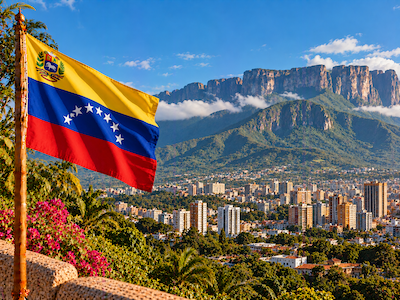
Venezuela is a country on the northern coast of South America, known for its extraordinary natural diversity, from Caribbean beaches and tropical rainforests to vast grasslands and dramatic mountain ranges. The country is home to Angel Falls, the world’s highest uninterrupted waterfall, and the striking tabletop mountains known as tepuis, which rise above the forests of the Guiana Highlands. The Andes extend into western Venezuela, while the Orinoco River and its surrounding plains support rich ecosystems and traditional rural communities. Caracas, the capital, lies in a mountain valley not far from the Caribbean coast. Venezuelan culture blends Indigenous, African, and Spanish influences, expressed through music, dance, cuisine, festivals, and oral traditions. Spanish is the official language, while Indigenous communities preserve numerous native languages and cultural practices.
Venezuelan literature reflects the country’s complex history, diverse cultural roots, and changing social landscape. Its traditions include Indigenous oral narratives, colonial chronicles, romantic poetry, political essays, and contemporary fiction. Writers have explored national identity, colonialism, social inequality, migration, memory, and the relationship between people and the natural environment. Venezuela’s landscapes, from the Amazonian rainforest to the vast llanos grasslands, have also inspired works that examine the connections between nature, power, and society. One of Venezuela’s most influential literary figures is Rómulo Gallegos, whose novel Doña Bárbara portrays the conflict between civilization and the untamed plains, becoming a landmark of Latin American literature. Andrés Bello, a nineteenth-century humanist, poet, and scholar, made significant contributions to Latin American intellectual and literary traditions. Teresa de la Parra, author of Ifigenia, examined women’s lives, social expectations, and the constraints of elite society. Arturo Uslar Pietri, known for The Red Lances, explored Venezuelan history and the legacy of colonialism. In contemporary literature, Rafael Cadenas, a major poet and recipient of the Reina Sofía Prize for Ibero-American Poetry, is celebrated for his meditations on language, existence, and the limits of expression. Karina Sainz Borgo, author of It Would Be Night in Caracas, explores political upheaval, displacement, and survival through the experiences of ordinary people. Together, these writers reveal the richness of Venezuela’s literary imagination and its ongoing dialogue with history, identity, and change.