United States

North America
United States
117
books
118
authors

Books from United States

1
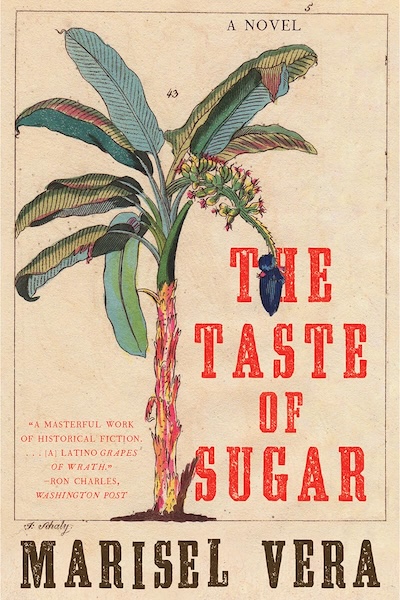
The Taste of Sugar
The Taste of Sugar
In late nineteenth-century Puerto Rico, seventeen-year-old Valentina Sánchez dreams of romance and a life beyond the expectations of her family. She marries Vicente Vega, a coffee farmer from the mountainous region of Utuado, hoping their love will bring happiness. But married life proves far more difficult than she imagined. Poverty, family tensions, and the struggle to keep their farm afloat threaten their future, while political upheaval transforms the island around them. Following the Spanish-American War and the devastating San Ciriaco hurricane of 1899, Puerto Rico comes under American rule, and the Vegas lose their livelihood. Promised prosperity, Vicente and Valentina join thousands of Puerto Ricans who migrate to Hawaii to work on sugar plantations. Instead of the fresh start they hoped for, they encounter harsh working conditions, exploitation, and broken promises. Spanning generations and continents, The Taste of Sugar traces one family’s struggle to survive amid colonial domination and economic injustice. Marisel Vera brings a neglected chapter of Puerto Rican history to life, exploring how love, family, and resilience endure when the promise of a better future comes at an extraordinary cost.
2020
2
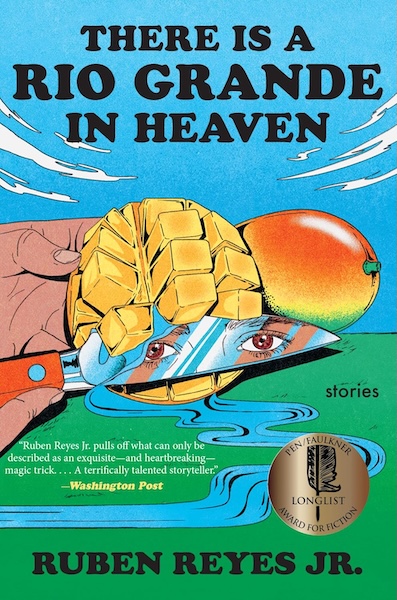
There Is a Rio Grande in Heaven
What happens when your life becomes unrecognisable overnight? In this imaginative debut collection, Ruben Reyes Jr. blends speculative fiction, magical realism, and dark humour to explore the experiences of Salvadoran immigrants and their descendants. An ordinary man wakes up to discover he has become a famous reggaetón star. An elderly grandmother gradually transforms into a marionette puppet. A researcher uncovers a disturbing programme that turns the bodies of undocumented migrants into artificial labourers. Moving between alternate histories, dystopian futures, and surreal versions of everyday life, these stories explore the forces that shape Central American identity. Family ties stretch across borders, technology offers unsettling solutions to human problems, and bureaucratic systems reduce lives to statistics. Beneath the collection’s strange and often absurd scenarios lies a serious examination of migration, colonial legacies, capitalism, and the struggle to be heard in a world that marginalises certain voices. Both inventive and deeply human, There Is a Rio Grande in Heaven challenges readers to reconsider whose stories are told—and what it costs to build a new life far from home.
2024
3
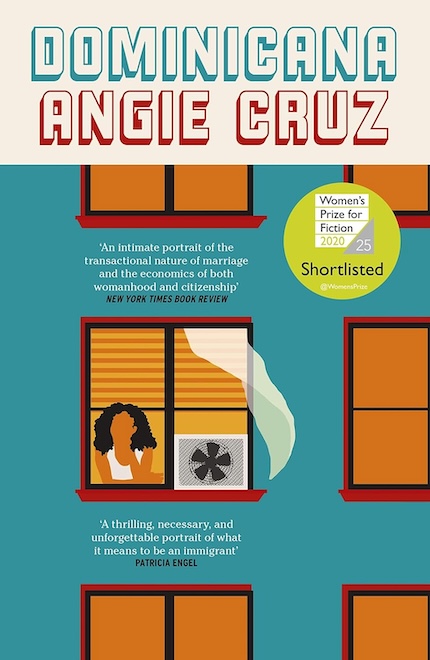
Dominicana
Dominicana
Fifteen-year-old Ana Canción has never dreamed of leaving the Dominican countryside, but when Juan Ruiz, a man twice her age, offers to marry her and take her to New York City, her family sees an opportunity for a better future. On New Year’s Day in 1965, Ana leaves behind everything she knows and arrives in Washington Heights, where she finds herself trapped in an unhappy marriage with a controlling and unfaithful husband. Lonely and struggling to adapt to life in a new country, she begins to imagine a future beyond the narrow role expected of her. When Juan returns to the Dominican Republic amid growing political turmoil, Ana discovers new freedoms through English lessons, friendships, and an unexpected romantic connection with his younger brother, César. But her growing independence clashes with her family’s hopes and the sacrifices expected of her. Set against the backdrop of the Dominican Civil War and the Dominican immigrant community in New York, Dominicana is a moving coming-of-age story about migration, womanhood, and the courage to claim a life of one’s own.
2019
4
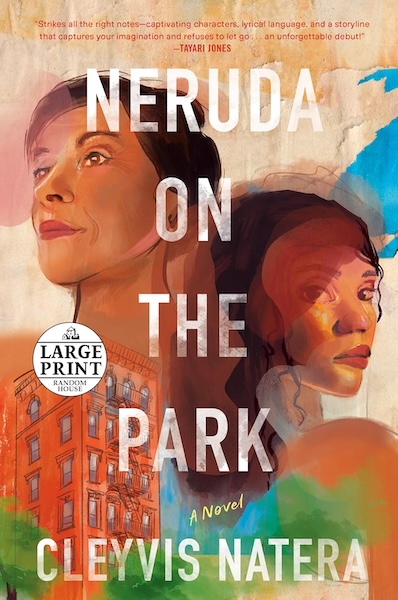
Neruda on the Park
Neruda on the Park
For twenty years, the Guerrero family has called Nothar Park, a predominantly Dominican neighbourhood in New York City, home. But when a neighbouring tenement is demolished to make way for luxury condominiums, the threat of gentrification pushes the community toward a breaking point. Eusebia Guerrero, determined to protect the neighbourhood and the people who shaped her life, begins organising increasingly risky schemes to frighten developers away. Her daughter, Luz, has very different ambitions: a successful career in corporate law and the comfortable lifestyle her immigrant parents worked hard to provide. When Luz loses her job and falls into a passionate relationship with a wealthy property developer connected to the very project her mother opposes, the conflict between them becomes deeply personal. Meanwhile, Luz’s father secretly plans their retirement in the Dominican Republic, reopening old tensions about home and belonging. With humour and emotional depth, Neruda on the Park explores gentrification, generational conflict, immigrant identity, and the difficult choices families face when the place they call home begins to disappear.
2022
5
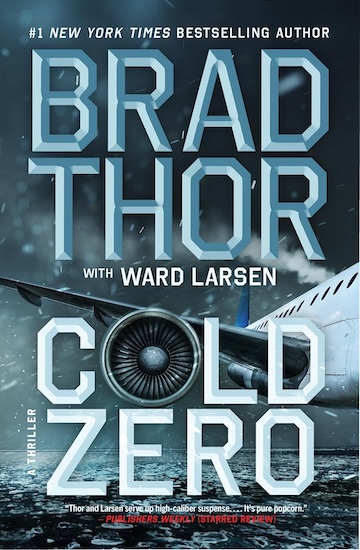
Cold Zero
Cold Zero
When Hemisphere Airlines Flight 777, one of the world’s most advanced passenger jets, vanishes over the North Pole, its disappearance triggers an international crisis. Sabotaged and forced down onto the frozen Arctic ice, the aircraft leaves its surviving passengers stranded in one of the planet’s most unforgiving environments. But the crash conceals a secret far more dangerous than the disaster itself: a revolutionary military technology capable of shifting the global balance of power. Among the survivors are CIA operative Kasey Sheridan and Brett Sharpe, a former fighter pilot now working as the plane’s first officer. As they struggle to keep the injured alive and escape the freezing wilderness, American, Russian, and Chinese intelligence forces race towards the wreckage. Each government is determined to secure the secret technology, regardless of the human cost. With temperatures falling and enemy forces closing in, Sheridan and Sharpe must navigate a deadly landscape where survival and international security are inseparable. Cold Zero combines Arctic survival suspense with high-stakes espionage, exploring technological warfare, geopolitical rivalry, and the catastrophic consequences of a conflict between nuclear powers.
2026

Famous authors from United States

About United States

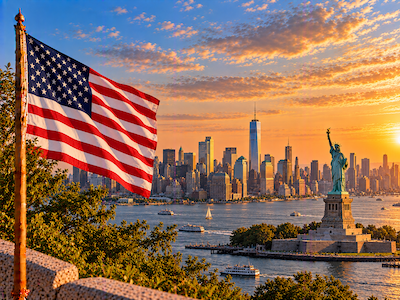
The United States is a vast country in North America, stretching from the Atlantic to the Pacific Ocean and encompassing an extraordinary range of landscapes, from the Rocky Mountains and Great Plains to tropical islands, deserts, forests, and rugged coastlines. Its cities reflect the country’s cultural and architectural diversity, from New York’s iconic skyline to the historic neighborhoods of Boston, the political landmarks of Washington, D.C., and the creative energy of Los Angeles. The United States is home to hundreds of Indigenous nations whose histories long predate European colonization. Its modern identity has also been shaped by immigration, slavery, westward expansion, and ongoing debates about freedom, equality, and belonging. English is the most widely spoken language, while Spanish and many Indigenous and immigrant languages contribute to the country’s multilingual cultural landscape.

Region
North America
Literary Context

American literature reflects the country’s complex history, cultural diversity, and changing ideas about identity and freedom. Indigenous oral traditions, colonial writings, enslaved people’s narratives, transcendentalist philosophy, modernist experimentation, and contemporary multicultural fiction have all shaped its literary heritage. Recurring themes include the American Dream, race, class, migration, individualism, gender, nature, and the tension between personal liberty and social responsibility. Among the most influential American writers is Mark Twain, whose novels The Adventures of Huckleberry Finn and The Adventures of Tom Sawyer explore childhood, social hypocrisy, and life along the Mississippi River. Walt Whitman transformed poetry with Leaves of Grass, celebrating individuality, democracy, and the diversity of American life. Toni Morrison, Nobel Prize laureate and author of Beloved and Song of Solomon, examined the lasting effects of slavery, memory, and African American identity. F. Scott Fitzgerald, in The Great Gatsby, captured the glamour and disillusionment of the Jazz Age. James Baldwin explored race, sexuality, religion, and belonging in works such as Giovanni’s Room and The Fire Next Time. Contemporary voices, including Louise Erdrich, whose fiction often centers Indigenous communities, and Ocean Vuong, whose writing explores migration, family, and identity, continue to expand the boundaries of American literature.

North America