Books from United States
Suggest a book
All genres
Historical Fiction
Literary Fiction
Fantasy
Romance
Horror
Thriller
Non-Fiction
Mystery
Memoir
Classics
History
Sci-Fi
Contemporary Fiction
Science Fiction
Fiction
Poetry
Essays
Family Saga
Magical Realism
Family Drama
Dark Academia
Psychological Fiction
Dark Comedy
Political Writing
Feminist Fiction
Satire
Campus Fiction
Cultural Studies
Biography
Philosophy
Comedy
Drama
Young Adult
Gothic
Dystopia
Crime
Children's Books
Short Stories
Mythology
Cozy
Retellings
Humour
Adventure
All themes
Love & Passion
Adventure & Journey
Identity & Belonging
War & Conflict
Freedom & Resistance
Family & Heritage
Nature & Landscape
Society & Class
Spirituality & Faith
Solitude & Exile
Coming of Age
Revolution & Change
Friendship
History
Immigration
Myths and Retellings
Colonialism
Women & Society
Mental Health
Motherhood
1
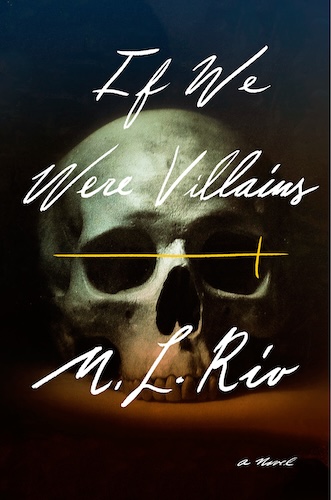
If We Were Villains
Seven Shakespearean acting students. One elite conservatory. A friendship that ends in murder.
Oliver Marks has just been released from prison after serving ten years for the death of one of his closest friends. Now, the detective who helped put him behind bars wants to know what really happened. A decade earlier, at the secluded Dellecher Classical Conservatory, Oliver and six fellow actors were inseparable, their lives blurring the line between the roles they played onstage and the people they became off it. But when fierce rivalries turn into jealousy, betrayal, and violence, their final year takes a deadly turn. Dark, atmospheric, and steeped in Shakespeare, If We Were Villains explores the dangerous consequences of obsession and the stories we tell ourselves to survive.
2017
2
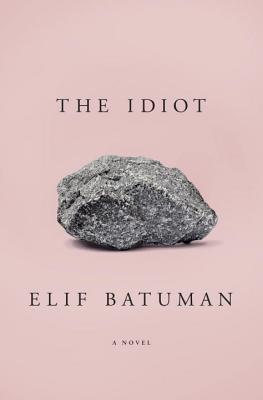
The Idiot
It’s 1995, email is new, and Harvard freshman Selin Karadağ is trying to figure out how language, love, and life actually work. The daughter of Turkish immigrants, she befriends a charismatic Serbian classmate and begins exchanging increasingly mysterious emails with Ivan, an older Hungarian mathematics student. When their ambiguous relationship follows her from university to the Hungarian countryside, Selin finds herself navigating first love, cultural misunderstandings, and the bewildering transition to adulthood. Witty, intellectually curious, and quietly moving, The Idiot captures the awkward beauty of becoming yourself when you have no idea who that person might be. A finalist for the Pulitzer Prize for Fiction, it is a coming-of-age story for readers who think too much and feel more than they can explain.
2017
3
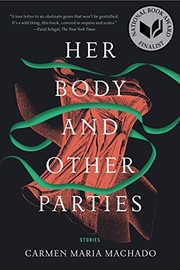
Her Body and Other Parties: Stories
In this electric and provocative debut, Carmen Maria Machado bends genre to shape startling narratives that map the realities of women's lives and the violence visited upon their bodies. A wife refuses her husband's entreaties to remove the green ribbon from around her neck. A woman recounts her sexual encounters as a plague slowly consumes humanity. A salesclerk in a mall makes a horrifying discovery within the seams of the store's prom dresses. One woman's surgery-induced weight loss results in an unwanted houseguest. And in the bravura novella 'Especially Heinous,' Machado reimagines every episode of Law & Order: Special Victims Unit, a show naively assumeded had shown it all, generating a phantasmagoric police procedural full of doppelgangers, ghosts, and girls with bells for eyes.
2017
4
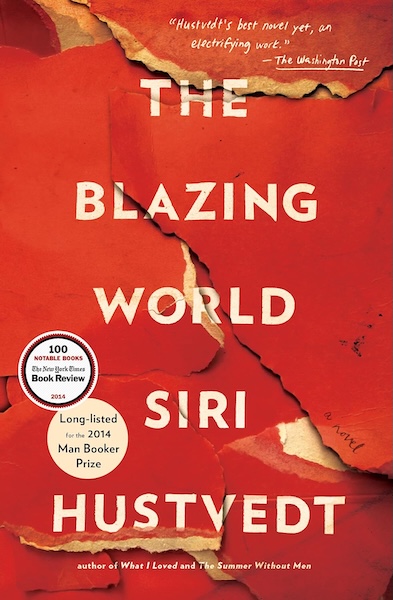
The Blazing World
What if your art were celebrated only when people believed it had been created by a man?
Harriet Burden is a fiercely intelligent artist who has spent years watching the New York art world overlook her work. After the death of her husband, she decides to conduct an audacious experiment: she secretly recruits three men to present her artwork as their own, concealing her identity behind their names. When the exhibitions receive the recognition she has long been denied, Harriet finally reveals the truth. But instead of winning acclaim, she encounters disbelief—and her final collaborator, the enigmatic artist Rune, refuses to acknowledge her role.
Told through diaries, interviews, reviews, and conflicting recollections assembled after Harriet’s death, The Blazing World becomes a literary puzzle in which the truth depends on who is telling the story. As the relationship between Harriet and Rune grows increasingly dangerous, questions of authorship, gender, power, and perception take centre stage.
Intellectually playful and psychologically intense, Siri Hustvedt’s novel challenges the assumptions that determine whose creativity is valued and whose voice is believed. Longlisted for the Booker Prize and winner of the 2014 Los Angeles Times Book Prize for Fiction, it is a provocative exploration of what it means to be seen—and what happens when recognition comes too late.
2014
5
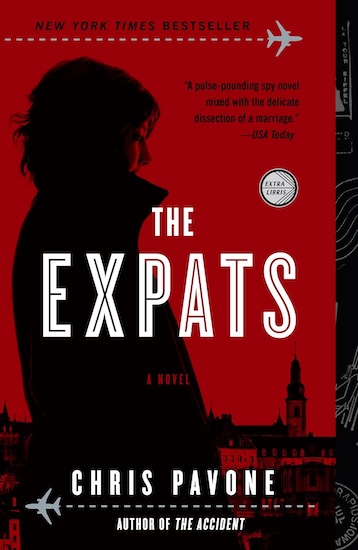
The Expats
Kate Moore appears to have built a comfortable new life in Luxembourg. After her husband accepts a lucrative job abroad, she leaves Washington, D.C., behind and settles into the routines of expatriate life: school drop-offs, coffee mornings, and weekend trips around Europe. But Kate is hiding a dangerous secret about her past, and the ordinary life she has constructed is becoming increasingly difficult to maintain.
When Kate begins to suspect that another American couple in Luxembourg are not who they claim to be, her suspicions grow. Her husband is also behaving strangely, and his work for an undisclosed banking client raises questions she cannot ignore. As she investigates the people around her, Kate discovers that the lives of the expatriates in her seemingly peaceful community are far more complicated than they appear.
Moving between the polished world of international professionals and the shadowy realm of espionage, Pavone builds a suspenseful story of deception, double-crossing, and hidden identities. The novel explores how people reinvent themselves when they move abroad, whether it is possible to escape one’s past, and how secrets can undermine even the closest relationships. The Expats won both the Edgar Award and the Anthony Award for Best First Novel in 2013.
2013
6
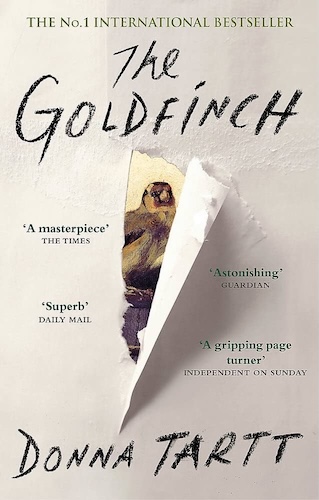
The Goldfinch
After a devastating accident kills his mother, thirteen-year-old Theo Decker finds himself clinging to a small, captivating painting that connects him to her. As he grows older, the artwork draws him into a world of wealth, deception, and the criminal art trade. Winner of the 2014 Pulitzer Prize for Fiction, this sweeping novel explores grief, obsession, and the mysterious ways beauty can shape a life.
2013
7
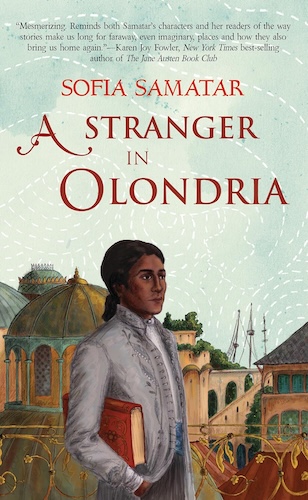
A Stranger in Olondria
Jevick, the son of a pepper merchant, grows up listening to stories about Olondria, a distant land where books are abundant and literacy is prized. When his father dies, Jevick takes over the family’s annual trading journey and finally visits the country he has long imagined. Enchanted by its cities, literature, and elaborate traditions, he feels he has entered a dream. But his happiness is shattered when the ghost of an illiterate young woman begins to haunt him.
Desperate to escape the apparition, Jevick seeks help from Olondria’s religious authorities, only to become entangled in a conflict between rival religious factions. To find freedom, he must uncover the dead woman’s story and confront the boundaries between the living and the dead, belief and knowledge, and personal experience and inherited tradition.
Blending lyrical prose, immersive world-building, and philosophical reflection, Sofia Samatar’s award-winning debut is both an intricate fantasy adventure and a meditation on the transformative power of literature. It explores how stories shape our understanding of other people—and how reading can become an act of wonder, possession, and liberation.
2013
8
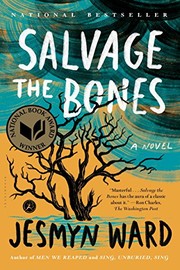
Salvage the Bones
Set in rural Mississippi in the days leading up to Hurricane Katrina, Salvage the Bones follows fifteen-year-old Esch Batiste and her three brothers as they navigate poverty, family tensions, and the looming threat of a devastating storm. Living with their father in a neglected community, the siblings struggle to prepare for the hurricane while confronting their own emotional and personal challenges. Esch, who is pregnant and quietly in love with her brother’s friend, finds parallels between her experiences and the mythological story of Medea. As the storm approaches, the family must rely on one another to survive. Through vivid storytelling and lyrical prose, Jesmyn Ward explores the bonds of family, the resilience of marginalized communities, and the enduring power of love amid hardship. The novel portrays the devastating intersection of poverty, race, and environmental disaster while celebrating the strength of those who endure.
2012
9
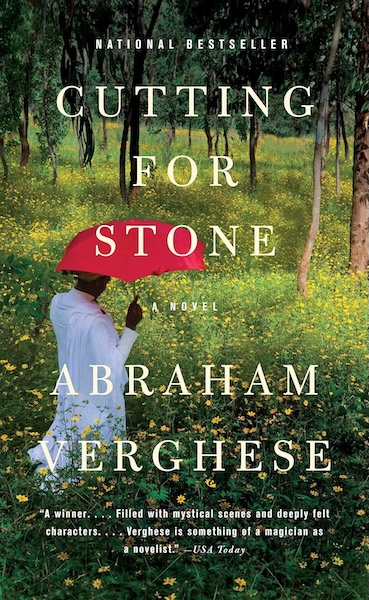
Cutting for Stone
In 1950s Addis Ababa, Ethiopia, twin brothers Marion and Shiva Stone are born from a secret relationship between an Indian nun and a British surgeon at a mission hospital. Their mother dies during childbirth, and their father disappears, leaving the twins to be raised by two devoted doctors who become their adoptive parents. Growing up surrounded by the world of medicine, the brothers develop an extraordinary bond and a shared fascination with surgery.
But as Ethiopia approaches revolution, their lives become entangled in forbidden love, jealousy, and betrayal. A devastating rupture drives Marion into exile in the United States, where he must confront the past he has tried to escape. When circumstances eventually bring him back to the world of his childhood, he faces the people and choices that shaped his life—and discovers that healing some wounds requires more than surgical skill.
Spanning continents and decades, Cutting for Stone is an epic story of brotherhood, sacrifice, and the complicated ties between parents and children. Abraham Verghese combines the intimate drama of a family saga with the intricate world of medicine, exploring how love, loss, and the accidents of birth can shape a person’s destiny.
2009
10
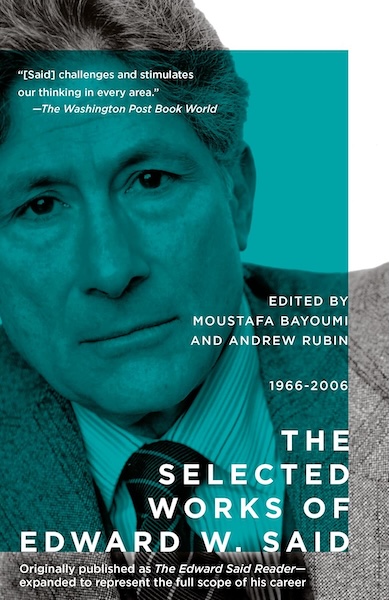
The Selected Works of Edward Said, 1966 - 2006
How do literature, culture, and politics shape the way we understand the world? And whose voices are missing from the stories history tells?
The Selected Works of Edward Said brings together key writings from four decades of one of the most influential intellectuals of the twentieth century. Edited by Moustafa Bayoumi and Andrew Rubin, this expanded collection traces Said’s thinking across subjects ranging from colonialism and Palestinian identity to literature, music, media, and the responsibilities of intellectuals.
Featuring selections from Orientalism, Culture and Imperialism, and Out of Place, alongside important essays and later writings, the collection offers an overview of Said’s evolving ideas about power, representation, and cultural identity.
Essential for understanding Said’s intellectual legacy, this volume reveals how cultural narratives influence political realities—and why questioning dominant perspectives remains vital.
2007
11
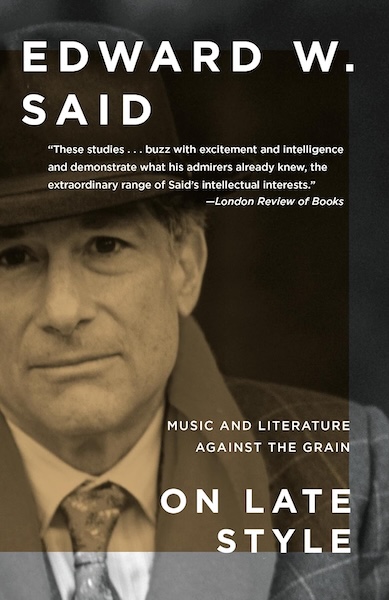
On Late Style: Music and Literature Against the Grain
What happens when great artists approach the end of their lives—and begin creating works that refuse to offer comfort, harmony, or easy answers?
In On Late Style, Edward W. Said explores the final works of celebrated composers, writers, and artists, including Beethoven, Mozart, Thomas Mann, and Jean Genet. He challenges the assumption that artistic maturity naturally leads to wisdom and reconciliation, arguing instead that some creators produce their most challenging work late in life, embracing contradiction, resistance, and unresolved tensions.
Drawing on music, literature, opera, and film, Said examines how artists confront their own mortality while remaining at odds with the cultural expectations of their time. The result is a compelling reflection on creativity, ageing, and the courage to resist conventional ideas of artistic perfection.
Published posthumously in 2006, this unfinished final work reflects Said’s own lifelong commitment to intellectual independence and the power of art to challenge established assumptions.
2006
12
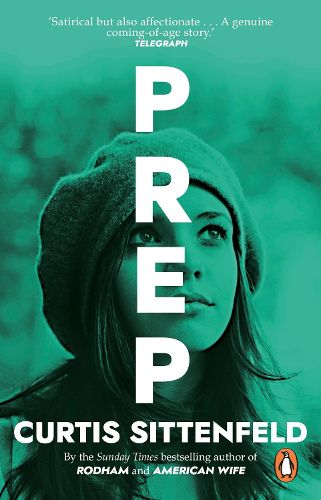
Prep
Curtis Sittenfeld is an American novelist and short-story writer born in Cincinnati, Ohio, in 1975. She studied English at Stanford University and later attended the creative writing program at the University of Iowa. Before becoming a full-time writer, she worked as a journalist and editor.
Sittenfeld made her literary debut with Prep (2005), a coming-of-age novel about a middle-class teenager navigating the social hierarchies of an elite American boarding school. The book became a bestseller and established her reputation for perceptive portrayals of class, identity, ambition, and the complexities of adolescence. Her subsequent novels include American Wife (2008), a fictionalized account inspired by former First Lady Laura Bush; Sisterland (2013); Eligible (2016), a contemporary retelling of Jane Austen’s Pride and Prejudice; and Rodham (2020), an alternative-history novel imagining a different life for Hillary Rodham Clinton.
Sittenfeld has also published the short-story collections You Think It, I’ll Say It (2018) and Help Yourself (2025). Her fiction often examines social expectations, relationships, privilege, and the private thoughts people conceal behind their public identities. Her work has appeared in publications including The New Yorker and The Atlantic.
2005