Books from United States
Suggest a book
All genres
Historical Fiction
Literary Fiction
Fantasy
Romance
Horror
Thriller
Non-Fiction
Mystery
Memoir
Classics
History
Sci-Fi
Contemporary Fiction
Science Fiction
Fiction
Poetry
Essays
Family Saga
Magical Realism
Family Drama
Dark Academia
Psychological Fiction
Dark Comedy
Political Writing
Feminist Fiction
Satire
Campus Fiction
Cultural Studies
Biography
Philosophy
Comedy
Drama
Young Adult
Gothic
Dystopia
Crime
Children's Books
Short Stories
Mythology
Cozy
Retellings
Humour
Adventure
All themes
Love & Passion
Adventure & Journey
Identity & Belonging
War & Conflict
Freedom & Resistance
Family & Heritage
Nature & Landscape
Society & Class
Spirituality & Faith
Solitude & Exile
Coming of Age
Revolution & Change
Friendship
History
Immigration
Myths and Retellings
Colonialism
Women & Society
Mental Health
Motherhood
1
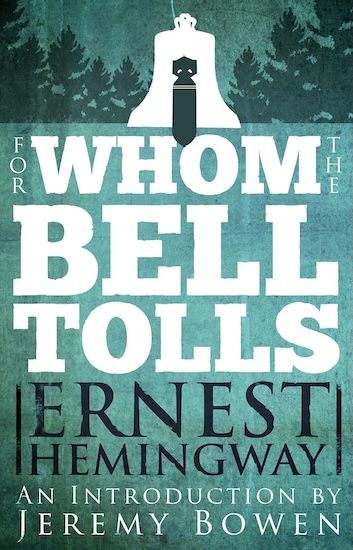
For Whom the Bell Tolls
For Whom the Bell Tolls follows Robert Jordan, an American volunteer fighting alongside Republican guerrillas during the Spanish Civil War. Assigned to destroy a strategically important bridge ahead of a military offensive, Jordan joins a small group of fighters in the mountains. As he prepares for the operation, he develops a relationship with María, a young woman traumatised by violence, and forms complicated bonds with the guerrillas who support his mission. Their preparations expose the divisions, fears, and conflicting loyalties within the Republican cause. As the operation approaches, Jordan must weigh his commitment to the wider struggle against the lives of the people around him. Hemingway explores courage, sacrifice, love, and the moral costs of war, questioning how individuals can preserve their humanity while participating in a conflict that demands violence and obedience.
1940
2
Blood Meridian
Set in the American Southwest and northern Mexico during the 1840s, Blood Meridian follows a nameless teenager known as the Kid as he joins a violent band of scalp hunters operating along the frontier. The group, led by the ruthless Captain Glanton and accompanied by the enigmatic Judge Holden, travels through landscapes marked by poverty, conflict, and brutality. Their journey exposes the violence underpinning territorial expansion and the mythology of the American West. McCarthy’s stark, biblical prose transforms the frontier into a world where cruelty seems almost elemental and human life is treated as expendable. The novel challenges romantic ideas of conquest and civilisation, exploring violence as both a historical force and a disturbing aspect of human existence.
1985
3
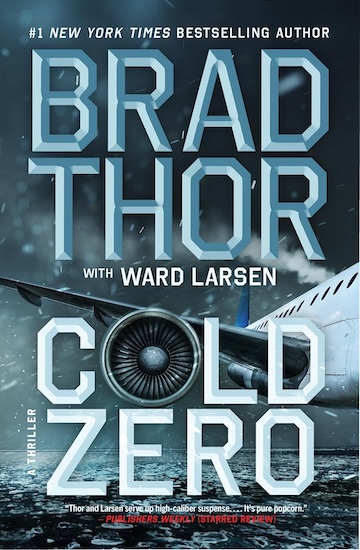
Cold Zero
When Hemisphere Airlines Flight 777, one of the world’s most advanced passenger jets, vanishes over the North Pole, its disappearance triggers an international crisis. Sabotaged and forced down onto the frozen Arctic ice, the aircraft leaves its surviving passengers stranded in one of the planet’s most unforgiving environments. But the crash conceals a secret far more dangerous than the disaster itself: a revolutionary military technology capable of shifting the global balance of power.
Among the survivors are CIA operative Kasey Sheridan and Brett Sharpe, a former fighter pilot now working as the plane’s first officer. As they struggle to keep the injured alive and escape the freezing wilderness, American, Russian, and Chinese intelligence forces race towards the wreckage. Each government is determined to secure the secret technology, regardless of the human cost.
With temperatures falling and enemy forces closing in, Sheridan and Sharpe must navigate a deadly landscape where survival and international security are inseparable. Cold Zero combines Arctic survival suspense with high-stakes espionage, exploring technological warfare, geopolitical rivalry, and the catastrophic consequences of a conflict between nuclear powers.
2026
4
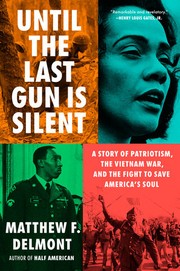
Until the Last Gun Is Silent
Until the Last Gun Is Silent examines the role of Black Americans in the Vietnam War and the movement to bring the conflict to an end. Historian Matthew F. Delmont traces the experiences of Black servicemen, veterans, activists, and peace protesters who confronted both the violence of war abroad and racial injustice at home. Their stories reveal the contradictions of fighting for democracy overseas while experiencing discrimination within the United States. The book also explores how Black communities challenged official narratives about military service, patriotism, and the purpose of the war. By connecting battlefield experiences with political activism and the struggle for civil rights, Delmont presents a broader account of the forces that helped end American involvement in Vietnam and reshape debates about citizenship, equality, and national responsibility.
2026