Books from United States
Suggest a book
All genres
Historical Fiction
Literary Fiction
Fantasy
Romance
Horror
Thriller
Non-Fiction
Mystery
Memoir
Classics
History
Sci-Fi
Contemporary Fiction
Science Fiction
Fiction
Poetry
Essays
Family Saga
Magical Realism
Family Drama
Dark Academia
Psychological Fiction
Dark Comedy
Political Writing
Feminist Fiction
Satire
Campus Fiction
Cultural Studies
Biography
Philosophy
Comedy
Drama
Young Adult
Gothic
Dystopia
Crime
Children's Books
Short Stories
Mythology
Cozy
Retellings
Humour
Adventure
All themes
Love & Passion
Adventure & Journey
Identity & Belonging
War & Conflict
Freedom & Resistance
Family & Heritage
Nature & Landscape
Society & Class
Spirituality & Faith
Solitude & Exile
Coming of Age
Revolution & Change
Friendship
History
Immigration
Myths and Retellings
Colonialism
Women & Society
Mental Health
Motherhood
1
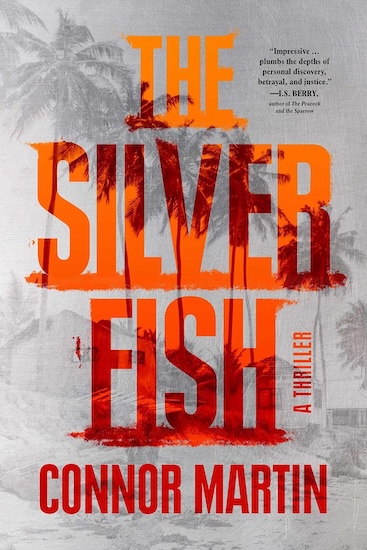
The Silver Fish
American journalist Danielle “Dani” Moreau arrives in Accra, Ghana, hoping to revive her career by investigating corruption in the country’s oil industry. Still reeling from a personal tragedy, she expects to uncover a conventional political scandal. Instead, an encounter with James Aidoo, the idealistic son of a prominent Ghanaian politician, draws her into a far more dangerous story.
Dani discovers a covert struggle between American and Chinese intelligence agencies over control of the underwater fibre-optic cables that carry the world’s digital communications. As she investigates, she encounters double agents, corrupt officials, and operatives with violent pasts. What begins as a journalistic investigation becomes a fight for survival, with the consequences reaching far beyond Ghana’s borders.
Set against the bustling streets and political complexities of West Africa, The Silver Fish combines espionage with contemporary geopolitical intrigue. Connor Martin explores the hidden infrastructure of global power, examining how technology, intelligence, and competing national interests shape the modern world—and the personal cost of pursuing the truth.
2026
2
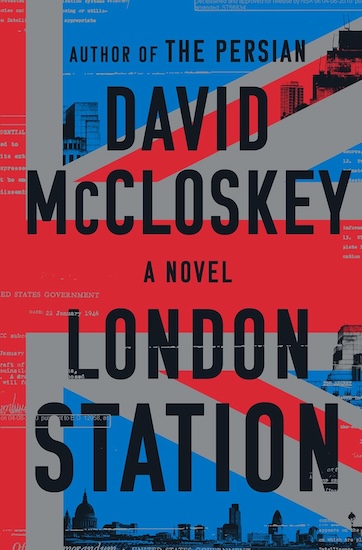
London Station
London becomes a battleground when the long-standing alliance between American and British intelligence begins to unravel. A new CIA director arrives determined to disrupt the agency and rethink its relationship with MI6. When the veteran chief of the CIA’s London Station is forced out, he makes an extraordinary decision: to work for the British instead. His betrayal is uncovered by his successor, Artemis Aphrodite Procter, who suddenly finds herself caught between a treacherous former superior and an increasingly ruthless leadership back in Washington.
As intelligence sources begin dying and the identities of covert agents are exposed, Procter and her team must uncover who is leaking secrets—and why. Their investigation draws them into a dangerous world of private intelligence companies, technological surveillance, and competing agendas, where allies become adversaries and loyalty can be fatal.
In this fifth novel featuring Artemis Procter, David McCloskey explores the fragile relationship between intelligence agencies and the political forces that shape their work. Combining intricate espionage operations with a story of institutional betrayal, London Station asks what happens when serving your country means disobeying the people who claim to represent it.
2026
3
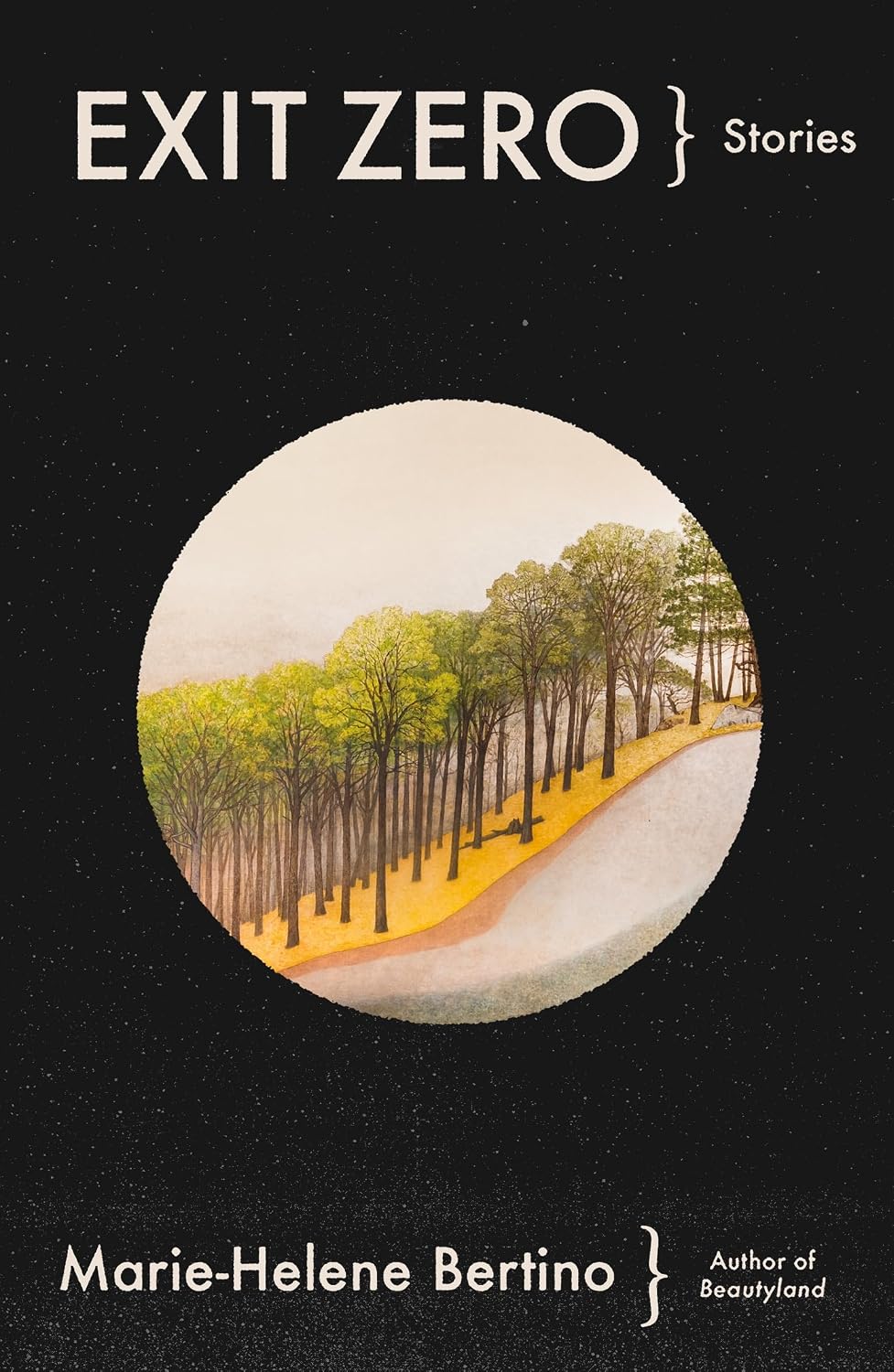
Exit Zero
Exit Zero is a collection of twelve surreal and imaginative short stories that explore the strange, often unsettling experiences of ordinary people. Blending magical realism, dark humour, and reflections on mortality, Marie-Helene Bertino creates worlds where the boundaries between everyday life and the extraordinary begin to dissolve.
In the title story, Jo returns to her estranged father’s home after his death and discovers that she has inherited an unexpected companion: a unicorn living in the backyard. Elsewhere, former lovers fall mysteriously from the sky, gardens become sites of communication between the living and the dead, and familiar objects take on uncanny significance.
Beneath the collection’s fantastical premises lies a thoughtful exploration of loneliness, family relationships, grief, and the difficulty of navigating an unpredictable world. Bertino’s stories invite readers to look beyond the apparent absurdity of everyday existence and consider the connections, losses, and moments of wonder that give life meaning.
2025
4
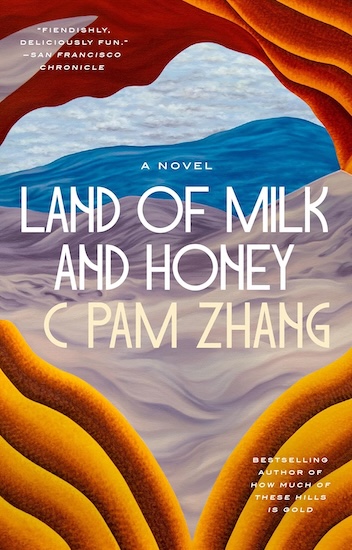
Land of Milk and Honey
In a world choked by smog, where crops are disappearing and food is becoming scarce, an unnamed young chef accepts a job at an isolated mountain estate reserved for the wealthy elite. Behind its borders, the sky is clear, rare ingredients flourish, and extravagant meals offer a taste of a world that no longer exists. Working for a mysterious benefactor and his enigmatic daughter, the chef discovers unexpected pleasures, forbidden desires, and unsettling truths about the people determined to survive at any cost. Sensuous and quietly dystopian, C Pam Zhang’s novel explores the morality of privilege, the politics of appetite, and the question of who deserves pleasure when the world is falling apart.
2024
5
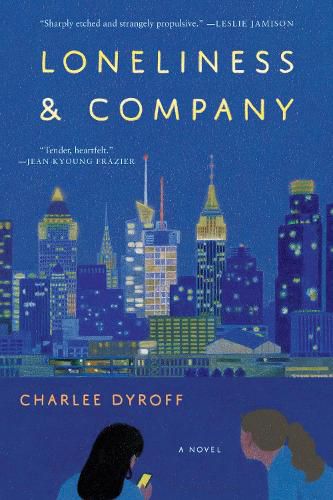
Loneliness & Company
In a near-future America where loneliness has supposedly been eliminated from society’s vocabulary, Lee expects her academic success to secure her a prestigious job at a leading technology corporation. Instead, she finds herself in a struggling, half-abandoned New York City, working for an obscure company with an unusual mission: training an artificial intelligence named Vicky to understand friendship. Initially, Lee approaches the task as a research problem, studying human interactions and observing the lively social life of her roommate, Veronika. But when she discovers that her employer is part of a secret government project designed to combat a mysterious resurgence of loneliness, her ambition takes over. Determined to produce results, Lee begins pursuing increasingly risky experiences to teach the algorithm what genuine human connection looks like. As her research becomes entangled with her own emotional life, she must confront the limits of technology and her understanding of intimacy. With wit and unsettling imagination, Dyroff explores isolation, ambition and the human need to belong in an increasingly technology-driven world.
2024
6
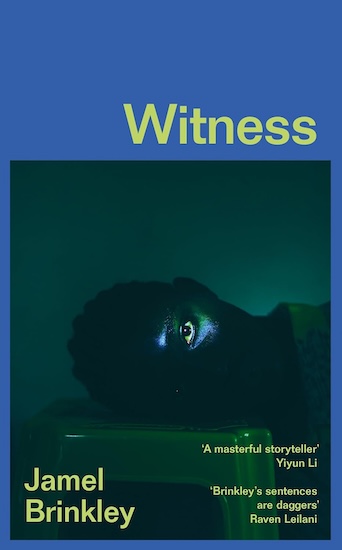
Witness
What does it mean to witness someone else’s suffering—and what responsibility comes with seeing the truth?
Set in contemporary New York City, Witness brings together ten stories about people caught between the desire to care for one another and the uncomfortable truths that make connection difficult. A young girl tries to navigate tensions within her family as the home she knows faces an uncertain future. A man struggles with memories he cannot escape. A woman living with the aftermath of violence searches for a way forward. Across these lives, ordinary encounters become moments of revelation, exposing the quiet decisions that can shape a family, a friendship, or an entire community.
Jamel Brinkley writes about the spaces between people: the affection that survives disappointment, the secrets that fracture trust, and the moments when silence becomes its own kind of betrayal. His characters are neither wholly innocent nor easily condemned; they are human, complicated, and often uncertain about what doing the right thing actually requires.
Tender, unsettling, and deeply observant, Witness explores grief, belonging, inequality, and the moral weight of looking away. It asks whether truly seeing another person is enough—or whether we must also find the courage to act.
2023
7
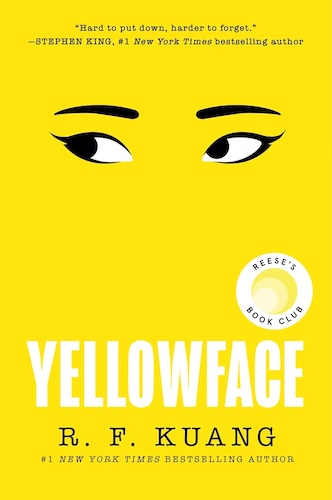
Yellowface
How far would you go to become the writer you believe you deserve to be? June Hayward has spent years watching her university friend Athena Liu enjoy the literary success she desperately craves. When Athena dies unexpectedly, June steals her unpublished manuscript, makes a few changes, and publishes it under the ambiguous name Juniper Song. The novel becomes a sensation, bringing June fame, fortune, and the recognition she has always wanted. But as questions about authorship and cultural appropriation begin to surface, maintaining her carefully constructed identity becomes increasingly dangerous. With biting humour and escalating suspense, Yellowface exposes the darker side of the publishing industry, exploring racism, jealousy, literary ambition, and the ethics of telling stories that are not yours.
2023
8
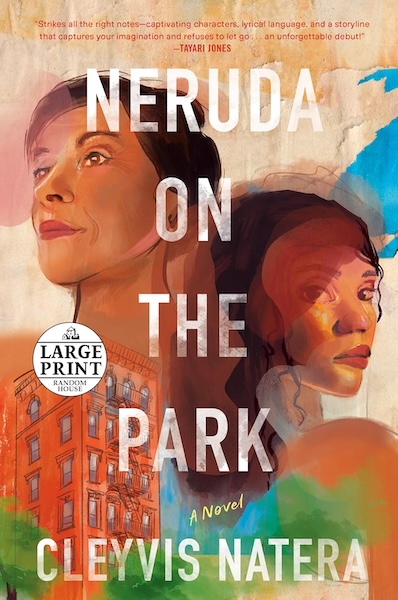
Neruda on the Park
For twenty years, the Guerrero family has called Nothar Park, a predominantly Dominican neighbourhood in New York City, home. But when a neighbouring tenement is demolished to make way for luxury condominiums, the threat of gentrification pushes the community toward a breaking point. Eusebia Guerrero, determined to protect the neighbourhood and the people who shaped her life, begins organising increasingly risky schemes to frighten developers away. Her daughter, Luz, has very different ambitions: a successful career in corporate law and the comfortable lifestyle her immigrant parents worked hard to provide.
When Luz loses her job and falls into a passionate relationship with a wealthy property developer connected to the very project her mother opposes, the conflict between them becomes deeply personal. Meanwhile, Luz’s father secretly plans their retirement in the Dominican Republic, reopening old tensions about home and belonging.
With humour and emotional depth, Neruda on the Park explores gentrification, generational conflict, immigrant identity, and the difficult choices families face when the place they call home begins to disappear.
2022
9
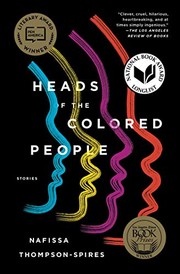
Heads of the Colored People
In Heads of the Colored People, Nafissa Thompson-Spires explores race, identity, and belonging in contemporary Black America. Through interconnected stories, she examines the complexities of social expectations, cultural stereotypes, and the pressures of navigating identity in a society shaped by racial inequality.
2019
10
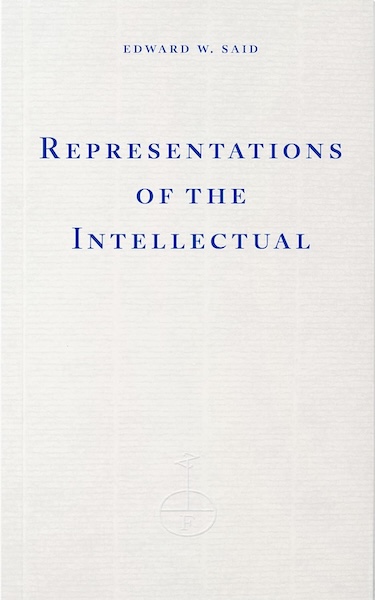
Representations of the Intellectual
Should intellectuals challenge those in power, even when doing so threatens their careers, reputations, or personal safety?
Based on his 1993 BBC Reith Lectures, Representations of the Intellectual explores the role of the thinker in public life. Edward W. Said argues that intellectuals have a responsibility to question accepted wisdom, resist political and institutional pressure, and speak honestly about injustice—even when their views are unpopular.
Drawing on figures such as Theodor Adorno and Jonathan Swift, as well as contemporary political events, Said examines the dangers of allowing expertise, ambition, nationalism, or financial interests to silence independent thought. He presents the intellectual as an outsider who must remain willing to challenge authority rather than simply serve it.
Passionate and provocative, this short collection asks what it means to preserve intellectual independence in a world shaped by powerful institutions and competing interests. It remains a compelling reflection on the relationship between knowledge, conscience, and public responsibility.
1994
11
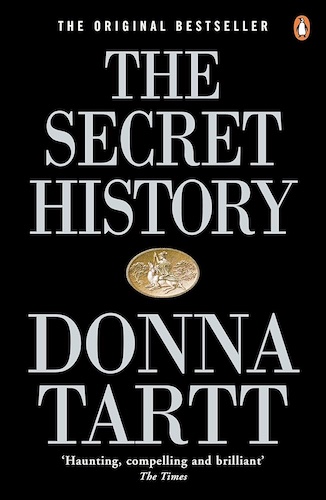
The Secret History
At an elite Vermont college, a tight-knit group of classics students becomes consumed by beauty, intellectual obsession, and the darker side of ancient philosophy. When their pursuit of an extraordinary experience leads to murder, their carefully constructed world begins to unravel. An atmospheric psychological novel about guilt, privilege, and the dangerous allure of belonging.
1992
12
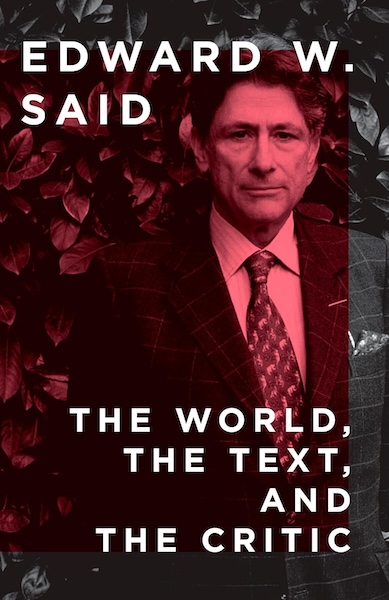
The World, the Text, and the Critic
Can literature ever be separated from the world in which it is created?
In The World, the Text, and the Critic, Edward W. Said challenges the idea that literary works should be understood independently of their historical and political contexts. Through a series of essays, he examines the relationship between literature, intellectual life, institutions, and social power.
Said introduces the idea of worldliness: texts are produced within particular historical circumstances and participate in the societies around them, whether their authors acknowledge it or not. He also considers the critic’s responsibility to question established assumptions rather than simply reinforce dominant ideas. This influential collection explores how literary criticism can become a form of intellectual independence and public engagement.
1983