Books from United States
Suggest a book
All genres
Historical Fiction
Literary Fiction
Fantasy
Romance
Horror
Thriller
Non-Fiction
Mystery
Memoir
Classics
History
Sci-Fi
Contemporary Fiction
Science Fiction
Fiction
Poetry
Essays
Family Saga
Magical Realism
Family Drama
Dark Academia
Psychological Fiction
Dark Comedy
Political Writing
Feminist Fiction
Satire
Campus Fiction
Cultural Studies
Biography
Philosophy
Comedy
Drama
Young Adult
Gothic
Dystopia
Crime
Children's Books
Short Stories
Mythology
Cozy
Retellings
Humour
Adventure
All themes
Love & Passion
Adventure & Journey
Identity & Belonging
War & Conflict
Freedom & Resistance
Family & Heritage
Nature & Landscape
Society & Class
Spirituality & Faith
Solitude & Exile
Coming of Age
Revolution & Change
Friendship
History
Immigration
Myths and Retellings
Colonialism
Women & Society
Mental Health
Motherhood
1
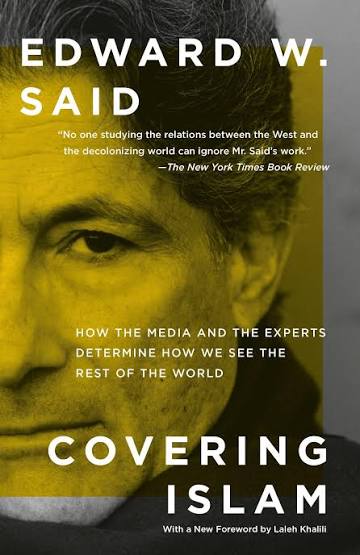
Covering Islam
How does the media shape what the world believes about Islam?
In Covering Islam, Edward W. Said investigates how Western news organisations, academics, and political commentators represent Islam and Muslim societies. He argues that media coverage often reduces diverse communities to simplified images associated with extremism, conflict, and political threat, obscuring the complexity of their histories and everyday lives.
Said explores the relationship between knowledge, media institutions, and political power, asking readers to question who gets to define another culture and whose perspectives are excluded. The book remains an important study of representation, stereotyping, and the influence of public narratives on international understanding.
1981
2
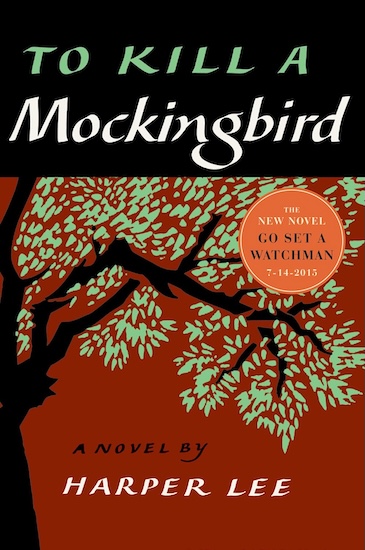
To Kill a Mockingbird
Set in the fictional town of Maycomb, Alabama, during the Great Depression, To Kill a Mockingbird is narrated by Scout Finch, a young girl growing up in a deeply segregated society. Her father, Atticus Finch, is a lawyer who agrees to defend Tom Robinson, a Black man falsely accused of assaulting a white woman. As Scout and her brother Jem observe the trial and its consequences, they encounter the realities of racial prejudice, social inequality, and moral courage. Their experiences challenge their childhood assumptions about justice and human goodness. Through Scout’s developing understanding of the world, Harper Lee examines the conflict between personal conscience and social convention, showing how prejudice can distort even the most fundamental principles of fairness.
1960
3

Best of Everything
The Best of Everything follows five young women working in a New York publishing company during the late 1950s as they navigate professional ambition, romance, and the expectations placed on women in postwar America. Caroline Bender dreams of building a meaningful career, while her colleagues struggle with relationships, financial insecurity, and the pressure to find suitable husbands. Their experiences reveal a world in which women are encouraged to pursue independence but are still judged by their marital status and appearance. As the characters encounter workplace discrimination, emotional disappointments, and difficult personal choices, they begin to question what success and happiness really mean. Jaffe offers an unvarnished portrait of women’s lives in a rapidly changing society, exploring the conflict between individual aspirations and conventional expectations. The novel examines gender inequality, ambition, and the price women are often expected to pay for trying to have both a career and a fulfilling personal life.
1958
4
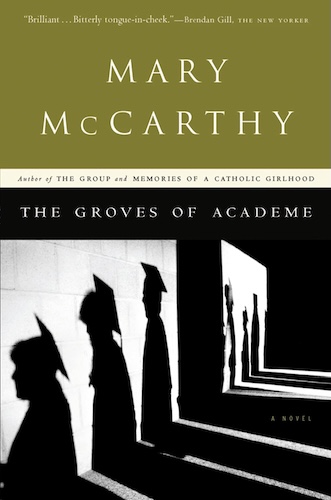
The Groves of Academe
At the progressive Jocelyn College, literature instructor Henry Mulcahy receives devastating news: his contract will not be renewed. Convinced that the college president is conspiring against him, Mulcahy launches a desperate campaign to save his career. As Cold War paranoia and anti-Communist suspicion sweep through America, he discovers that political loyalties and accusations can be powerful weapons in the battle for academic survival. But the more he fights for justice, the more his own dishonesty and ambition come to light. Sharp, witty, and mercilessly observant, The Groves of Academe exposes the rivalries, ideological hypocrisy, and petty power struggles lurking behind the respectable façade of university life.
1952
5
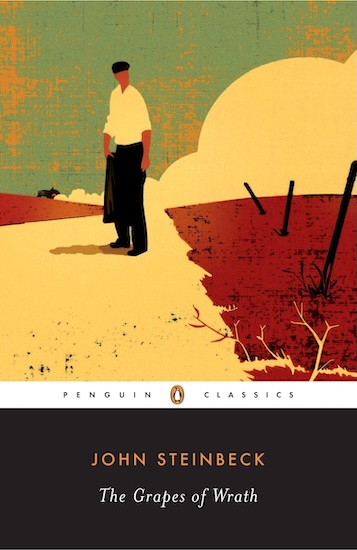
The Grapes of Wrath
The Grapes of Wrath follows the Joad family, tenant farmers driven from their Oklahoma home during the Great Depression and the Dust Bowl. Hoping to find work and a better future, they travel west to California, joining thousands of other migrants searching for survival. Instead of prosperity, they encounter exploitation, overcrowded camps, low wages, and hostility from landowners who fear the growing number of desperate workers. As the family’s circumstances deteriorate, Tom Joad and his mother struggle to preserve their dignity and solidarity in the face of injustice. Steinbeck portrays the human cost of economic collapse, revealing how powerful institutions can profit from the vulnerability of ordinary people. The novel explores poverty, migration, collective resistance, and the importance of community, arguing that human survival depends not only on individual determination but also on mutual responsibility and social justice.
1939