Books from United States
Suggest a book
All genres
Historical Fiction
Literary Fiction
Fantasy
Romance
Horror
Thriller
Non-Fiction
Mystery
Memoir
Classics
History
Sci-Fi
Contemporary Fiction
Science Fiction
Fiction
Poetry
Essays
Family Saga
Magical Realism
Family Drama
Dark Academia
Psychological Fiction
Dark Comedy
Political Writing
Feminist Fiction
Satire
Campus Fiction
Cultural Studies
Biography
Philosophy
Comedy
Drama
Young Adult
Gothic
Dystopia
Crime
Children's Books
Short Stories
Mythology
Cozy
Retellings
Humour
Adventure
All themes
Love & Passion
Adventure & Journey
Identity & Belonging
War & Conflict
Freedom & Resistance
Family & Heritage
Nature & Landscape
Society & Class
Spirituality & Faith
Solitude & Exile
Coming of Age
Revolution & Change
Friendship
History
Immigration
Myths and Retellings
Colonialism
Women & Society
Mental Health
Motherhood
1
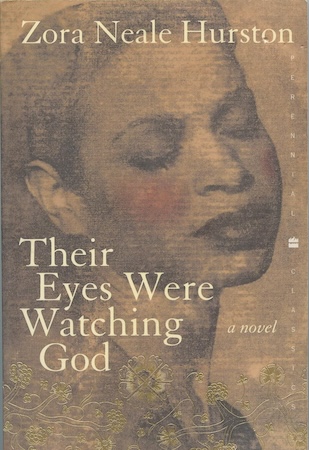
Their Eyes Were Watching God
Set in the early twentieth-century American South, Their Eyes Were Watching God follows Janie Crawford, an African American woman searching for love, independence, and a life she can call her own. Returning to her hometown of Eatonville, Florida, after a long absence, Janie faces the curiosity and judgment of her neighbours. Through a conversation with her friend Pheoby, she begins to recount the experiences that have shaped her.
Raised by her grandmother, who dreams of securing her future through marriage, Janie enters a series of relationships that teach her painful lessons about power, gender, and self-worth. Her first two marriages offer security and social status but leave little room for her voice or desires. It is only when she meets Tea Cake, a younger man who introduces her to a world of spontaneity, friendship, and adventure, that she begins to experience a more expansive kind of love.
Hurston’s novel is a landmark of African American literature, celebrated for its rich use of Black Southern dialect, folklore, and storytelling traditions. Through Janie’s journey, it explores the intersections of race, gender, class, and personal freedom, ultimately affirming a woman’s right to define herself beyond the expectations of others.
1937
2
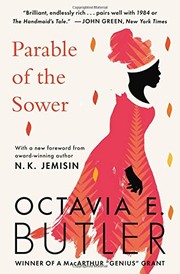
Parable of the Sower
In 2025, with the world descending into madness and anarchy, one woman begins a fateful journey toward a better future.
Lauren Olamina and her family live in one of the only safe neighborhoods remaining on the outskirts of Los Angeles. Behind the walls of their defended enclave, Lauren’s father, a preacher, and a handful of other citizens try to salvage what remains of a culture that has been destroyed by drugs, disease, war, and chronic water shortages. While her father tries to lead people on the righteous path, Lauren struggles with hyperempathy, a condition that makes her extraordinarily sensitive to the pain of others.
When fire destroys their compound, Lauren’s family is killed and she is forced out into a world that is fraught with danger. With a handful of other refugees, Lauren must make her way north to safety, along the way conceiving a revolutionary idea that may mean salvation for all mankind.
1993
3
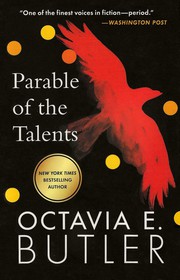
Parable of the Talents
Set in a dystopian America in the early twenty-first century, Parable of the Talents continues the story of Lauren Olamina, founder of the Earthseed movement, which teaches that humanity’s destiny is to shape change and eventually travel beyond Earth. As Lauren works to build a community based on cooperation, equality, and spiritual transformation, a Christian fundamentalist government rises to power, bringing persecution and violence. The novel is narrated partly through the perspective of Lauren’s estranged daughter, who struggles to understand her mother’s beliefs and legacy. Through their intertwined stories, Octavia E. Butler examines religious extremism, authoritarianism, racial injustice, and the struggle to preserve freedom in a society shaped by fear. The novel offers a powerful reflection on the dangers of political fanaticism and the resilience required to imagine a different future.
1998
4
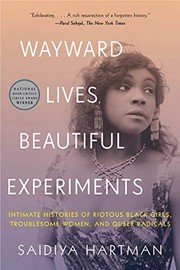
Wayward Lives, Beautiful Experiments
At the dawn of the twentieth century, black women in the US were carving out new ways of living. The first generations born after emancipation, their struggle was to live as if they really were free.
These women refused to labour like slaves. Wrestling with the question of freedom, they invented forms of love and solidarity outside convention and law. These were the pioneers of free love, common-law and transient marriages, queer identities, and single motherhood - all deemed scandalous, even pathological, at the dawn of the twentieth century, though they set the pattern for the world to come.
In Wayward Lives, Beautiful Experiments, Saidiya Hartman deploys both radical scholarship and profound literary intelligence to examine the transformation of intimate life that they instigated. With visionary intensity, she conjures their worlds, their dilemmas, their defiant brilliance.
2020
5
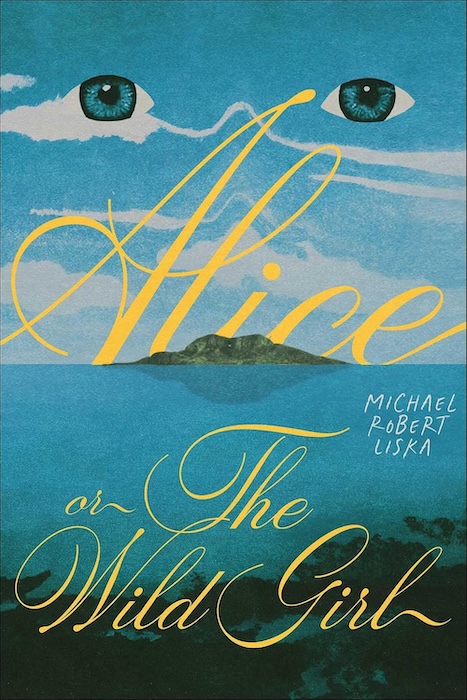
Alice, or The Wild Girl
In 1856, Lieutenant Henry Aaron Bird, an aging officer in the United States Navy, makes an extraordinary discovery on a remote Pacific island: a young, speechless girl living alone in the aftermath of a shipwreck. Naming her Alice, Bird takes her aboard his ship and eventually brings her to San Francisco, where he presents her to the public as the “Wild Girl of the Pacific.” To the crowds, Alice is a scientific curiosity and a spectacle; to Bird, she is both a responsibility and an opportunity to restore his fading reputation.
But Alice is not content to remain an object of fascination or a prisoner of someone else’s ambitions. As she struggles to reclaim control over her life, she must navigate the unfamiliar world of nineteenth-century America, where freedom can prove as elusive as it was on the island.
Blending historical fiction, maritime adventure, dark humour, and social satire, Liska explores exploitation, loneliness, and the power of storytelling. The novel asks who has the right to define another person’s identity—and whether true independence is ever entirely within our grasp.
2025
6
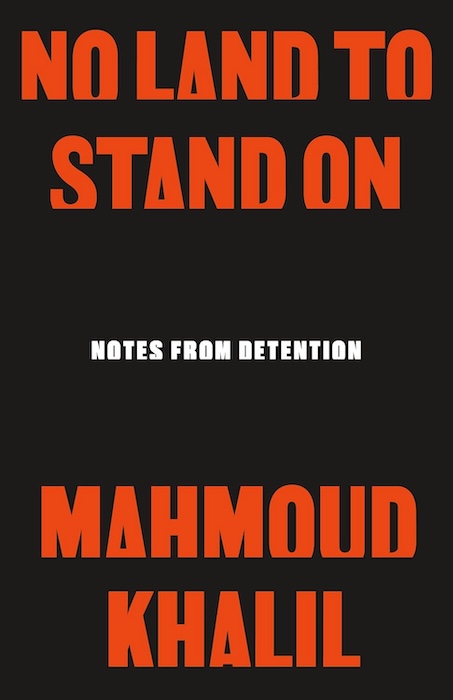
No Land to Stand On: Notes from Detention
In this powerful memoir, Palestinian activist Mahmoud Khalil recounts his detention by U.S. Immigration and Customs Enforcement (ICE) in March 2025 and the fight against his threatened deportation. A Columbia University graduate student and legal permanent resident, Khalil became a prominent voice in student protests against the war in Gaza. His arrest separated him from his pregnant wife and home in New York, transporting him to a detention facility in Louisiana, where he faced uncertainty about his future and the possibility of being forcibly removed from the country.
Drawing on the diary he kept during his imprisonment, Khalil describes the psychological toll of detention, the precarious lives of fellow detainees, and the unexpected solidarity that develops among people deprived of their freedom. He also traces his family’s history of displacement—from Palestine to a refugee camp in Syria—and his own journey through Lebanon to the United States. Combining personal testimony with political reflection, this memoir examines exile, belonging, and the consequences of speaking out against injustice. It asks what freedom and security truly mean when a person’s right to remain at home can be challenged for exercising their right to protest.
2026
7
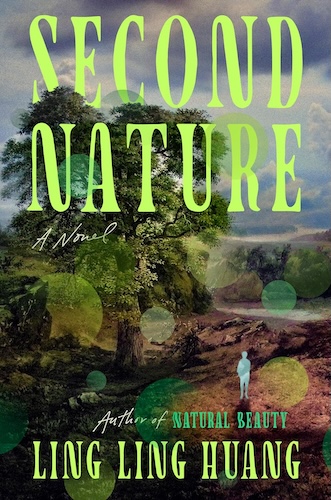
Second Nature
In the isolated community of the Veil, Bodie grows up surrounded by his many mothers and devoted to a female God. His world seems peaceful, governed by ancient traditions and strict expectations. But as Bodie develops romantic feelings for his closest friend, Aster, he begins to question the rules that shape their lives. When he approaches a mysterious ritual marking the transition to adulthood, unsettling truths emerge about the society he has always trusted. To protect himself and the people he loves, Bodie must confront the one thing his community forbids: escape. Haunting and thought-provoking, this speculative novel explores faith, desire, survival, and the dangers of unquestioned traditions.
2027
8
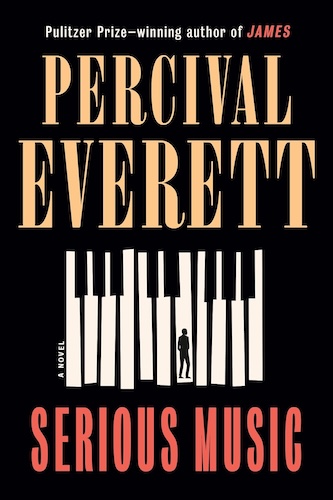
Serious Music
In 1918, Arthur Champion is a gifted young Black music scholar studying at the Oberlin Conservatory when a vindictive professor sends his life in an unexpected direction: he is drafted into the US Army and shipped to the trenches of the First World War. Surviving the horrors of the Somme, Arthur begins a remarkable journey through the jazz clubs of Paris and Harlem, eventually reaching the White House of President Woodrow Wilson. Along the way, he discovers the transformative power of his musical voice in a society determined to deny him ownership of his own talent. Blending dark humour with historical drama, Percival Everett examines racism, artistic freedom, and the struggle to claim one’s place in a world shaped by prejudice.
2027