Books from United States
Suggest a book
All genres
Historical Fiction
Literary Fiction
Fantasy
Romance
Horror
Thriller
Non-Fiction
Mystery
Memoir
Classics
History
Sci-Fi
Contemporary Fiction
Science Fiction
Fiction
Poetry
Essays
Family Saga
Magical Realism
Family Drama
Dark Academia
Psychological Fiction
Dark Comedy
Political Writing
Feminist Fiction
Satire
Campus Fiction
Cultural Studies
Biography
Philosophy
Comedy
Drama
Young Adult
Gothic
Dystopia
Crime
Children's Books
Short Stories
Mythology
Cozy
Retellings
Humour
Adventure
All themes
Love & Passion
Adventure & Journey
Identity & Belonging
War & Conflict
Freedom & Resistance
Family & Heritage
Nature & Landscape
Society & Class
Spirituality & Faith
Solitude & Exile
Coming of Age
Revolution & Change
Friendship
History
Immigration
Myths and Retellings
Colonialism
Women & Society
Mental Health
Motherhood
1
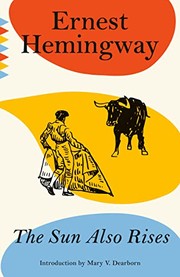
Sun Also Rises
The Sun Also Rises follows a group of American and British expatriates living in Europe after the First World War. Its narrator, Jake Barnes, is a journalist whose war injury has left him unable to pursue a conventional romantic relationship with Lady Brett Ashley, a charismatic woman whose independence and restlessness affect everyone around her. Their circle travels from Paris to the Spanish countryside, where fishing trips and the festivities of Pamplona’s bullfighting season offer temporary escape from emotional uncertainty. Beneath the characters’ drinking, flirtation, and restless movement lies a profound sense of disillusionment. Hemingway captures a generation struggling to find meaning after war, exploring unfulfilled desire, damaged masculinity, and the loneliness that can persist even among friends.
1926
2
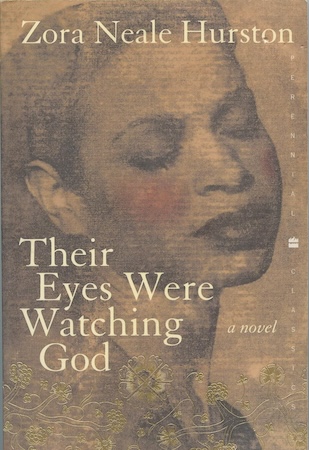
Their Eyes Were Watching God
Set in the early twentieth-century American South, Their Eyes Were Watching God follows Janie Crawford, an African American woman searching for love, independence, and a life she can call her own. Returning to her hometown of Eatonville, Florida, after a long absence, Janie faces the curiosity and judgment of her neighbours. Through a conversation with her friend Pheoby, she begins to recount the experiences that have shaped her.
Raised by her grandmother, who dreams of securing her future through marriage, Janie enters a series of relationships that teach her painful lessons about power, gender, and self-worth. Her first two marriages offer security and social status but leave little room for her voice or desires. It is only when she meets Tea Cake, a younger man who introduces her to a world of spontaneity, friendship, and adventure, that she begins to experience a more expansive kind of love.
Hurston’s novel is a landmark of African American literature, celebrated for its rich use of Black Southern dialect, folklore, and storytelling traditions. Through Janie’s journey, it explores the intersections of race, gender, class, and personal freedom, ultimately affirming a woman’s right to define herself beyond the expectations of others.
1937
3

Best of Everything
The Best of Everything follows five young women working in a New York publishing company during the late 1950s as they navigate professional ambition, romance, and the expectations placed on women in postwar America. Caroline Bender dreams of building a meaningful career, while her colleagues struggle with relationships, financial insecurity, and the pressure to find suitable husbands. Their experiences reveal a world in which women are encouraged to pursue independence but are still judged by their marital status and appearance. As the characters encounter workplace discrimination, emotional disappointments, and difficult personal choices, they begin to question what success and happiness really mean. Jaffe offers an unvarnished portrait of women’s lives in a rapidly changing society, exploring the conflict between individual aspirations and conventional expectations. The novel examines gender inequality, ambition, and the price women are often expected to pay for trying to have both a career and a fulfilling personal life.
1958
4
Blood Meridian
Set in the American Southwest and northern Mexico during the 1840s, Blood Meridian follows a nameless teenager known as the Kid as he joins a violent band of scalp hunters operating along the frontier. The group, led by the ruthless Captain Glanton and accompanied by the enigmatic Judge Holden, travels through landscapes marked by poverty, conflict, and brutality. Their journey exposes the violence underpinning territorial expansion and the mythology of the American West. McCarthy’s stark, biblical prose transforms the frontier into a world where cruelty seems almost elemental and human life is treated as expendable. The novel challenges romantic ideas of conquest and civilisation, exploring violence as both a historical force and a disturbing aspect of human existence.
1985
5
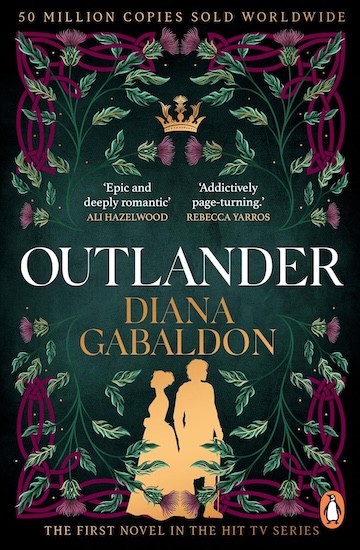
Outlander
Outlander follows Claire Randall, a former Second World War nurse who, while visiting the Scottish Highlands in 1945, mysteriously travels back in time to 1743. Stranded in a world of political unrest and clan rivalries, Claire must navigate unfamiliar customs and dangerous circumstances while searching for a way to return to her own time. She becomes entangled with Jamie Fraser, a young Scottish warrior whose courage and compassion challenge her loyalties and transform her life. As their relationship deepens, Claire faces an impossible choice between the husband she left behind in the twentieth century and the love she discovers in the past. Blending historical fiction, romance, adventure, and time travel, Gabaldon explores love, loyalty, survival, and the ways personal choices become intertwined with the course of history.
1998
6
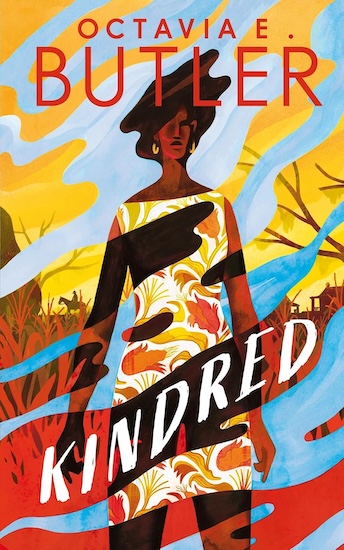
Kindred
In Kindred, Dana, a young Black writer living in California in 1976, is unexpectedly transported through time to an antebellum Maryland plantation. Each time she arrives in the past, she encounters Rufus Weylin, the white son of a plantation owner whose survival becomes mysteriously linked to her own. As Dana is repeatedly pulled between her modern life and the brutal realities of slavery, she must navigate a world where her freedom and safety are constantly threatened. Her relationship with Rufus grows increasingly complicated as she struggles to protect her ancestors while preserving her own identity and humanity. Blending historical fiction and science fiction, Octavia E. Butler explores slavery, racism, power, and the enduring consequences of historical violence. The novel offers a deeply personal examination of how the past shapes the present and challenges our understanding of freedom, survival, and belonging.
2003
7
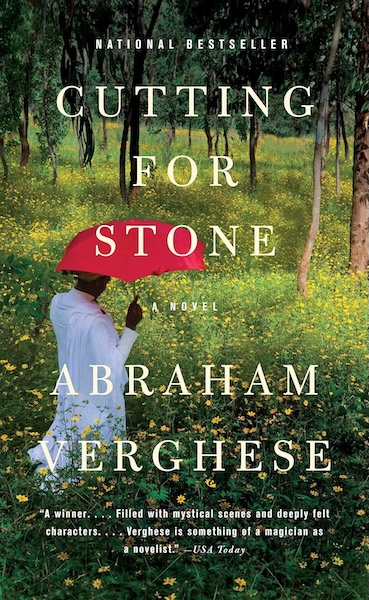
Cutting for Stone
In 1950s Addis Ababa, Ethiopia, twin brothers Marion and Shiva Stone are born from a secret relationship between an Indian nun and a British surgeon at a mission hospital. Their mother dies during childbirth, and their father disappears, leaving the twins to be raised by two devoted doctors who become their adoptive parents. Growing up surrounded by the world of medicine, the brothers develop an extraordinary bond and a shared fascination with surgery.
But as Ethiopia approaches revolution, their lives become entangled in forbidden love, jealousy, and betrayal. A devastating rupture drives Marion into exile in the United States, where he must confront the past he has tried to escape. When circumstances eventually bring him back to the world of his childhood, he faces the people and choices that shaped his life—and discovers that healing some wounds requires more than surgical skill.
Spanning continents and decades, Cutting for Stone is an epic story of brotherhood, sacrifice, and the complicated ties between parents and children. Abraham Verghese combines the intimate drama of a family saga with the intricate world of medicine, exploring how love, loss, and the accidents of birth can shape a person’s destiny.
2009
8
Salvage the Bones
Set in rural Mississippi in the days leading up to Hurricane Katrina, Salvage the Bones follows fifteen-year-old Esch Batiste and her three brothers as they navigate poverty, family tensions, and the looming threat of a devastating storm. Living with their father in a neglected community, the siblings struggle to prepare for the hurricane while confronting their own emotional and personal challenges. Esch, who is pregnant and quietly in love with her brother’s friend, finds parallels between her experiences and the mythological story of Medea. As the storm approaches, the family must rely on one another to survive. Through vivid storytelling and lyrical prose, Jesmyn Ward explores the bonds of family, the resilience of marginalized communities, and the enduring power of love amid hardship. The novel portrays the devastating intersection of poverty, race, and environmental disaster while celebrating the strength of those who endure.
2012
9
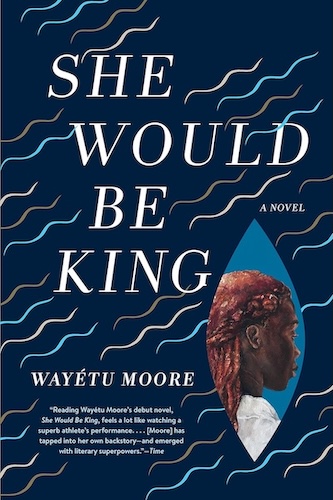
She Would Be King
In the nineteenth century, as Liberia emerges as a new nation, three extraordinary individuals from different parts of the African diaspora find their lives intertwined. Gbessa, a young woman from a West African village, is exiled after being accused of witchcraft. Left to die in the wilderness, she survives a deadly snakebite and discovers she possesses an unusual gift: immortality. June Dey, born into slavery on a plantation in Virginia, has extraordinary physical strength that he struggles to control. Norman Aragon, the son of a British coloniser and a Jamaican Maroon woman, can disappear from sight whenever the earth calls him.
Their journeys eventually bring them to Monrovia, where former enslaved people from America are attempting to establish a new society alongside Liberia's indigenous communities. As tensions rise between settlers, local populations, and European powers, the three must decide how to use their extraordinary abilities to protect their new homeland.
Blending magical realism, African folklore, and historical fiction, She Would Be King reimagines the founding of Liberia through stories of displacement, resistance, identity, and the complicated legacies of colonialism.
2018
10
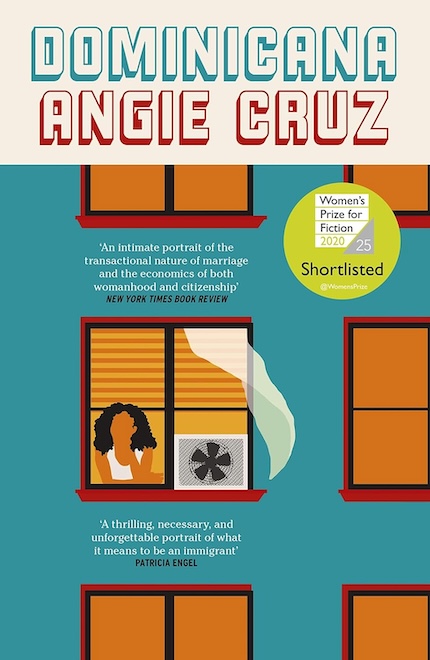
Dominicana
Fifteen-year-old Ana Canción has never dreamed of leaving the Dominican countryside, but when Juan Ruiz, a man twice her age, offers to marry her and take her to New York City, her family sees an opportunity for a better future. On New Year’s Day in 1965, Ana leaves behind everything she knows and arrives in Washington Heights, where she finds herself trapped in an unhappy marriage with a controlling and unfaithful husband. Lonely and struggling to adapt to life in a new country, she begins to imagine a future beyond the narrow role expected of her.
When Juan returns to the Dominican Republic amid growing political turmoil, Ana discovers new freedoms through English lessons, friendships, and an unexpected romantic connection with his younger brother, César. But her growing independence clashes with her family’s hopes and the sacrifices expected of her. Set against the backdrop of the Dominican Civil War and the Dominican immigrant community in New York, Dominicana is a moving coming-of-age story about migration, womanhood, and the courage to claim a life of one’s own.
2019
11
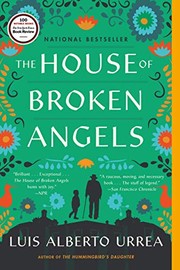
The House of Broken Angels
In The House of Broken Angels, Luis Alberto Urrea tells the story of the De La Cruz family as they gather in San Diego to celebrate the seventy-first birthday of patriarch Big Angel and the final days of their beloved matriarch, Mamá América. Over one emotionally charged weekend, siblings, children, grandchildren, and extended relatives come together, bringing unresolved conflicts, old memories, and complicated relationships to the surface. As Big Angel reflects on his life, he confronts his Mexican heritage, his experiences as an immigrant, and the legacy he will leave behind. Blending humor, grief, and tenderness, Urrea portrays the complexities of Mexican American identity and the bonds that hold families together across generations. The novel celebrates the resilience of immigrant communities while exploring mortality, belonging, cultural heritage, and the enduring power of family love.
2019
12
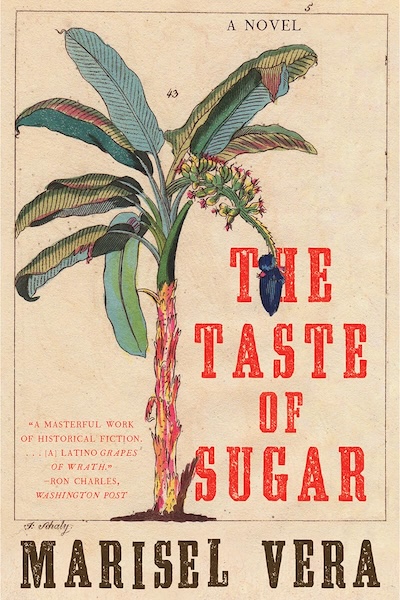
The Taste of Sugar
In late nineteenth-century Puerto Rico, seventeen-year-old Valentina Sánchez dreams of romance and a life beyond the expectations of her family. She marries Vicente Vega, a coffee farmer from the mountainous region of Utuado, hoping their love will bring happiness. But married life proves far more difficult than she imagined. Poverty, family tensions, and the struggle to keep their farm afloat threaten their future, while political upheaval transforms the island around them.
Following the Spanish-American War and the devastating San Ciriaco hurricane of 1899, Puerto Rico comes under American rule, and the Vegas lose their livelihood. Promised prosperity, Vicente and Valentina join thousands of Puerto Ricans who migrate to Hawaii to work on sugar plantations. Instead of the fresh start they hoped for, they encounter harsh working conditions, exploitation, and broken promises. Spanning generations and continents, The Taste of Sugar traces one family’s struggle to survive amid colonial domination and economic injustice. Marisel Vera brings a neglected chapter of Puerto Rican history to life, exploring how love, family, and resilience endure when the promise of a better future comes at an extraordinary cost.
2020