Books from United States
Suggest a book
All genres
Historical Fiction
Literary Fiction
Fantasy
Romance
Horror
Thriller
Non-Fiction
Mystery
Memoir
Classics
History
Sci-Fi
Contemporary Fiction
Science Fiction
Fiction
Poetry
Essays
Family Saga
Magical Realism
Family Drama
Dark Academia
Psychological Fiction
Dark Comedy
Political Writing
Feminist Fiction
Satire
Campus Fiction
Cultural Studies
Biography
Philosophy
Comedy
Drama
Young Adult
Gothic
Dystopia
Crime
Children's Books
Short Stories
Mythology
Cozy
Retellings
Humour
Adventure
All themes
Love & Passion
Adventure & Journey
Identity & Belonging
War & Conflict
Freedom & Resistance
Family & Heritage
Nature & Landscape
Society & Class
Spirituality & Faith
Solitude & Exile
Coming of Age
Revolution & Change
Friendship
History
Immigration
Myths and Retellings
Colonialism
Women & Society
Mental Health
Motherhood
1
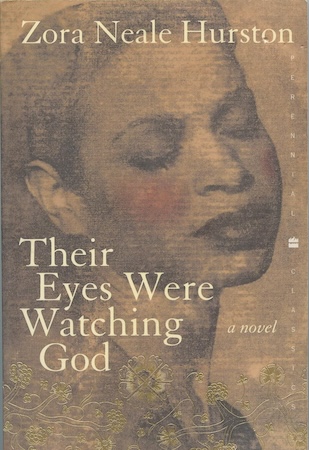
Their Eyes Were Watching God
Set in the early twentieth-century American South, Their Eyes Were Watching God follows Janie Crawford, an African American woman searching for love, independence, and a life she can call her own. Returning to her hometown of Eatonville, Florida, after a long absence, Janie faces the curiosity and judgment of her neighbours. Through a conversation with her friend Pheoby, she begins to recount the experiences that have shaped her.
Raised by her grandmother, who dreams of securing her future through marriage, Janie enters a series of relationships that teach her painful lessons about power, gender, and self-worth. Her first two marriages offer security and social status but leave little room for her voice or desires. It is only when she meets Tea Cake, a younger man who introduces her to a world of spontaneity, friendship, and adventure, that she begins to experience a more expansive kind of love.
Hurston’s novel is a landmark of African American literature, celebrated for its rich use of Black Southern dialect, folklore, and storytelling traditions. Through Janie’s journey, it explores the intersections of race, gender, class, and personal freedom, ultimately affirming a woman’s right to define herself beyond the expectations of others.
1937
2
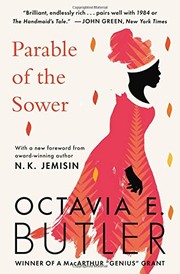
Parable of the Sower
In 2025, with the world descending into madness and anarchy, one woman begins a fateful journey toward a better future.
Lauren Olamina and her family live in one of the only safe neighborhoods remaining on the outskirts of Los Angeles. Behind the walls of their defended enclave, Lauren’s father, a preacher, and a handful of other citizens try to salvage what remains of a culture that has been destroyed by drugs, disease, war, and chronic water shortages. While her father tries to lead people on the righteous path, Lauren struggles with hyperempathy, a condition that makes her extraordinarily sensitive to the pain of others.
When fire destroys their compound, Lauren’s family is killed and she is forced out into a world that is fraught with danger. With a handful of other refugees, Lauren must make her way north to safety, along the way conceiving a revolutionary idea that may mean salvation for all mankind.
1993
3
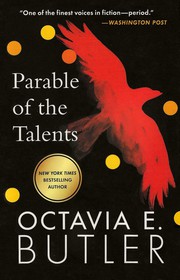
Parable of the Talents
Set in a dystopian America in the early twenty-first century, Parable of the Talents continues the story of Lauren Olamina, founder of the Earthseed movement, which teaches that humanity’s destiny is to shape change and eventually travel beyond Earth. As Lauren works to build a community based on cooperation, equality, and spiritual transformation, a Christian fundamentalist government rises to power, bringing persecution and violence. The novel is narrated partly through the perspective of Lauren’s estranged daughter, who struggles to understand her mother’s beliefs and legacy. Through their intertwined stories, Octavia E. Butler examines religious extremism, authoritarianism, racial injustice, and the struggle to preserve freedom in a society shaped by fear. The novel offers a powerful reflection on the dangers of political fanaticism and the resilience required to imagine a different future.
1998