Books from United States
Suggest a book
All genres
Historical Fiction
Literary Fiction
Fantasy
Romance
Horror
Thriller
Non-Fiction
Mystery
Memoir
Classics
History
Sci-Fi
Contemporary Fiction
Science Fiction
Fiction
Poetry
Essays
Family Saga
Magical Realism
Family Drama
Dark Academia
Psychological Fiction
Dark Comedy
Political Writing
Feminist Fiction
Satire
Campus Fiction
Cultural Studies
Biography
Philosophy
Comedy
Drama
Young Adult
Gothic
Dystopia
Crime
Children's Books
Short Stories
Mythology
Cozy
Retellings
Humour
Adventure
All themes
Love & Passion
Adventure & Journey
Identity & Belonging
War & Conflict
Freedom & Resistance
Family & Heritage
Nature & Landscape
Society & Class
Spirituality & Faith
Solitude & Exile
Coming of Age
Revolution & Change
Friendship
History
Immigration
Myths and Retellings
Colonialism
Women & Society
Mental Health
Motherhood
1
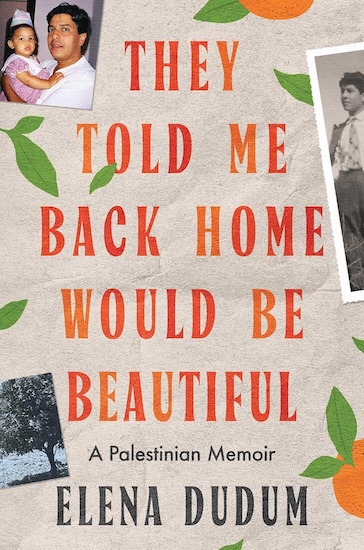
They Told Me Back Home Would Be Beautiful
Raised in a Palestinian Christian family in San Francisco, Elena Dudum grows up surrounded by her father’s stories of a homeland her grandparents were forced to leave. For years, she resists this inheritance, trying to fit into American life and escape the weight of a history she struggles to claim. But a visit to Palestine brings the realities of occupation, displacement, and her family’s past into sharp focus. Weaving together family memories, archival discoveries, and political reflection, this intimate memoir traces one woman’s journey from estrangement to belonging—and her determination to reclaim a heritage that cannot be erased.
2027
2
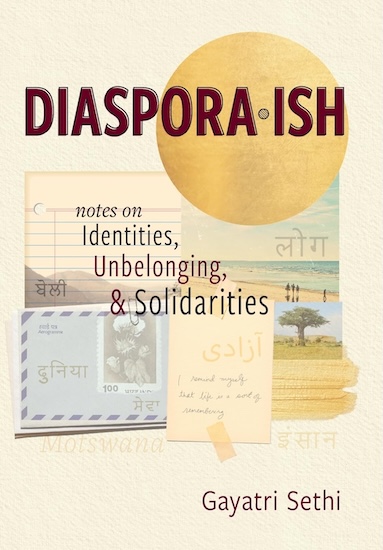
Diaspora-ish: Notes on Identities, Unbelonging, & Solidarities
What does it mean to belong when your identity crosses borders, cultures, and histories? Drawing on her own journey from Tanzania to Botswana and the United States, Gayatri Sethi challenges conventional ideas about nationality, race, ethnicity, and belonging. Blending personal reflections, poetry, academic insights, and interactive exercises, she explores how colonialism, racism, immigration, and inherited cultural expectations shape the ways people understand themselves and others. Moving beyond individual identity, Sethi asks how people from different backgrounds can build meaningful solidarities without erasing their differences. Thought-provoking and deeply personal, this book invites readers to question the boundaries that divide us and imagine a more inclusive vision of collective liberation.
2026
3
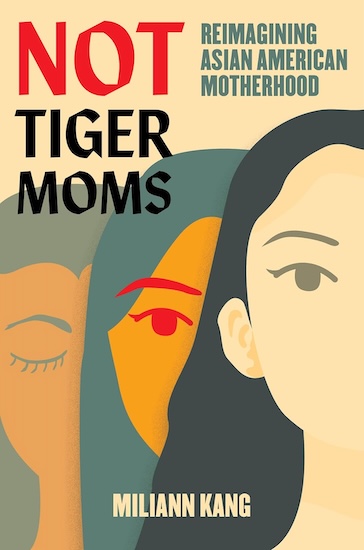
Not Tiger Moms: Reimagining Asian American Motherhood
Asian American mothers are often reduced to a familiar stereotype: strict, demanding parents obsessed with their children’s academic success. In Not Tiger Moms, sociologist Miliann Kang challenges this narrow narrative, revealing how racism and xenophobia shape perceptions of Asian American motherhood. Drawing on candid interviews with mothers born or raised primarily in the United States, Kang explores the pressures they face as they navigate parenting, cultural identity, education, work, and belonging. Their stories reveal lives far more complex than the stereotypes allow, exposing the contradictions between being seen as a model minority and being treated as perpetual outsiders. Thoughtful and illuminating, this book reimagines motherhood beyond racial expectations and asks how society might better support mothers in all their diversity.
2026
4
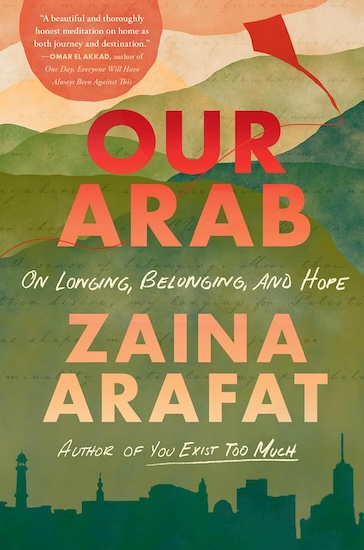
Our Arab
What does it mean to belong to a homeland you may never fully know? In this moving collection of essays, Palestinian-American writer Zaina Arafat explores the complexities of diaspora, inherited memory, and the longing for home. Moving between Nablus, Amman, the Appalachian Mountains, and Manhattan, she weaves together her family’s history, her experiences of identity and motherhood, and the pain of watching Palestine from afar. With tenderness, anger, and sharp insight, Arafat examines what it means to preserve a culture across generations while confronting displacement, erasure, and the shifting meaning of belonging. Our Arab is both an intimate family portrait and a powerful meditation on what it means to be Palestinian today.
2026
5
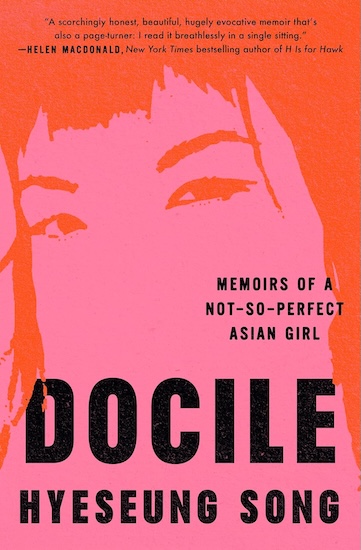
Docile: Memoirs of a Not-So-Perfect Asian Girl
Raised by ambitious Korean immigrant parents in Texas, Hyeseung Song grows up believing that achievement is the price of acceptance. She earns her place at an Ivy League university, striving to embody the model minority ideal while struggling with depression, family expectations, and a fractured sense of belonging. But when academic success and parental approval can no longer sustain her, she faces a painful reckoning with the life she has been taught to pursue. Through mental illness, a psychiatric hospitalization, and her eventual embrace of painting, Song begins to reclaim her identity beyond the expectations imposed on her. Docile is an unflinching memoir about the cost of perfection, the complexities of mother-daughter relationships, and the courage to build a life that feels authentically one’s own.
2024
6
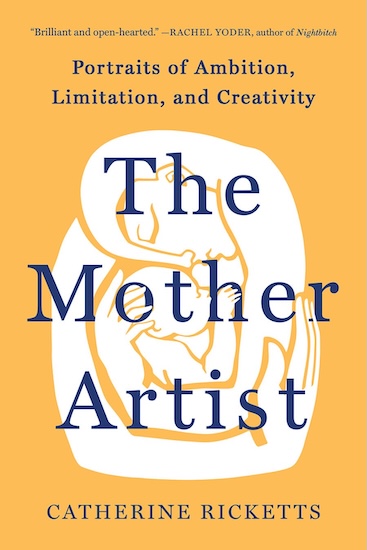
The Mother Artist: Portraits of Ambition, Limitation, and Creativity
Can a woman nurture both her children and her creative ambitions without sacrificing part of herself? Blending memoir, biography, and art criticism, Catherine Ricketts explores the complicated relationship between motherhood and artistic expression. Through her own experiences and the lives of remarkable women—including Toni Morrison, Joan Didion, Ruth Asawa, and Alice Neel—she examines how pregnancy, caregiving, grief, and domestic responsibilities shape the creative process. Thoughtful and deeply compassionate, this book challenges the idea that motherhood and ambition must compete, celebrating the women who continue to create despite the limitations imposed on their time, bodies, and freedom.
2024
7
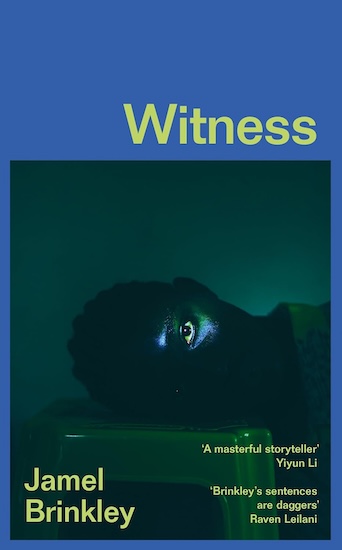
Witness
What does it mean to witness someone else’s suffering—and what responsibility comes with seeing the truth?
Set in contemporary New York City, Witness brings together ten stories about people caught between the desire to care for one another and the uncomfortable truths that make connection difficult. A young girl tries to navigate tensions within her family as the home she knows faces an uncertain future. A man struggles with memories he cannot escape. A woman living with the aftermath of violence searches for a way forward. Across these lives, ordinary encounters become moments of revelation, exposing the quiet decisions that can shape a family, a friendship, or an entire community.
Jamel Brinkley writes about the spaces between people: the affection that survives disappointment, the secrets that fracture trust, and the moments when silence becomes its own kind of betrayal. His characters are neither wholly innocent nor easily condemned; they are human, complicated, and often uncertain about what doing the right thing actually requires.
Tender, unsettling, and deeply observant, Witness explores grief, belonging, inequality, and the moral weight of looking away. It asks whether truly seeing another person is enough—or whether we must also find the courage to act.
2023
8
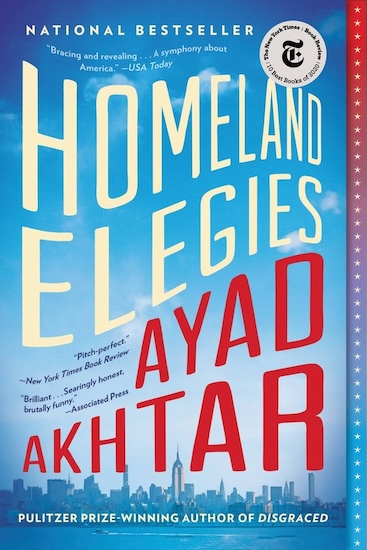
Homeland Elegies
Homeland Elegies blends fiction, memoir, and social commentary to explore what it means to be Muslim, Pakistani American, and American in a country struggling with questions of race, religion, patriotism, and belonging.
The novel follows a fictionalised version of Ayad Akhtar and his relationship with his father, a Pakistani immigrant and devoted admirer of Donald Trump. As father and son navigate their complicated relationship, their personal experiences unfold against the backdrop of post-9/11 America, where Islamophobia, political division, and economic insecurity have reshaped the lives of immigrant communities.
Moving between family memories, political reflections, cultural criticism, and encounters with people across different social worlds, Akhtar examines the contradictions of the American Dream. His narrator grapples with the privileges and prejudices of American society, the burden of inherited expectations, and the tension between wanting to belong to a country and feeling rejected by it.
Rather than presenting a straightforward autobiographical account, Akhtar deliberately blurs the boundaries between truth and invention. The result is an intimate and provocative portrait of a nation wrestling with its identity, told through the experiences of a family whose personal struggles mirror America’s broader divisions.
2020
9
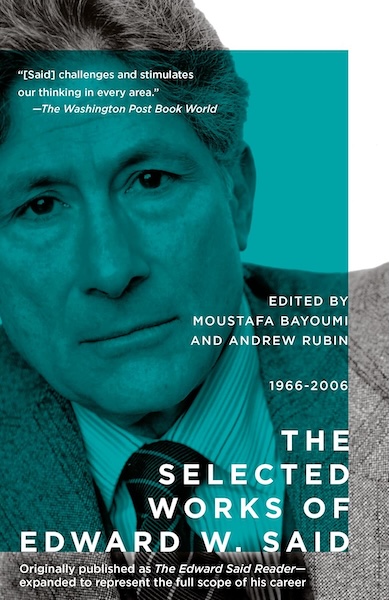
The Selected Works of Edward Said, 1966 - 2006
How do literature, culture, and politics shape the way we understand the world? And whose voices are missing from the stories history tells?
The Selected Works of Edward Said brings together key writings from four decades of one of the most influential intellectuals of the twentieth century. Edited by Moustafa Bayoumi and Andrew Rubin, this expanded collection traces Said’s thinking across subjects ranging from colonialism and Palestinian identity to literature, music, media, and the responsibilities of intellectuals.
Featuring selections from Orientalism, Culture and Imperialism, and Out of Place, alongside important essays and later writings, the collection offers an overview of Said’s evolving ideas about power, representation, and cultural identity.
Essential for understanding Said’s intellectual legacy, this volume reveals how cultural narratives influence political realities—and why questioning dominant perspectives remains vital.
2007
10
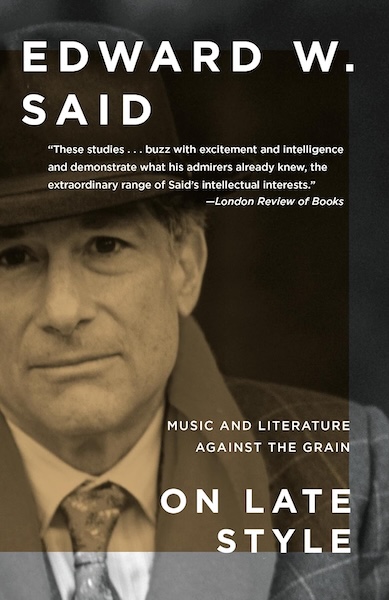
On Late Style: Music and Literature Against the Grain
What happens when great artists approach the end of their lives—and begin creating works that refuse to offer comfort, harmony, or easy answers?
In On Late Style, Edward W. Said explores the final works of celebrated composers, writers, and artists, including Beethoven, Mozart, Thomas Mann, and Jean Genet. He challenges the assumption that artistic maturity naturally leads to wisdom and reconciliation, arguing instead that some creators produce their most challenging work late in life, embracing contradiction, resistance, and unresolved tensions.
Drawing on music, literature, opera, and film, Said examines how artists confront their own mortality while remaining at odds with the cultural expectations of their time. The result is a compelling reflection on creativity, ageing, and the courage to resist conventional ideas of artistic perfection.
Published posthumously in 2006, this unfinished final work reflects Said’s own lifelong commitment to intellectual independence and the power of art to challenge established assumptions.
2006
11
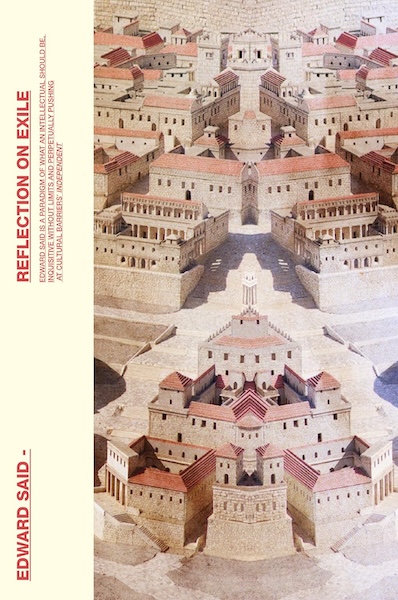
Reflections On Exile: And Other Literary And Cultural Essays
What does it mean to live between worlds—to belong to a place through memory while remaining separated from it by distance, politics, or history?
In Reflections on Exile, Edward W. Said brings together essays written over more than three decades, exploring literature, culture, politics, and the experience of displacement. The collection reflects his lifelong engagement with Palestinian identity and his own experience of exile, while examining how writers and artists respond to the societies that shape them.
Said moves between close readings of literary works and broader reflections on imperialism, cultural identity, and intellectual responsibility. He considers figures such as Joseph Conrad, George Orwell, and Naguib Mahfouz, revealing how art can illuminate the tensions between personal experience and historical forces.
At the heart of the collection is the idea that exile is more than physical separation: it can transform how people see home, belonging, and themselves. Both intellectually searching and deeply personal, the book explores the creative possibilities and emotional costs of living between cultures.
2000
12
Representations of the Intellectual
Should intellectuals challenge those in power, even when doing so threatens their careers, reputations, or personal safety?
Based on his 1993 BBC Reith Lectures, Representations of the Intellectual explores the role of the thinker in public life. Edward W. Said argues that intellectuals have a responsibility to question accepted wisdom, resist political and institutional pressure, and speak honestly about injustice—even when their views are unpopular.
Drawing on figures such as Theodor Adorno and Jonathan Swift, as well as contemporary political events, Said examines the dangers of allowing expertise, ambition, nationalism, or financial interests to silence independent thought. He presents the intellectual as an outsider who must remain willing to challenge authority rather than simply serve it.
Passionate and provocative, this short collection asks what it means to preserve intellectual independence in a world shaped by powerful institutions and competing interests. It remains a compelling reflection on the relationship between knowledge, conscience, and public responsibility.
1994